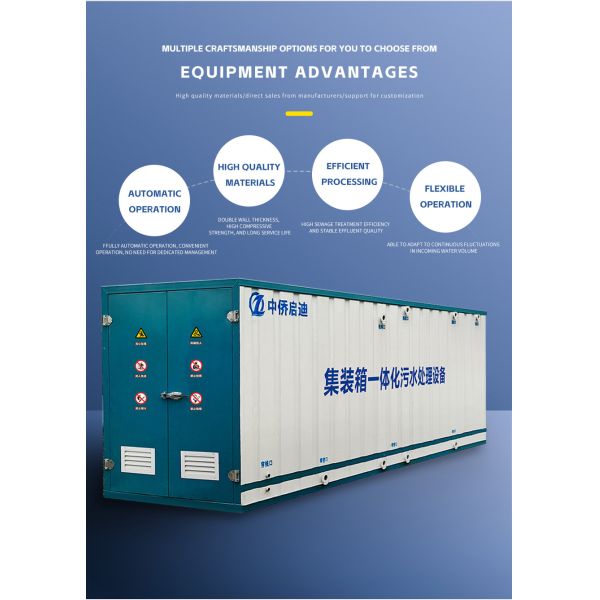
Containerized Integrated Wastewater Treatment Plant (CIWTPP) is a highly integrated, modular, mobile, and rapid-deployment wastewater treatment system, specifically designed to treat complex industrial sewage. It encapsulates entire treatment processes within standard shipping containers (20ft/40ft), offering a "plug-and-play" alternative to traditional civil-engineering-based wastewater plants.

Core Design & Technical Features
1. High Integration & Modularity
- Factory Prefabrication: All treatment units (grille, regulation tank, biochemical reactor, sedimentation, filtration, disinfection, control cabinet) are fully assembled, piped, wired, and factory-tested before delivery.
- Modular Combination: Processes are split into independent modules (e.g., A/O, MBBR, MBR, DAF, UF/RO) that can be flexibly combined or scaled like "Lego blocks" to match specific industrial wastewater characteristics.
- Compact Footprint: Eliminates large on-site concrete tanks; footprint is 50–70% smaller than conventional systems.
2. Advanced Treatment Processes
Tailored for industrial pollutants (COD, BOD, ammonia nitrogen, total nitrogen/phosphorus, heavy metals, oil, suspended solids, refractory organics):
- Biological Modules:
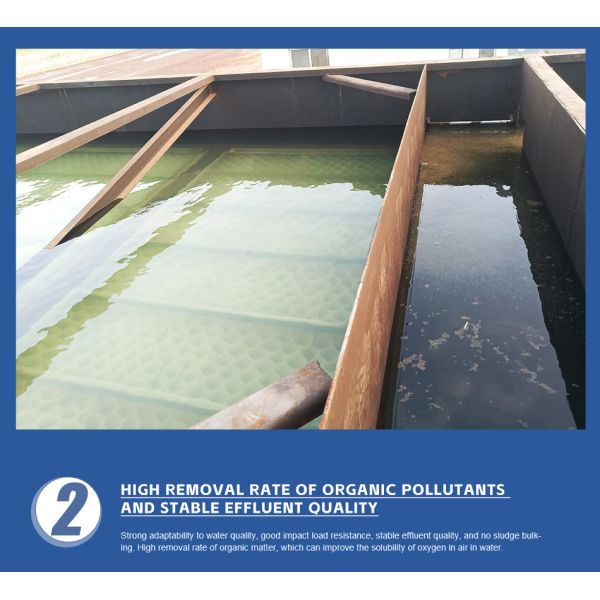
- A/O (Anoxic/Oxic): Efficiently removes organic matter and denitrifies nitrogen.
- MBBR (Moving Bed Biofilm Reactor): High biomass loading, strong shock resistance.
- MBR (Membrane Bioreactor): Submerged microfiltration/ultrafiltration membranes replace secondary clarifiers; effluent SS ≈ 0, turbidity < 0.5 NTU.
- Physical-Chemical Modules:
- DAF (Dissolved Air Flotation): Removes oils, suspended solids, and colloids.
- Chemical Precipitation/Reduction: Targets heavy metals (Pb, Cd, Cr, Hg, etc.).
- UF + RO (Ultrafiltration + Reverse Osmosis): Produces high-purity reusable water (for industrial recycling).
3. Rapid Deployment & Mobility
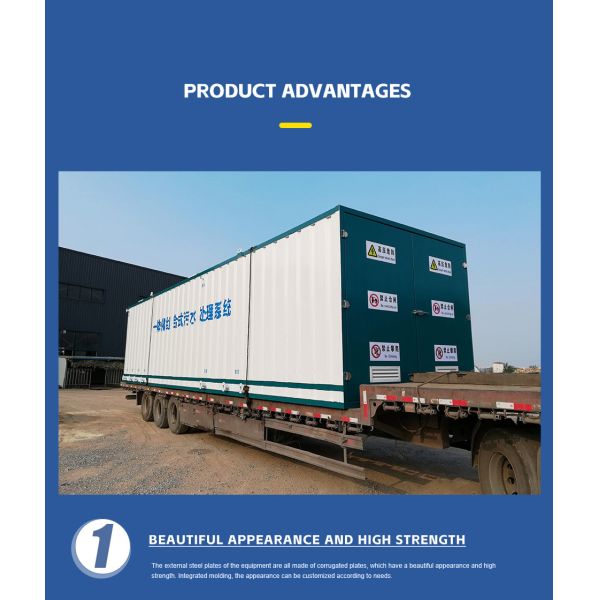
- Standard Containers: Fits ISO 20ft/40ft shipping containers; easily transported by truck, train, or ship.
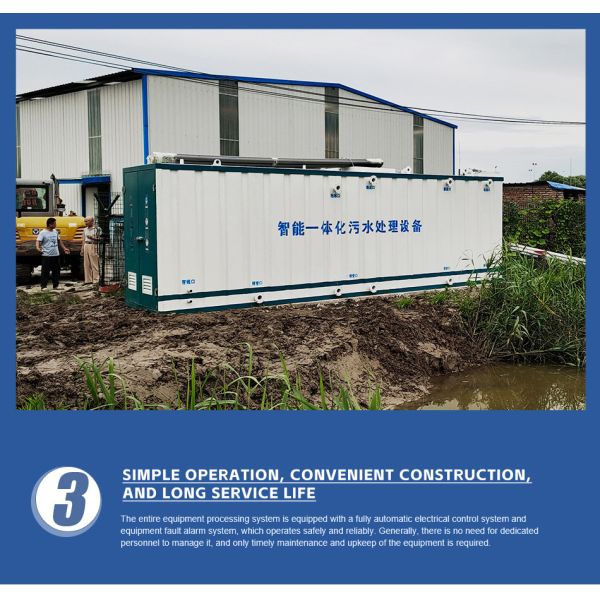
- Fast Installation: On-site setup only requires leveling, connecting inlet/outlet pipes, and power; commissioning in 3–7 days (vs. months for traditional plants).
- Movable & Reusable: Can be relocated to other sites or used temporarily (e.g., construction, emergency, remote mines).
4. Intelligent & Automatic Operation
- PLC + SCADA Control: Fully automatic operation (auto aeration, sludge discharge, chemical dosing, backwash).
- Remote Monitoring: Real-time data, fault alarms, and remote adjustment via computer/APP.
- Low Maintenance: Minimal on-site labor; sludge yield reduced by 30–50% vs. conventional activated sludge.
5. Durability & Climate Adaptability
- Structural Material: Corrosion-resistant carbon steel (6mm+ thickness) or stainless steel; anti-corrosion coating for long service life.
- Weatherproofing: Insulated, heated, and ventilated containers maintain process stability in cold/harsh environments.
Typical Applications
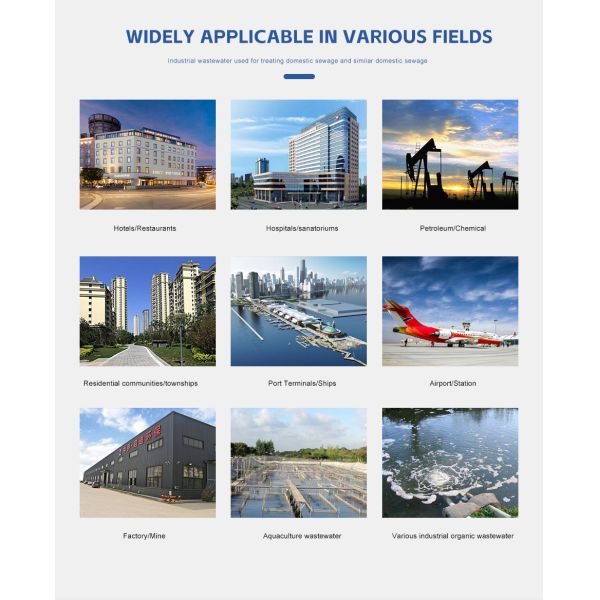
Ideal for industrial sectors with complex or variable wastewater:
- Petrochemical, chemical, pharmaceutical
- Electroplating, mining, metallurgy (heavy metals)
- Food & beverage, slaughterhouse, aquaculture (high organics/oil)
- Textile dyeing, paper making (color, refractory COD)
- Temporary industrial sites, remote factories, emergency treatment
Advantages Summary
- Speed: Months → days for deployment
- Cost: Lower civil work; faster ROI
- Flexibility: Customizable, scalable, movable
- Quality: Stable, high-standard effluent (often reuse-ready)
- Space: Minimal footprint
- Operation: Smart, unmanned, low labor cost
Performance & Specifications (Typical)
- Capacity: 5–500 m³/day per unit; parallel for larger flows
- Removal Rates: COD ≥ 90%, BOD ≥ 95%, NH3-N ≥ 90%, TN ≥ 85%, TP ≥ 90%
- Effluent Standard: Meets national/regional discharge limits or industrial reuse standards
In short, containerized integrated plants represent a modern, efficient, and flexible solution for industrial wastewater treatment, especially where speed, mobility, and compactness are priorities.