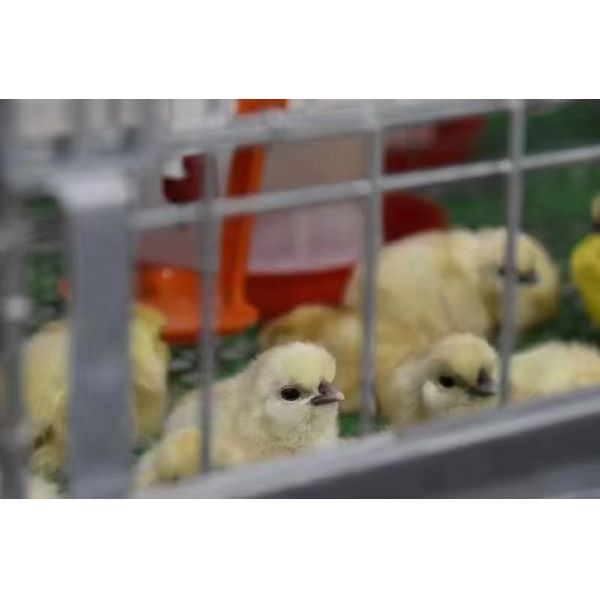
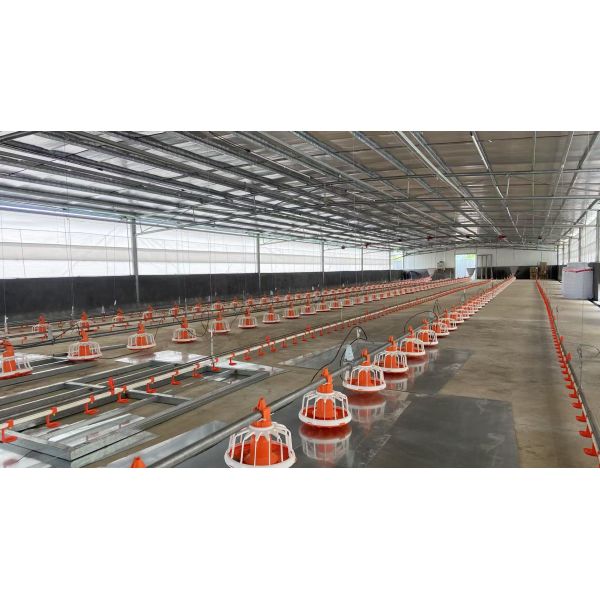
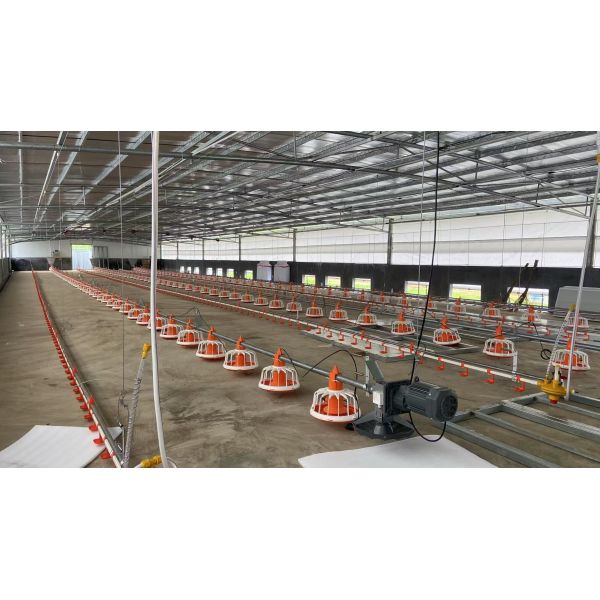
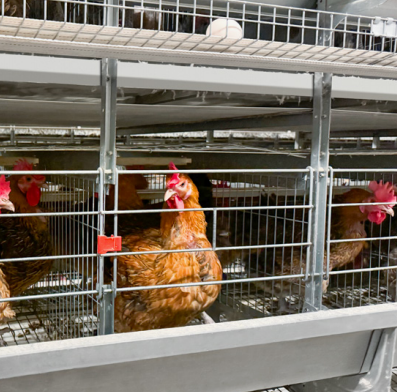
This CHICK REARING AND CAGE EQUIPMENT is engineered for brooding and growing pullets from day‑old to point‑of‑lay (0‑16 weeks). The cage frame and mesh are firmly welded with a rational structure, innovative design, advanced architecture, and high technical content. Elliptical feeding holes allow chicks to access feed comfortably while preventing escape. A water receiving cup positioned below each drinker captures drips, keeping manure belts dry and reducing ammonia. The inward push cage door is simple and reliable, featuring a wide and practical opening for easy bird catching and inspection. Three mainstream insulation methods are supported – water heating, floor heating, and air insulation – ensuring optimal brooding temperatures regardless of climate. This equipment maximizes early growth uniformity, lowers mortality, and prepares healthy pullets for transfer to laying cages.

| Parameter | Specification |
|---|---|
| Material | Q235 steel wire, firm welded frame + mesh (hot‑dip galvanized or electro‑galvanized) |
| Cage Configuration | 3 to 5 tiers stackable (single or double sided) |
| Single Cage Cell Dimensions (L×W×H) | 1200‑1500mm × 600‑800mm × 400‑450mm |
| Bird Capacity per Cell | 20‑40 chicks (depending on age and density) |
| Feeding Hole Type | Elliptical opening, anti‑escape design |
| Drinking System | Nipple drinker with dedicated water receiving cup |
| Cage Door | Inward push type, wide opening (300‑400mm width) |
| Manure Removal | Polyester belt conveyor (under each tier) |
| Insulation Methods | Water heating pipes, floor heating mats, or forced air insulation |
| Control System | PLC with temperature sensor (brooding zone 32‑35°C, weaning zone 22‑25°C) |
| Power Supply | 220V / 50Hz single phase (for ventilation and manure belt) |
Precise temperature zones – Water, floor, or air insulation maintains 32‑35°C at chick level without hot spots; sensor feedback adjusts heat output every 30 seconds
Elliptical feeding holes – Curve shape matches chick head movement; allows easy access but prevents chicks from climbing out, reducing feed spillage by 15%
Water receiving cup – Catches every drip; manure belt stays dry and light, extending belt life by 30% and lowering ammonia production
Inward push cage door – Wide opening (400mm) enables quick chick catching for vaccination or weight sampling; door springs back automatically
Adjustable floor height – Snap‑in plastic or wire floor panels can be raised as pullets grow, preventing leg strain
Ventilation integration – Mesh top allows warm air to rise and exit while cool fresh air enters from below, preventing floor drafts
Transitional feeding holes – Elliptical shape gradually enlarges as pullets mature (optional exchangeable front panels)
Anti‑perch water cup – Dome‑shaped receiving cup prevents birds from standing in water while still capturing drips
Stress‑free transfer – Wide door allows pullet removal without chase or restraint; compatible with transfer trolley to laying cages
Water Heating Insulation
Even temperature distribution – Hot water circulates through pipes beneath each cage tier; no cold corners in brooding zone
Low energy maintenance – Can be integrated with central boiler or solar thermal panels
Floor Heating Insulation
Direct contact warmth – Heating mats placed directly under chick resting area (not under manure belt) reduce heat loss through feet
Rapid response – Electric or hydronic floor mats reach target temperature in under 10 minutes
Air Insulation (Forced Air)
Fast installation – No under‑floor pipes or mats; uses existing barn furnace with ducted outlets to each tier
Combined ventilation – Warm air supply doubles as positive pressure ventilation during brooding
Firm welded frame – Robotic welding ensures uniform strength; no loose wires or sharp spurs
Rational structure – Weight‑bearing columns align with manure belt supports; no sagging even at 5 tiers
Advanced architecture – Modular connections allow expansion or reconfiguration without cutting or re‑welding
Inward push door seal – Door closes flush with front panel, leaving no gap for rodents to enter
Drip‑free manure belt – Water receiving cup prevents moisture from reaching belt, reducing bacterial growth (Salmonella, E. coli)
Easy wash design – All horizontal surfaces have slight slope (2°) for water runoff; no standing water after cleaning
Wide cage door access – Worker can reach entire cage depth (600‑800mm) without disassembling parts
Elliptical hole for feeding – Automated feeder chain passes through holes; no need to open doors for feeding, saving 2 hours per barn per day
Simple door mechanism – Inward push spring latch has only two moving parts; zero maintenance over 10 years
Uniform feed access – Elliptical holes spaced every 100mm along cage front; all chicks reach feed simultaneously, reducing size variation
Dry litter conditions – Water receiving cup eliminates wet spots on manure belt; no fecal fermentation beneath cages
Low chick mortality – Proper insulation + draft prevention + dry floors lower early mortality to under 2%
Broiler breeder pullet rearing – Precise weight control via adjustable feeding holes; prevents overeating in fast‑growing strains
Layer pullet rearing – High density stacking (up to 5 tiers) maximizes brooder house capacity before transfer to laying cages
Free‑range pullet preparation – Optional pop‑hole door on lower tier for outdoor access training from 6 weeks
Quarantine & isolated rearing – Solid side panels between cells for disease containment during disease‑prone brooding period
Centralized insulation control – One PLC manages water, floor, or air heating across all tiers; zone control for different age groups in same barn
Manure belt timer – Belt runs only when receiving cup is dry (humidity sensor triggered), saving energy
Alarm interface – Connect to farm management system for temperature drop, water leak, or door ajar alerts