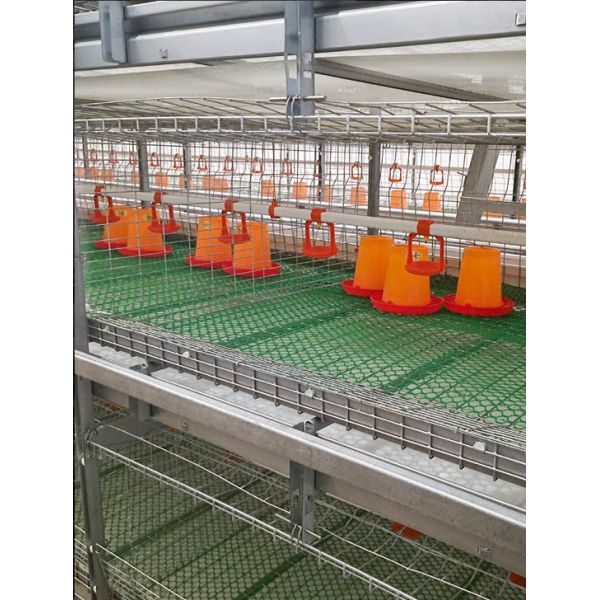
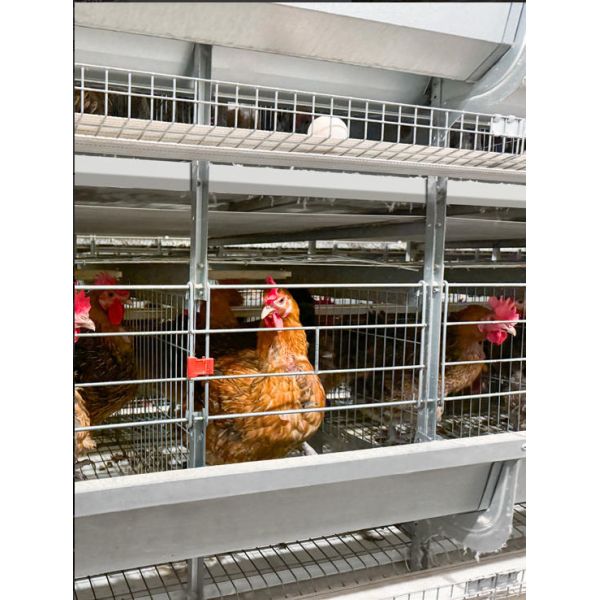
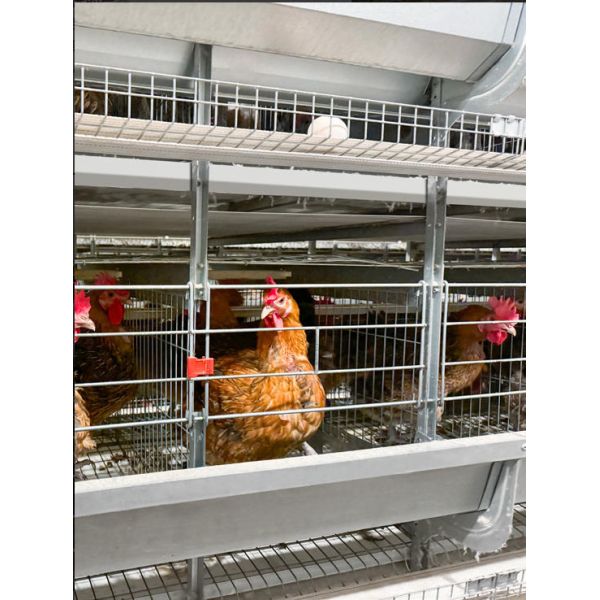
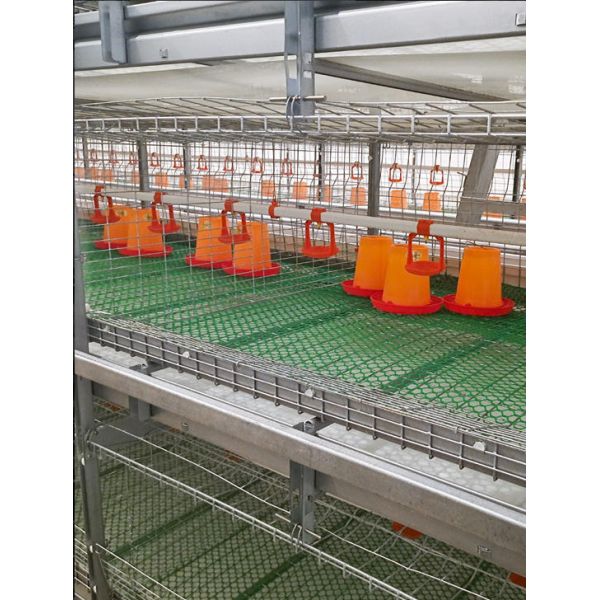
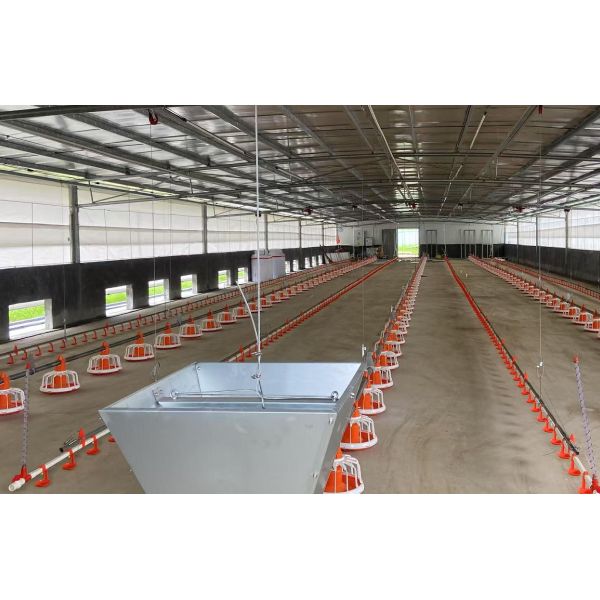
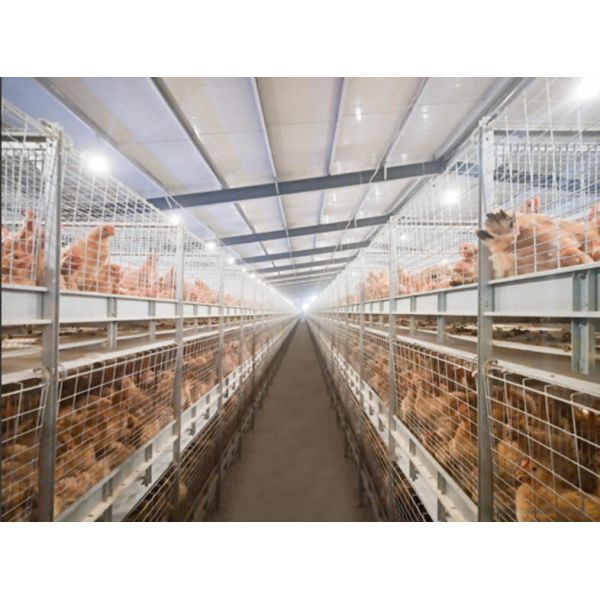
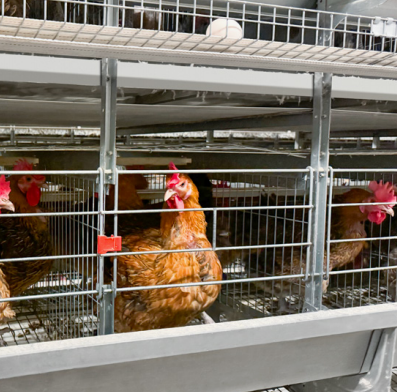
This Poultry Cage Equipment is engineered for intensive layer and pullet operations demanding long service life, precision feeding, and low labor input. The main frame uses aluminum‑magnesium‑zinc plated sheet with a 275g/m² galvanized layer, while cage wire is manufactured via aluminum‑zinc wire welding or post‑weld overall hot‑dip galvanizing for extended durability. The seeder type feeding machine features a hot‑dip galvanized sheet frame, ensuring corrosion resistance, stable precision operation, and long term reliability. A new style side longitudinal connection attaches closely to the bottom net with an outward facing design that completely prevents fecal leakage between tiers. The retractable homogenizer overcomes uneven feed dropping caused by sloped floors. An innovative thread rope clamp with anti‑loss design greatly saves labor and improves usage efficiency. The integrated edge sealing injection molded mesh works with a chicken blocking plate – it is comfortable, non‑damaging to chickens, prevents feces from leaking into lower feeding troughs, stops chicks from escaping, and is designed to save labor. The system supports manual, remote control, and timed automatic feeding, records cumulative feeding times, and displays the seeder’s walking distance, advancing toward fully unmanned intelligent poultry breeding.


Aluminum magnesium zinc plated sheet – 275g/m² coating provides superior corrosion resistance; self‑healing on cut edges, ideal for high‑ammonia poultry houses
Wire options – Choose aluminum‑zinc wire welding (lightweight, uniform) or post‑weld hot‑dip galvanizing (maximum joint protection) – both deliver 15+ year service life
Hot‑dip galvanized sheet frame – Resists feed acids and washdown chemicals; maintains dimensional stability over decades
Retractable homogenizer – Telescoping design compensates for uneven concrete floors (up to 50mm slope), ensuring identical feed depth across the entire cage row
Accurate feed control – Seeder mechanism delivers <2% variation in feed volume per linear meter, improving flock uniformity
Close fit to bottom net – Eliminates gaps where manure can accumulate, reducing cleaning frequency and ammonia buildup
Outward facing design – Directs spilled feed and droppings away from lower cages, keeping tiers below clean and dry
Anti‑loss design – Clamp remains attached to adjustment plate when loosened; no dropped or lost parts during tension adjustment
Quick one‑hand operation – Reduces seeder rope leveling time by 70%, allowing farm staff to focus on other tasks
Leak proof for chicks – Sealed front edge prevents day‑old chicks from squeezing through; no additional chick guards needed
Manure barrier for lower trough – Horizontal extension stops droppings from falling directly into feed troughs, keeping feed fresh and reducing disease transmission
Chicken blocking plate compatible – Smooth, rounded plastic edge prevents wing and leg injuries while blocking adult bird escape
Comfortable non‑damaging – No sharp burrs or pinch points; hens move freely without feather loss or skin abrasion
Labor saving design – Integrated mesh and blocking plate eliminate separate installation steps; clean in place with high pressure washer
Three operation modes – Manual for maintenance, remote control for flexible scheduling, timed automatic for daily routine
Cumulative feeding counter – Logs total feeding cycles per day/week; alerts if a cycle is missed, preventing underfeeding
Seeder walking distance display – Shows exact position (0‑150m) on control panel; enables targeted inspection when an error occurs
Path to fully unmanned – Seeder auto‑returns to home after each run; can be integrated with central farm management software for remote operation
Commercial layer houses – High density stacking with seeder feeder ensures uniform egg production across 5‑8 tiers; anti‑leak mesh keeps lower tiers free from upper‑tier droppings
Pullet rearing barns – Integrated edge sealing mesh contains small chicks (0‑4 weeks) without extra chick guards; retractable homogenizer adapts to floor variations common in older rearing houses
Breeder farms – Outward facing side connection prevents manure contamination of hatching eggs collected from lower belts; comfortable mesh reduces injury during pair handling
Unmanned pilot farms – Timed automatic feeding with cumulative counter and distance display allows one worker to manage multiple houses from a control room, advancing toward zero‑touch daily operation
Free‑range or organic transition houses – Seeder feeder can be programmed for multiple light‑phase feedings, matching natural foraging behavior when pop‑holes are open