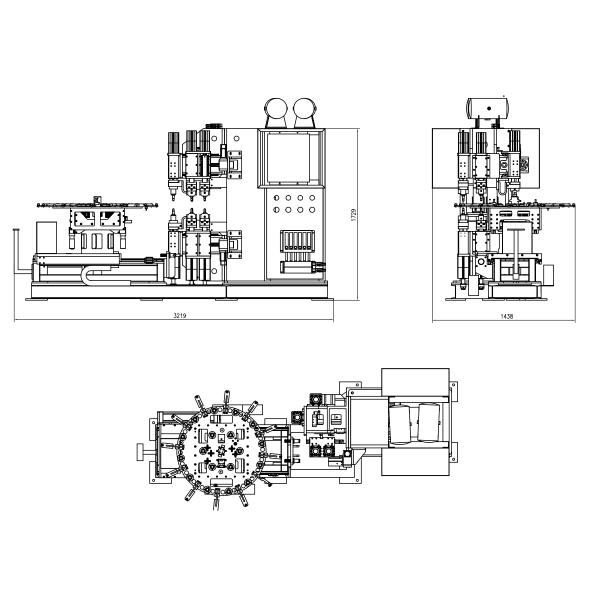
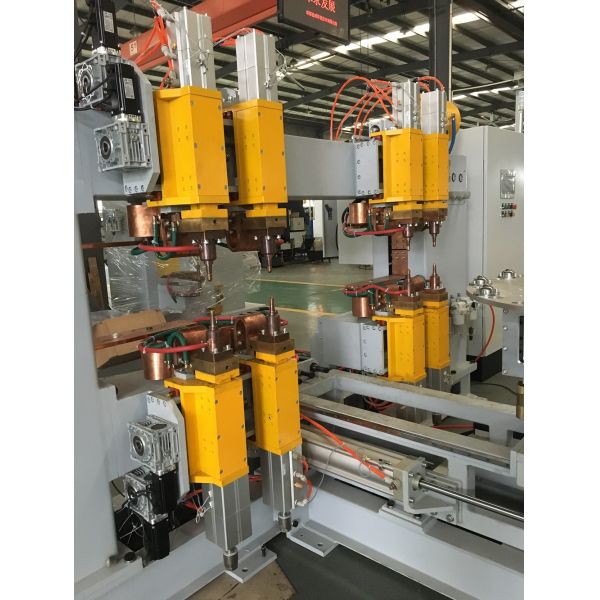
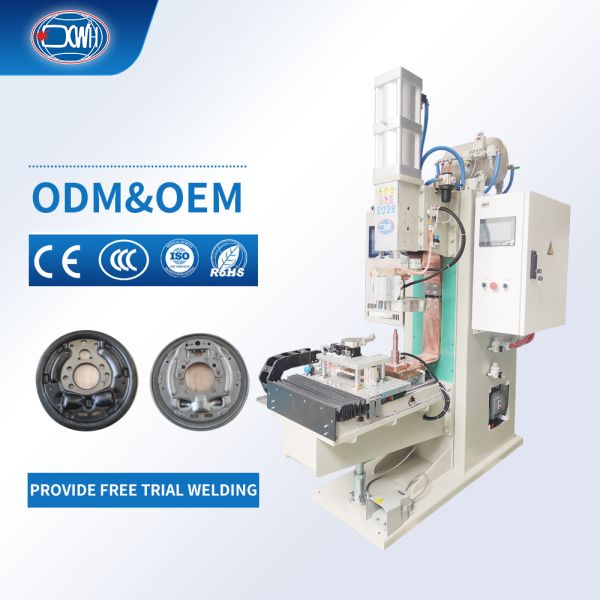
Motor casings and generator housings require tens to hundreds of spot welds on a single workpiece. Welding these points one at a time on a single-gun machine creates an unacceptable bottleneck: each index-and-weld cycle takes 3-5 seconds, and with 50+ weld points per part, cycle times stretch into minutes. Beyond throughput, sequential single-gun welding introduces cumulative thermal distortion as the workpiece heats unevenly from repeated localised heating.
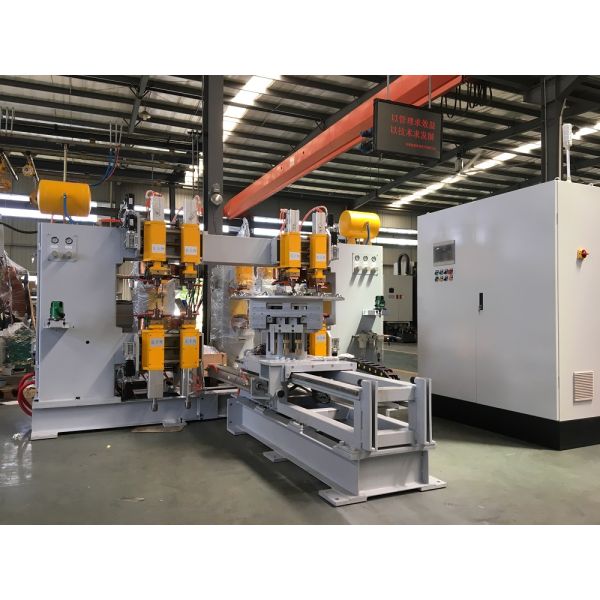
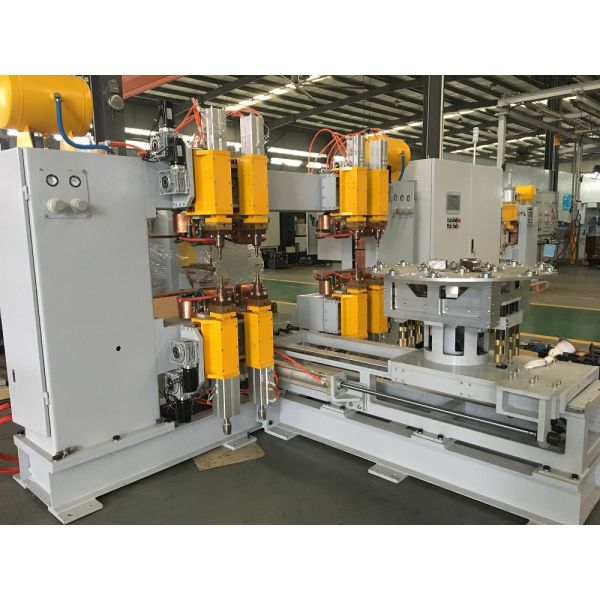
This Xinwei CNC multi-spot welder solves both problems through its multi-gun array architecture. Multiple coordinated welding guns, mounted on a rigid frame, execute weld points in programmed sequence as the workpiece indexes via servo drive. The CNC controller orchestrates which guns fire, at what parameters, and in what order. This parallelised approach reduces per-part cycle time by 60-80% compared to sequential single-gun welding while distributing heat input more evenly across the workpiece, minimising thermal distortion on precision motor components.
1. Multi-Gun Array with CNC Sequencing: 50+ Welds in One Cycle
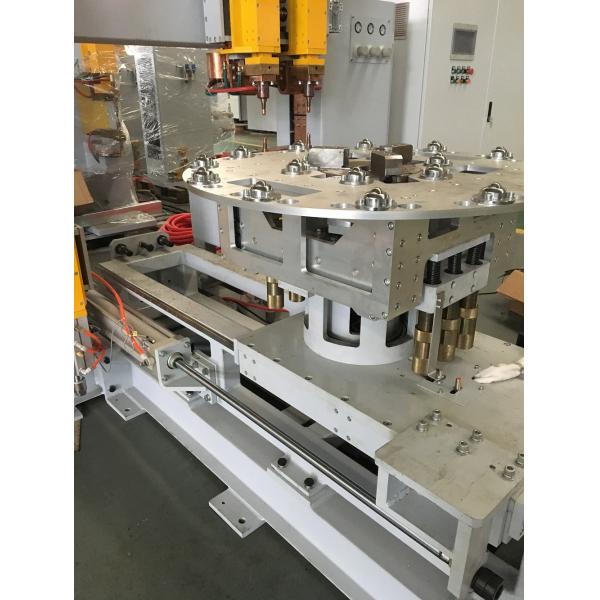
Instead of indexing the workpiece to a single gun for each weld point, multiple welding guns are pre-positioned around the fixture. The CNC controller fires guns in programmed groups as the workpiece indexes through servo-driven positions. This transforms what would be 50+ sequential cycles on a single-gun machine into a continuous automated sequence that completes all weld points in one pass. For motor casing production at scale, this is the difference between a bottleneck station and a line-paced operation.
2. 3-Phase Balanced Power: Stable Input for Multi-Gun Simultaneous Firing
Multi-gun welding places heavy demands on the power supply. The 3-phase input design balances the electrical load across phases when multiple guns fire simultaneously, preventing voltage sag that would compromise weld quality. This is a fundamental advantage over single-phase systems that would require sequential firing to avoid overloading a single phase, defeating the throughput benefit of a multi-gun architecture.
3. CNC Programmable: Flexible for Multiple Motor Casing Variants
The CNC control unit stores complete welding programs for each motor casing variant. When production shifts from one part number to another, the operator loads the corresponding program. The system automatically adjusts the firing sequence, weld parameters, and indexing positions. This makes the machine practical for manufacturers producing multiple motor models rather than a single dedicated high-volume line, protecting the investment against product changes.
4. Precision Pneumatic Pressurisation: Consistent Weld Quality Per Point
Each welding gun in the array is equipped with a precision pneumatic pressurisation system. The CNC controller sets individual force parameters per gun, allowing different weld points on the same workpiece to receive different electrode forces as the joint design requires. This level of per-point parameter control is essential for motor casings where weld positions on flanges, brackets, and mounting points each have distinct thickness and joint configurations.
● New Energy Vehicle Motor Casing Production
EV motor housings require dense multi-point welding for structural integrity and electromagnetic shielding. The CNC multi-gun approach delivers the throughput needed for automotive production volumes while maintaining consistent weld quality at every point. The stainless steel and aluminium compatibility supports both rotor and stator housing variants.
● Industrial Motor and Generator Housing Assembly
Large industrial motors and generator sets with complex housing geometries benefit from the programmable multi-point sequencing. The CNC controller handles the varying weld positions, joint thicknesses, and material combinations typical of industrial motor assemblies produced in medium batch sizes.
● Complex Metal Enclosure and Structural Assembly
Any sheet metal assembly requiring tens of spot welds in precise locations benefits from the multi-gun architecture. The CNC programmability and servo indexing make it suitable for components where weld position accuracy directly affects assembly fit and function.
Ready to Multiply Your Motor Casing Welding Throughput?
Send us your motor casing drawings for a custom multi-gun configuration study and free welding feasibility test.
info@xwweld.com | +86-13378111895