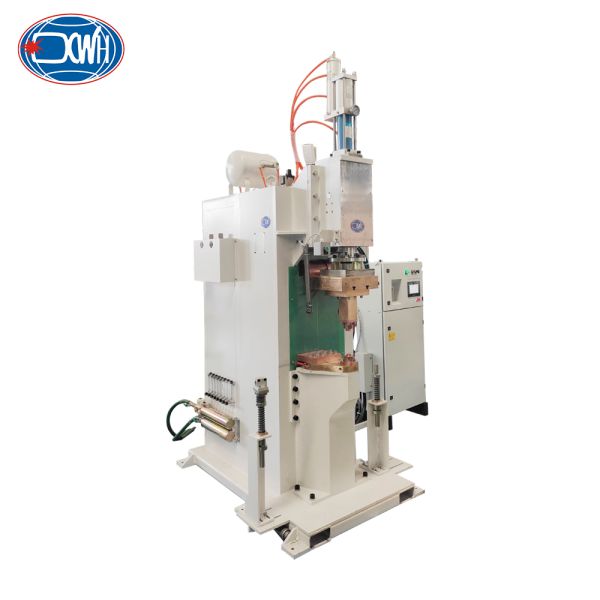
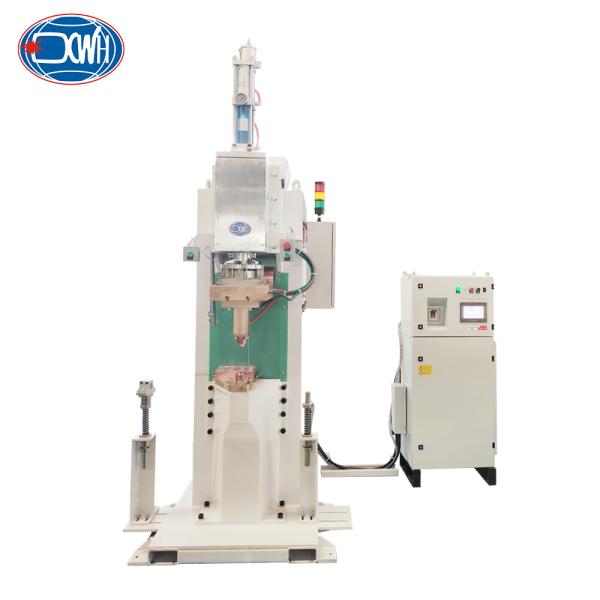
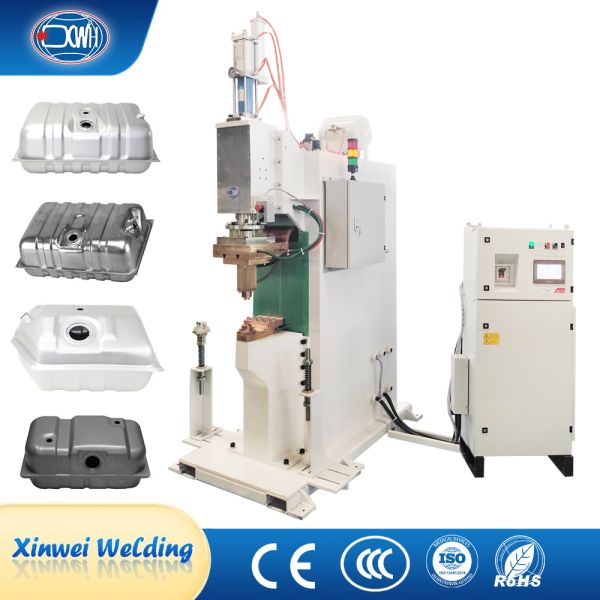
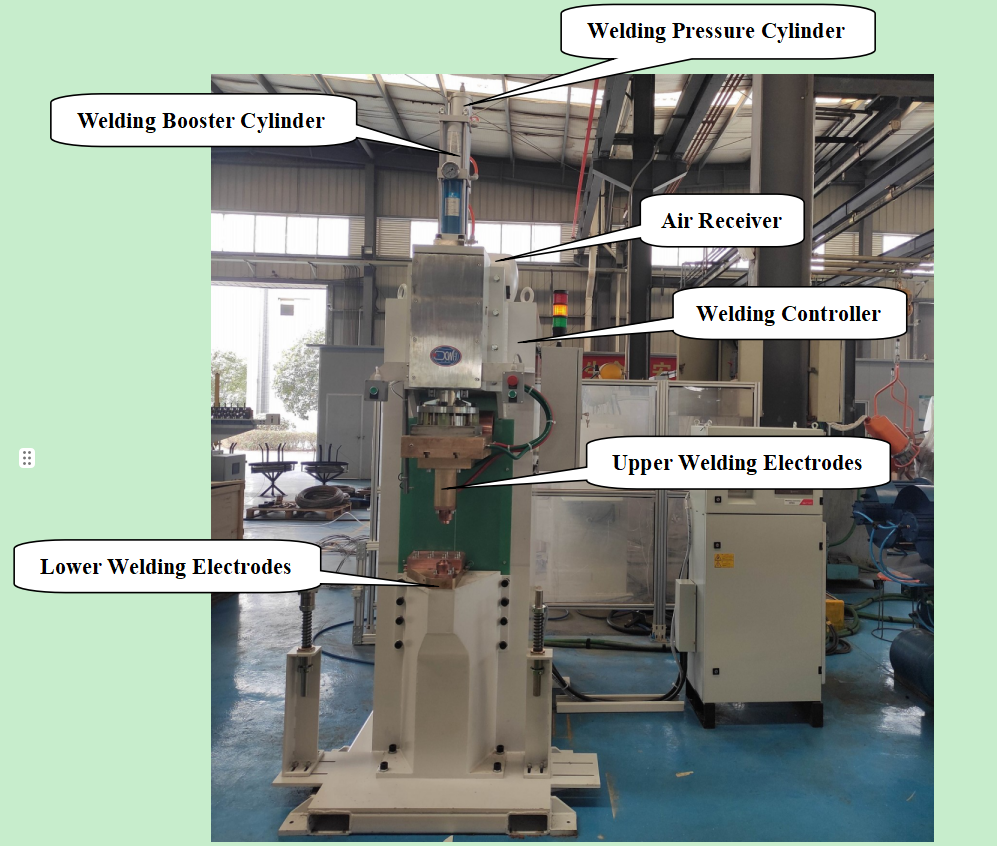
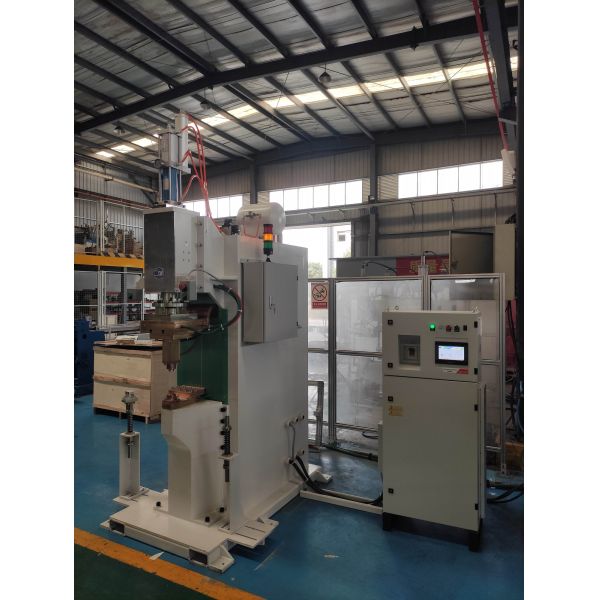
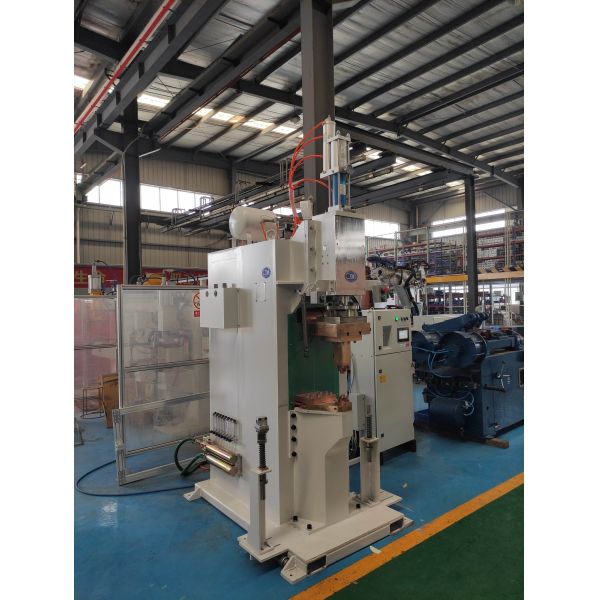
This semi-automatic projection welding system is purpose-built for fuel filler cap assembly, delivering a streamlined production flow that reduces operator learning time and boosts daily throughput. The machine integrates an ergonomic workbench with an optimized working height, minimizing fatigue during extended shifts. Clear status lamps together with an audible buzzer allow operators to monitor weld cycles accurately even in high-noise shopfloor environments.
Engineered with a rigid rib-reinforced frame and splash-proof enclosures, the unit maintains consistent weld quality across both job-shop and high-volume manufacturing scenarios. Routine cleaning and preventive maintenance are simplified by the accessible internal layout, while the fully water-cooled power train supports continuous duty operation. This welding station is a dependable choice for fuel tank fabricators and automotive component subcontractors seeking repeatable projection welds on coated and stainless materials.
The multi-rib reinforced structure absorbs shock and suppresses vibration during projection cycles, preserving electrode alignment and minimizing frame deflection. This mechanical stability translates into steady weld nugget formation and safer manual loading operations over long production runs.
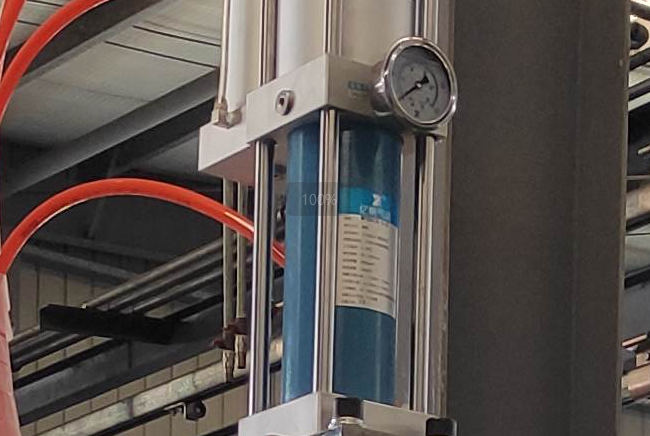
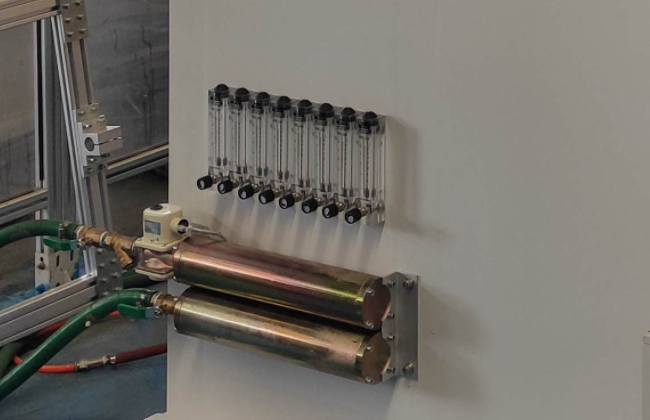
An integrated booster cylinder converts standard shop air into precise hydraulic electrode force with stepless adjustment. The built-in air reservoir cushions pressure dips during each weld, delivering repeatable clamping force without the cost or footprint of a standalone hydraulic unit.
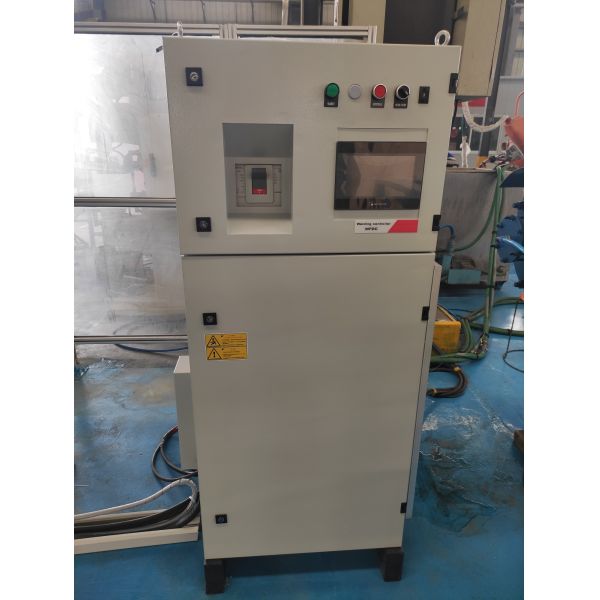
Air pressure and coolant flow switches continuously guard the welding process. If water supply is insufficient or air pressure drops below set thresholds, the control circuit halts operation to protect electrodes and the transformer from thermal or mechanical damage, supporting uninterrupted daily use.
The head advance and return speeds are independently adjustable, softening electrode contact on the workpiece and reducing impact noise. A lightweight aluminum cylinder barrel combined with low-friction seals and a high-flow pilot valve provides quick follow-up response for elevated cycling rates.
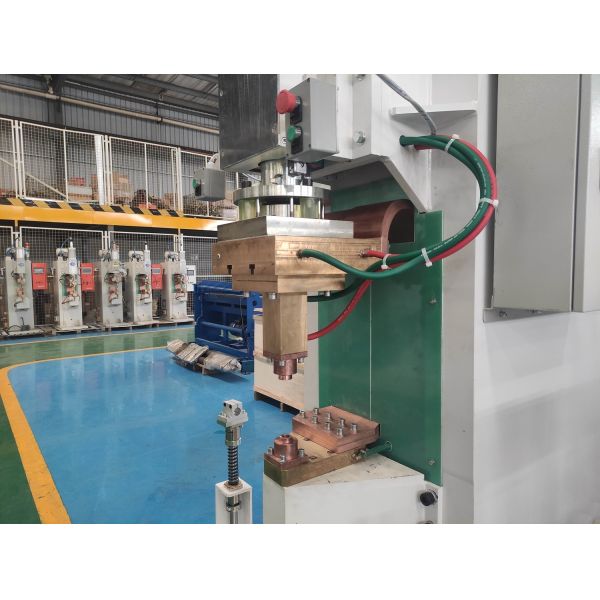
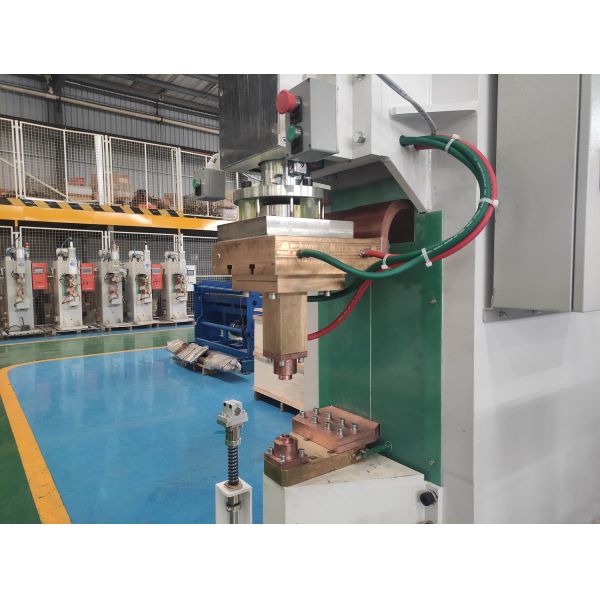
The pressure cylinder base and upper arm feature a dedicated insulation design, allowing direct mounting on metal machine bases without short-circuit risk. This simplifies site commissioning and reduces installation preparation time for production managers and maintenance staff.
A fully water-cooled transformer and rectifier assembly delivers stable output during continuous, high-duty-cycle work. Effective heat dissipation maintains consistent electrical performance and improves overall energy conversion, helping workshops keep utility costs in check.
| Industry | Typical Workpiece | Welding Mode |
|---|---|---|
| Automotive Fuel Systems | Fuel filler cap assemblies | Projection welding |
| Tank & Container Fabrication | Neck rings, brackets, reinforcing plates on fuel tanks | Multi-projection welding |
| Stainless Steel Components | Stainless brackets, covers, small housings | Resistance projection welding |
| General Metal Fabrication | Nuts, studs, plates requiring precise weld location | Pneumatic projection welding |
The workpiece is placed on the lower electrode with pre-formed projections positioned at weld locations. A pneumatic-hydraulic booster drives the upper electrode downward, applying controlled clamping force. Simultaneously, a high-current, low-voltage pulse from the water-cooled transformer passes through the contact points. The resistance heat at each projection melts the material while the applied force collapses the projections, forming a solid nugget. The entire sequence is governed by a digital control unit that manages squeeze time, weld time, hold time, and current levels for consistent results.
| Parameter | Unit | DN(B)-100 | DN(B)-160 | DN(B)-200 | DN(B)-250 |
|---|---|---|---|---|---|
| Rated power (KVA) | KVA | 100 | 160 | 200 | 250 |
| Power input (V) | V | 3φAC 380V | 3φAC 380V | 3φAC 380V | 3φAC 380V |
| Max. short circuit current (KA) | KA | 30 | 35 | 40 | 45 |
| Duty cycle | % | 50 | 50 | 50 | 50 |
| Max. force | N | 6000 | 6000 | 10000 | 15000 |
| Electrode length | MM | 450 | 450 | 450 | 500 |
| Working stroke | MM | 80 | 80 | 80 | 80 |
| Cooling consumption | L/min | 20 | 20 | 20 | 20 |
| Max. welding capacity | MM | 3.0+3.0 | 4.0+4.0 | 4.0+4.0 | 6.0+6.0 |
Yes. The digital controller allows precise adjustment of weld current and time, making the machine flexible enough for stainless steel and coated aluminum workpieces. We recommend sending samples for a welding test to confirm the optimal parameter set.
The machine can be configured for 3φAC 380V, 220V, or 440V according to your facility power supply. Kindly indicate your local voltage when requesting a quotation.
With the fast-response pneumatic system, the complete projection welding cycle typically completes in 2–5 seconds depending on material thickness and projection design. This supports efficient production lines for fuel filler caps.
Routine checks cover electrode tip wear, coolant flow and level, air filter condition, and general cleanliness of the splash-proof enclosure. Our support team provides a maintenance checklist with clear intervals.
Yes. Our engineers can tailor the workbench, electrode holders, and tooling to match your filler cap design and production output. Send your drawings and target capacity for a custom solution proposal.
Send us your workpiece drawings and production requirements. Our engineering team will evaluate your application, configure the optimal solution, and provide a detailed proposal with electrode design and automation integration options.
Send Drawing | Request Welding Test | Get Custom Solution