1. Product Overview
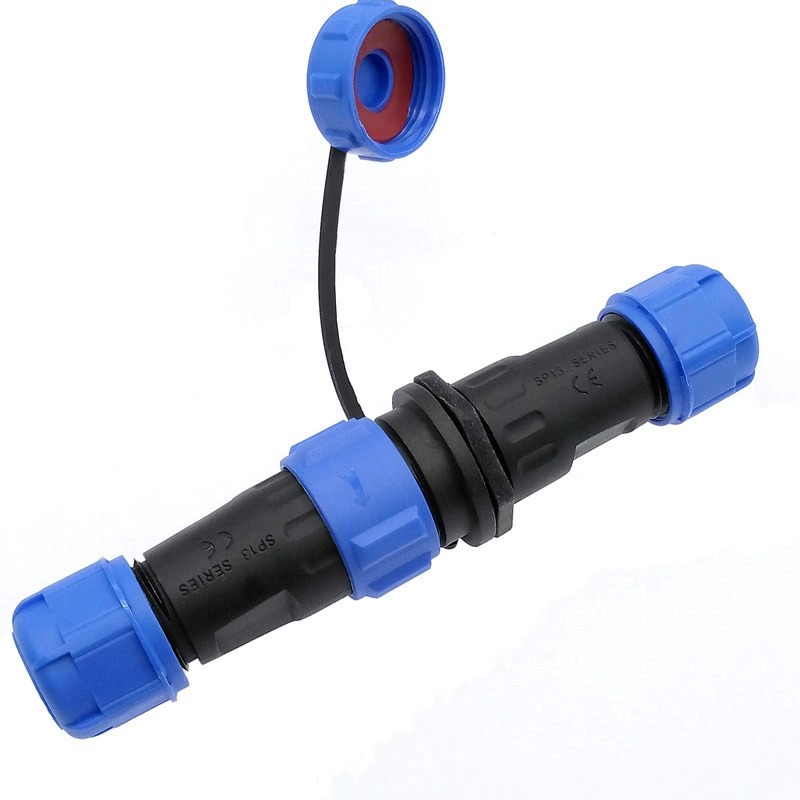
The M16 Board-End Connector (also called M16 panel-mount receptacle, M16 flange socket, M16 PCB-mount circular connector) is the enclosure-faceplate interface of the 16 mm-class threaded circular system, built to IEC 61076-2-106 / IEC 60130-9. It brings field-side power and signal through the enclosure wall and directly onto the control board via an M16×1.0 coupling face and an M18×0.75 panel thread, with a rear tail terminated as 180°/90° PCB DIP pins, solder cups, Faston tabs, or flying leads. When mated with a standard M16 field plug, the panel penetration stays IP67 (optional IP68) sealed. It sits between M12 (≤4 A) and M20 (≥20 A): up to 7 A on 2/3-pin at 250 V, 6 A on 4-pin, 5 A on 5–8-pin, down to 1 A on 24-pin, covering 24 VDC aux buses, sensor clusters, encoder+power combos, PROFIBUS B-code, and AISG/RET telecom lines without jumping to a larger shell.
2. Buyer-Focused Selling Points
One sealed board landing, no internal splice: Panel O-ring + M16 threaded lock give IP67 at the sheet-metal wall; rear tail is PCB pin / solder cup / fly-wire, so your SMT or THT line places it like any other board connector—no flying leads through a PG gland, no internal terminal block, no loose ends inside the cabinet.
Up to 7 A / 250 V in a 16-mm faceprint: 2/3-pin 7 A 250 V, 4-pin 6 A 250 V, 5-pin 6 A 60 V, 6–8-pin 5 A, 12–24-pin 1–3 A—covers 24 VDC sensor power, IO-Link aux, small AC/DC motor feed, PROFIBUS B-code (5/7/14-pin), and AISG C485 antenna lines in one footprint.
Coding prevents mis-mate: A-code (power/sensor), B-code (PROFIBUS/AISG/fieldbus), keyed inserts stop L/N/G or TX/RX reversal on site.
Front / rear / flange mount + straight/90° PCB: Front-lock nut behind thin cover, rear-lock for thick doors, 4-hole square flange for welded enclosures, 180° DIP or 90° elbow saves depth on dense boards.
Industrial contacts & shell: Phosphor-bronze / brass, gold flash (3 µ"+), ≤5 mΩ contact R; PA66+GF insert, Ni-plated brass or Zn-diecast shell with 360° shield option on B-coded builds; -40 °C to +85/+105 °C, 500–600+ mating cycles, UL94-V0, CE/RoHS/REACH, UL1977/UL2238 on major-brand SKUs.
Lower BOM than "gland + TB": One reeled SKU replaces panel gland + internal terminal block + strain relief + fly-wire; cleaner EMC, faster harness build, re-openable for RMA without cutting the external cordset.
Field repairable: Unscrew the M16 field plug; the flange receptacle stays bolted to the panel—swap the PCB, keep the harness.
3. Key Features
Coupling: M16 × 1.0 plug face, M18 × 0.75 panel thread, knurled nut (PA or Ni-brass)
Mount: front-panel / rear-panel / 4-hole square flange; tail 180° PCB DIP, 90° DIP, solder cup, Faston 6.3, fly-wire (22–28 AWG)
Gender: female socket (board side) standard; male pin available
Coding: A / B (keyed), non-coded option
Pins: 2 / 3 / 4 / 5 / 6 / 7 / 8 / 12 / 14 / 16 / 19 / 24
Shell: PA66+GF (black/grey) or Ni-plated Zn-diecast / brass; shielded & unshielded
Seal: silicone O-ring face + epoxy-sealed rear cavity (molded), optional cap when unmated
Wire tail: 0.05–1.0 mm² (30–20 AWG) DIP/solder; ≤1.0 mm² on 7 A 2/3-pin builds
4. Typical Specifications
Parameter
M16 board-end class
Standard
IEC 61076-2-106 / IEC 60130-9
Coupling / panel cut-out
M16×1.0 face / M18×0.75 thread (~17.1–18.1 mm hole)
Pins
2–24 (common 3/4/5/6/8)
Coding
A / B / none
Rated current
7 A (2/3P), 6 A (4P), 6 A (5P A), 5 A (5–8P), 3 A (12–19P), 1 A (24P)
Rated voltage
250 V (2–4P), 125 V (5/7P), 60 V (8–12P), 30 V (14–24P)
Contact resistance
≤ 5 mΩ
Insulation resistance
≥ 100 MΩ @ 500 V DC (≥10¹⁰ Ω premium)
Withstand voltage
1500 V AC / 1 min
Protection
IP67 mated (IP68 opt.)
Operating temp.
-40 °C … +85 °C (static +105 °C on some builds)
Shell
PA66+GF V0 / Ni-Zn brass
Mating cycles
≥ 500 (std) / 600+ (premium)
Certs
CE, RoHS, REACH, UL1977/UL2238 (binder/Amphenol class)
5. Competitive Advantage vs Alternatives
vs M12 board-end: +75% current (7 A vs 4 A), up to 24 pins, larger cable OD, same panel-seal logic
vs PG gland + internal terminal block: coded keying, sealed face, PCB-direct tail, 50% fewer internal parts, no loose wire ends in the cabinet
vs D-sub / RJ45 on door: M16 threaded lock survives vibration, hose-down, oil mist; B-code carries PROFIBUS/AISG natively
vs buying pre-wired feed-thru: flange PCB version is placed by your SMT line with the rest of the BOM—no hand-wiring the panel connector
6. Applicable Places & Uses
PLC / DCS / IO cabinets: 24 VDC sensor power rows, valve island headers, IO-Link master ports, encoder combos
Industrial communication: PROFIBUS B-code 5/7/14-pin, CANopen, RS-485 faceplate ports
Machine power entry: small AC/DC motor aux, 230 VAC 3-pin panel feed, 48 VDC battery bus tap on control board
Telecom & AISG: antenna RET/ACT lines, 5G outdoor radio aux, AISG C485 compliant (Amphenol C091-M16 class)
Outdoor enclosures: streetlight controller box, solar combiner panel, P