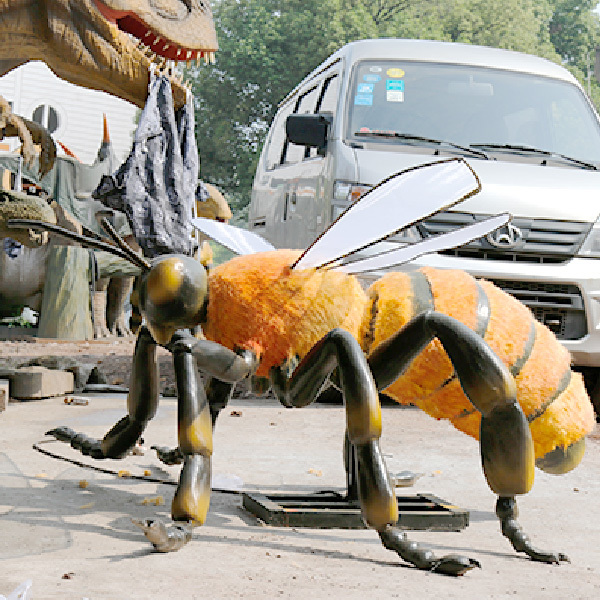
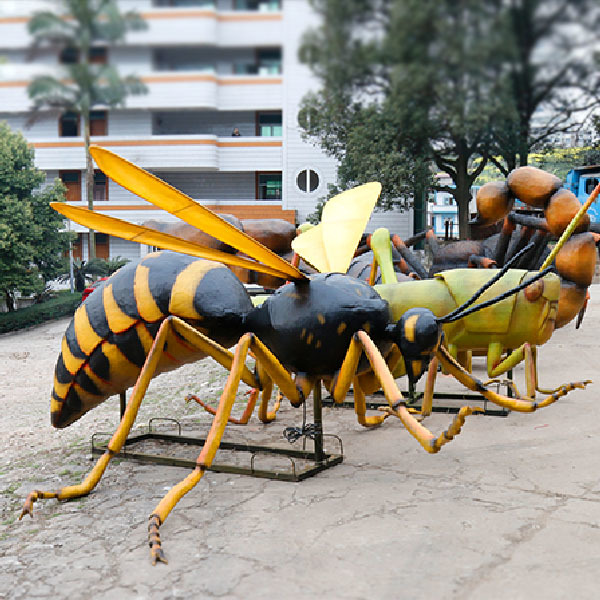
Giant Size Insect Honey Bee Animatronic Wasp Realistic Speciman Model
Discover the intricate world of pollinators and predators with our Giant Honey Bee & Wasp Animatronic Realistic
Specimen Models—an awe-inspiring, educational, and visually stunning exhibition series that magnifies nature’s
most sophisticated insects to larger-than-life scale. Designed for museums, botanical gardens, science centers,
and environmental exhibitions, these models combine breathtaking anatomical accuracy, dynamic motion, and
interactive learning in one immersive installation.
| Items | Parameters |
| Size | Giant Size |
| Movements | 1. Mouth open and close; 2. Head left to right; 3. Roaring |
| Control | Infrared Sensor |
|
Material | 1. Rust-proof treated mechanical steel frame; DC motor(24V weak power, no harm to human body); 2. Surface material: high density foam, silicone rubber, etc. 3. Artificial fur |
| Power | 110v or 220V |
| Certificates | CE, ISO |
| Loading Port | Chengdu, Chongqing, Shanghai, Guangzhou, Shenzhen, Ningbo |
| Transportation | By Sea, Railway, Air |
| Warranty | 12 months |
Certificates

Product Showcase


Motion & Behavior Profiles
Honey Bee Behavior Modes:
1. Pollination Sequence: Flying from flower to flower with pollen transfer simulation
2. Waggle Dance Demonstration: Communicative “dance” patterns that teach navigation
3. Hive Defense Posture: Gentle warning displays without aggressive motion
4. Resting & Grooming: Detailed self-cleaning animations showing leg-antennae coordination
Wasp Behavior Modes:
1. Predator-Prey Interaction: Simulated hunting of smaller insect models (grasshopper)
2. Nest Construction: Paper-pulp gathering and hexagonal cell building demonstration
3. Aerobatic Flight: Sharp turns, hovering, and rapid directional changes
4. Colony Alert State: Group coordination behavior when paired with multiple wasp models
Exhibition Integration Ideas
Solo Installation:
-
Pollinator Pavilion Centerpiece: Bee model surrounded by giant flower sculptures
-
Predator’s Perspective Exhibit: Wasp model in attack pose with dramatic lighting
-
Size Comparison Walkway: Visitors walk underneath suspended models
Dual Exhibition – “Nature’s Balance”:
-
Two models facing each other in interactive dialogue
-
Shared educational console comparing ecological roles
-
Timed “encounter” sequence showing natural interactions
Immersive Environments:
-
Bee Meadow: Full sensory experience with flower scents, warm lighting, meadow sounds
-
Wasp Woodland: Dappled light, paper nest sculptures, interactive prey-selection game
-
Laboratory Setting: Models presented as “giant specimens” with measurement tools and dissection overlays
Why These Models Transform Insect Exhibitions
✅ Science as Spectacle: Turns intricate biology into visceral, memorable experiences
✅ Fear Reduction: Gentle bee model and fascinating wasp behavior demystify misunderstood insects
✅ Multi-Generational Appeal: Engages children through scale and motion, adults through sophistication
✅ Curriculum Alignment: Supports STEM learning standards in entomology, ecology, and biomechanics
✅ Photographic Magnet: Creates viral social media moments that increase exhibition visibility
✅ Research Value: Can be used for actual biomechanics study and public perception research
Support & Development Services
1. Exhibition Design Partnership: Collaborative development of full exhibit storyline
2. Educational Material Development: Lesson plans, activity guides, and teacher resources
3. Technical Training: On-site training for museum staff on operation and basic maintenance
4. Traveling Exhibition Packages: Custom crating and installation protocols for touring
5. Digital Extension Content: Companion apps, virtual tours, and online learning modules
A New Standard in Entomological Exhibition
These giant animatronic specimens represent more than technological achievement—they are ambassadors for understanding, transforming insects from overlooked or feared creatures into subjects of wonder, respect,
and scientific curiosity. By experiencing their magnified beauty and complexity, visitors gain new appreciation
for these essential components of our world’s ecosystems.
Ready to bring these giant pollinators and predators to your institution? Contact our exhibition
development team for detailed proposals, funding support documents, and interactive demonstrations.
Let’s create an exhibition that doesn’t just display insects—it reveals their extraordinary world.