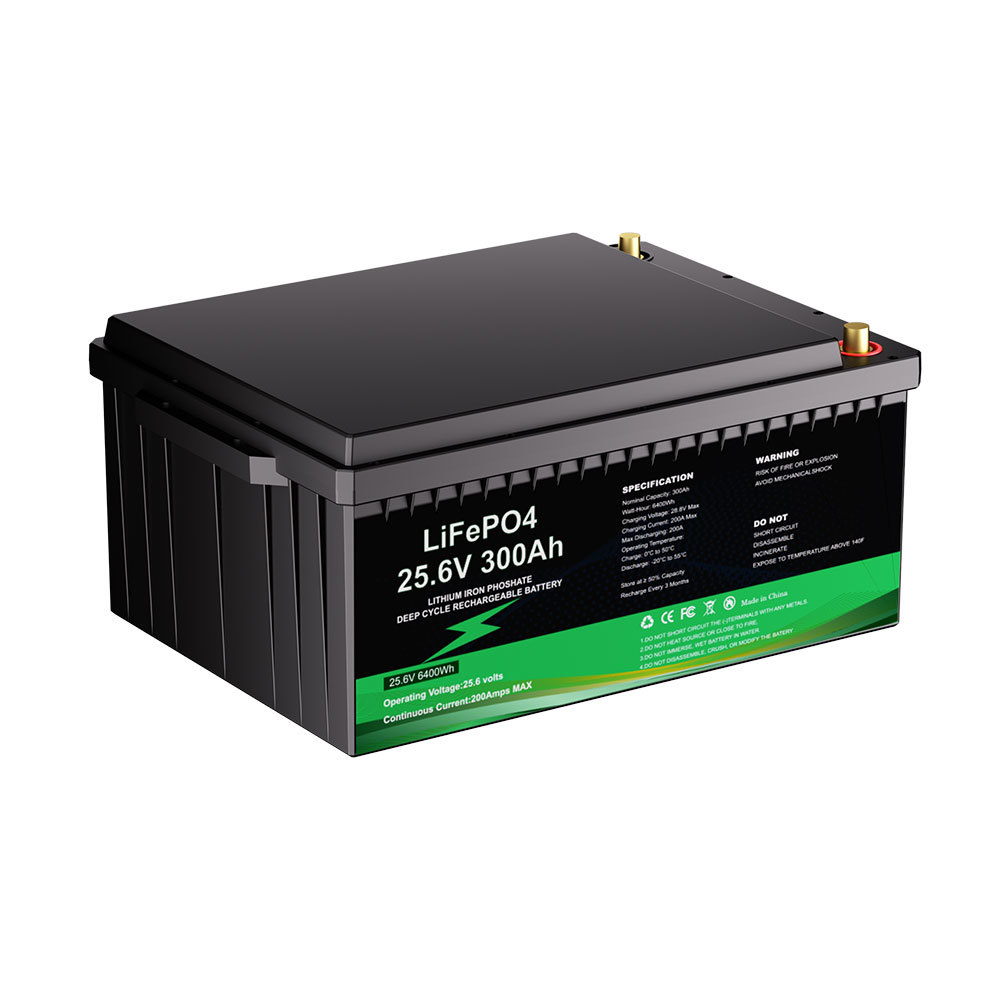
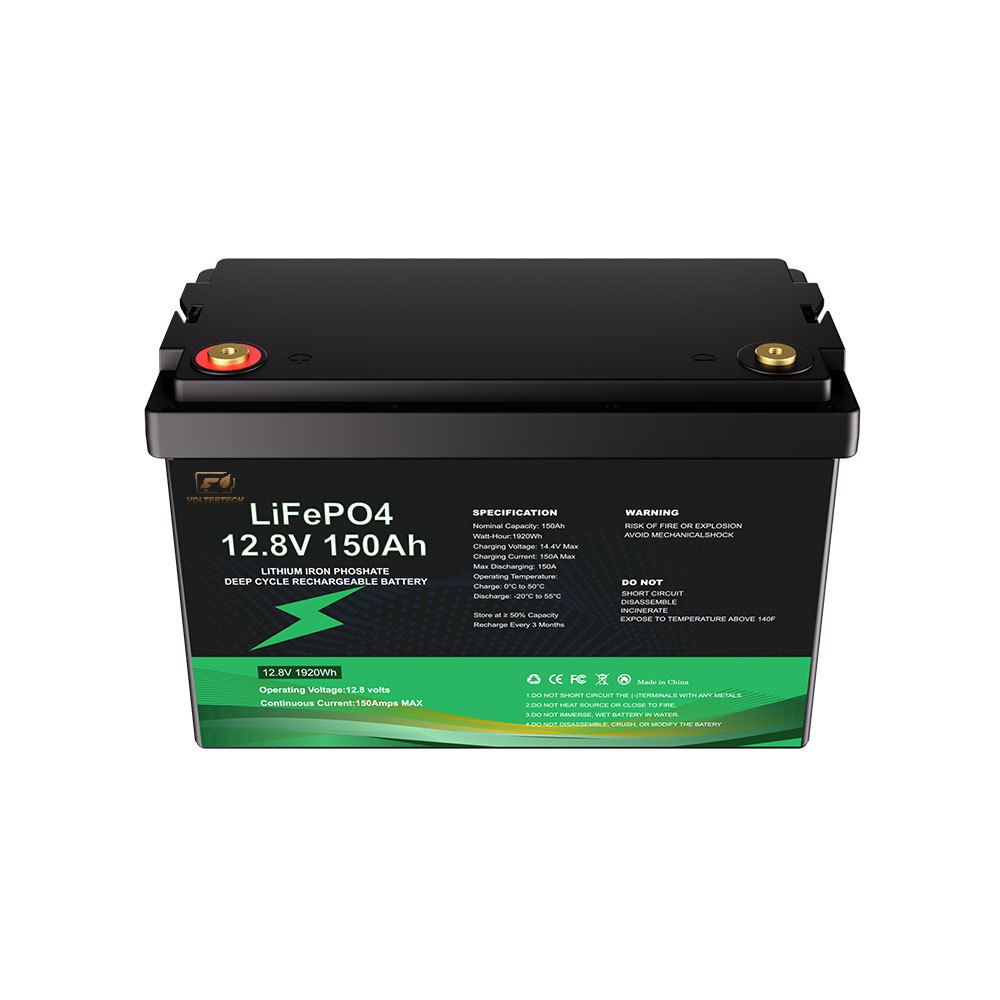
7.68kWh 25.6V 300Ah LiFePO4 Battery for Large 24V Energy Storage Systems
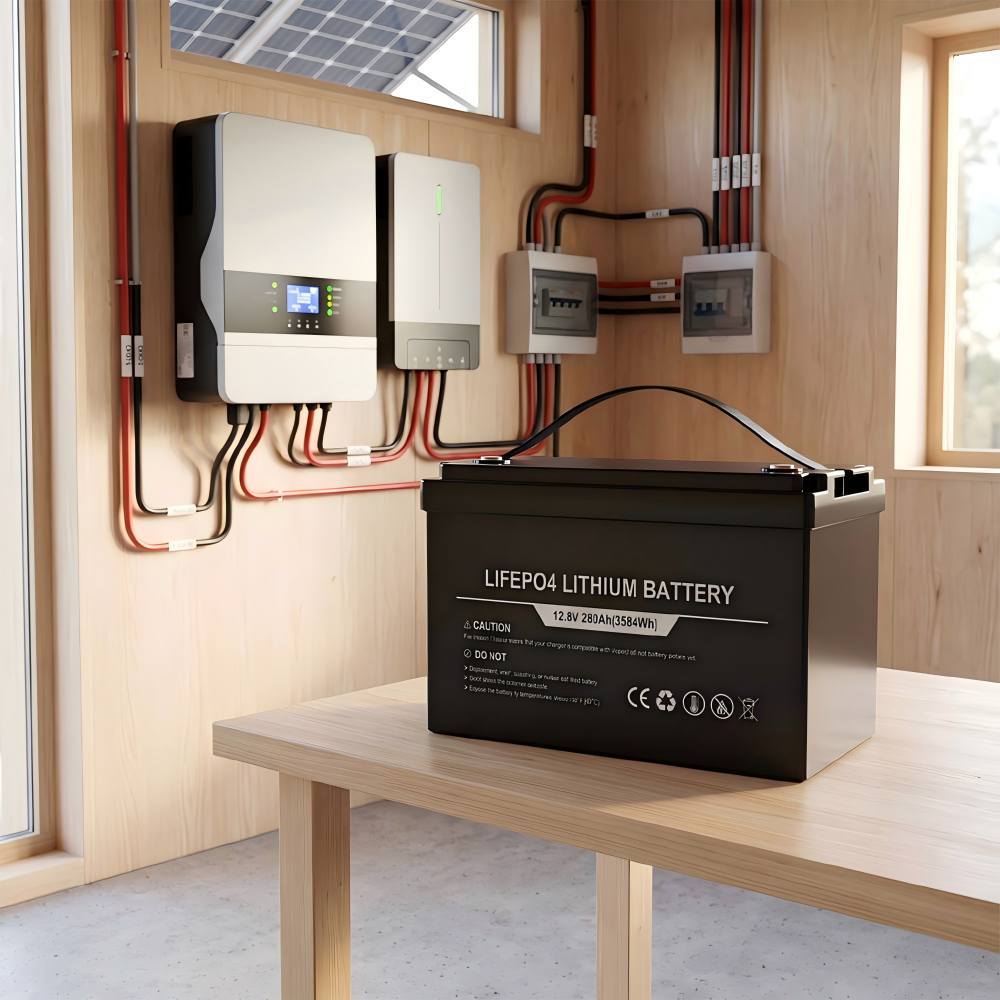
This 25.6V, 300Ah LiFePO4 battery provides 7.68kWh of nominal energy for larger 24V-class solar, wind, UPS and emergency energy-storage systems.
It is the highest-capacity 25.6V option in this series and is intended for projects requiring a longer operating period without moving to a 48V battery platform.
The 7.68kWh capacity can support extended energy use by selected communication, lighting, security, medical-support and inverter loads.
Required capacity should be calculated from daily kilowatt-hour consumption. Inverter efficiency, retained reserve and battery operating conditions affect usable energy.
Rated charge and discharge current is 200A. Rated battery-side power is 5.12kW, with 205A and 5.24kW listed for one second.
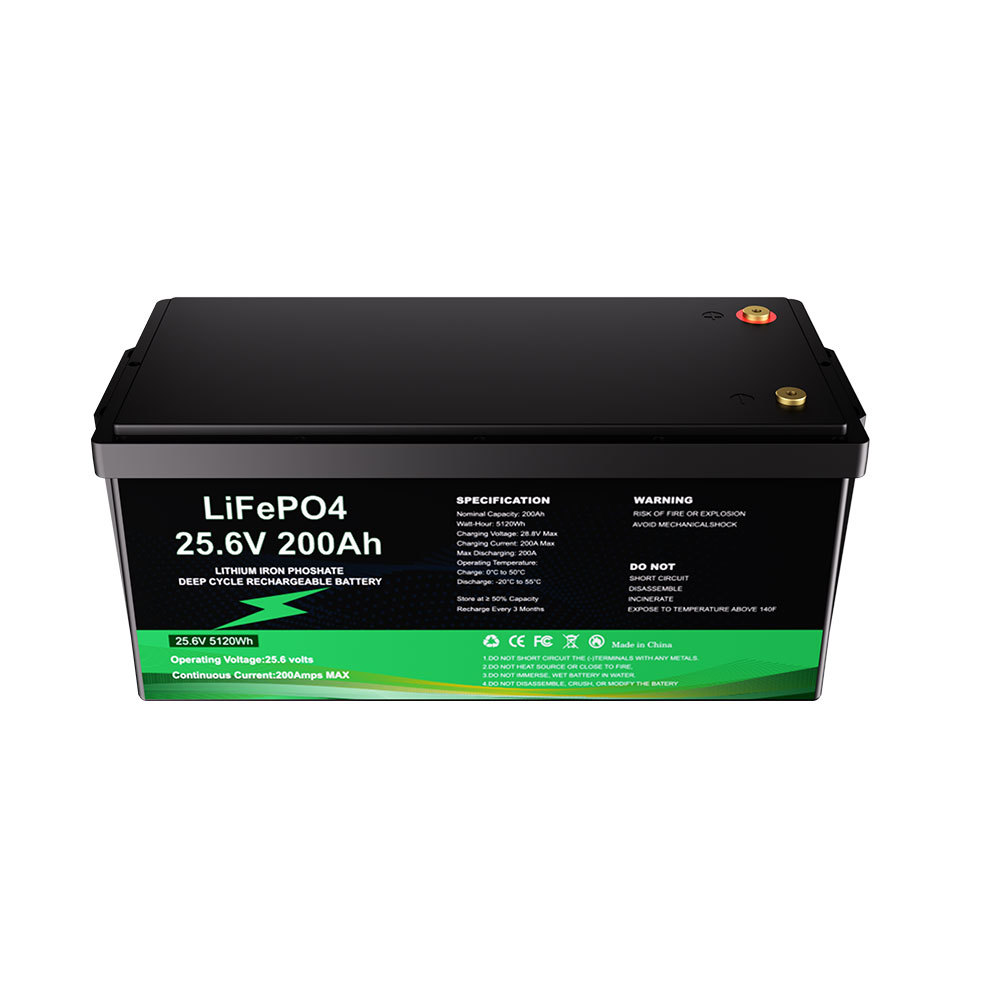
Although the 300Ah model stores more energy than the 200Ah version, both share the same listed power platform. The principal benefit is therefore a longer potential operating period.
The solar controller, inverter charger or AC charger should be sized to restore the energy used within the available charging window.
The battery weighs approximately 48kg. Ground placement, handling access, M8 cable connections and the final protected position should be prepared before delivery.
| Nominal Rating | 25.6V / 300Ah / 7.68kWh |
| Cell and BMS Configuration | 8S1P / 8S200A BMS |
| Listed Operating Range | 25.6–26.4V |
| Current Capability | 200A Rated / 205A for 1 Second |
| Power Capability | 5.12kW Rated / 5.24kW for 1 Second |
| Cycle Reference | At Least 6000 Cycles at 80% DOD and 25°C |
| Expansion and Display | Two Series / Four Parallel Listed / Battery Display |
| Dimensions and Weight | 524 × 365 × 232.5mm / 48kg |
| Operating Environment | IP67 / Charge 0°C to 50°C / Discharge -10°C to 60°C / ≤2000m |
It is suitable when the smaller models cannot provide the required energy reserve or operating period.
No. It is nominal DC energy before inverter losses, battery settings and retained reserve.
Compare the daily discharged energy with the available solar or AC charging power and charging time.
IP67 protection still requires correctly protected terminals, cables and a stable installation environment.
Provide the inverter or controller model, daily consumption, maximum current, recharge window and project quantity.
Send the energy-use profile and charging-source data to review whether the 7.68kWh configuration suits the project.