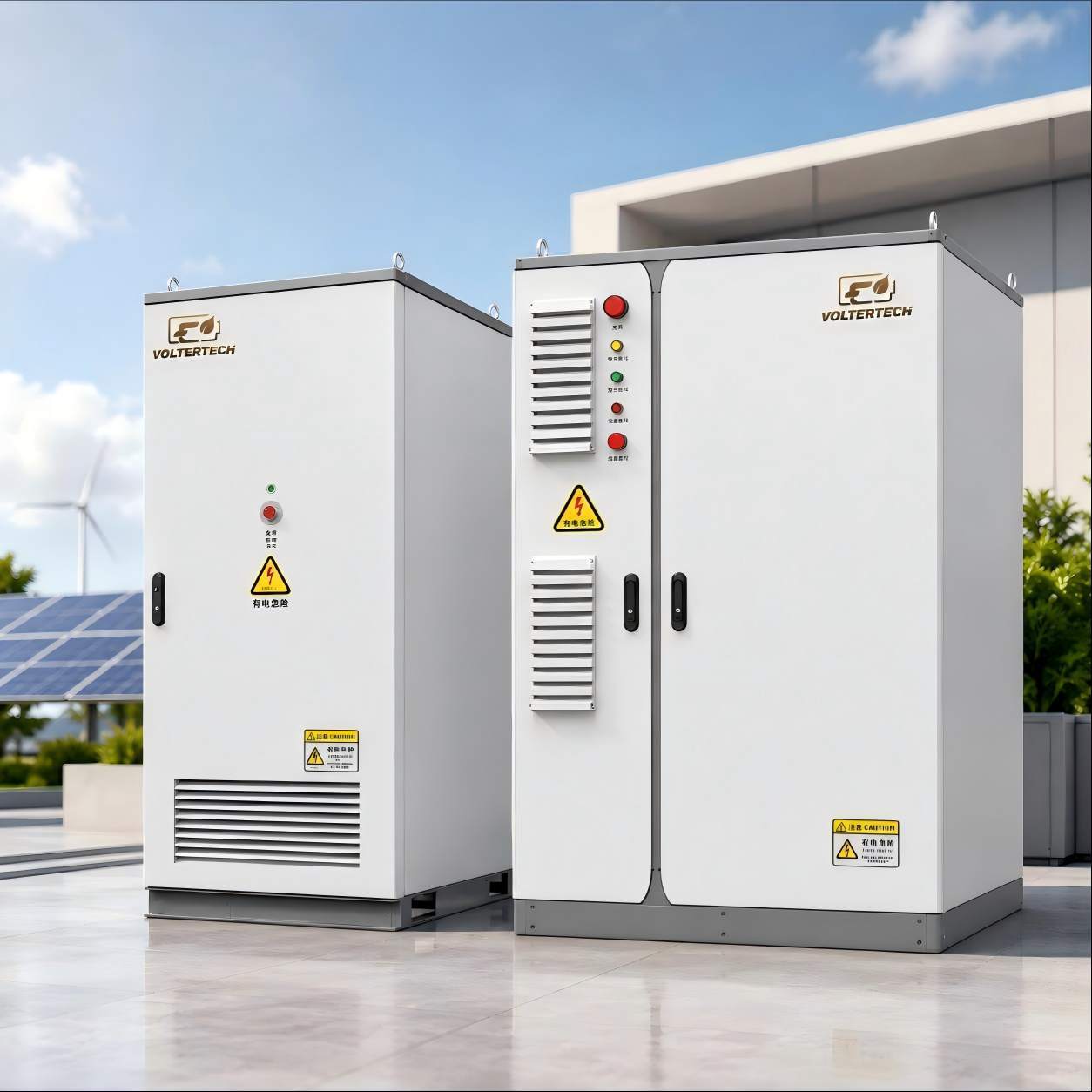
The 215kWh Liquid Cooling C&I Energy Storage System with 100kW PCS is designed for commercial and industrial energy storage projects that require both substantial battery capacity and controlled power conversion within a single project configuration.
The system combines 215kWh of LiFePO4 battery energy with a 100kW rated PCS. Its battery section operates at 768V nominal voltage with a 648–864V operating range and uses liquid cooling for thermal management.
The two main ratings describe different parts of the energy storage system.
The 215kWh figure represents battery energy capacity, while the 100kW PCS rating represents the rated power at which energy can be converted on the AC side.
The relationship between energy capacity and power makes this configuration a useful reference point when evaluating approximately two-hour commercial and industrial storage requirements.
If the site does not continuously use the full 100kW rated output, the nominal energy duration becomes longer.
These figures are simple calculations based on 215kWh nominal battery capacity. They are not guaranteed discharge durations and do not include system losses or reserve settings.
Commercial and industrial energy storage should be selected according to the site's load profile, grid connection, operating schedule and energy management objective.
The battery section uses LiFePO4 chemistry with a nominal capacity of 280Ah and nominal system voltage of 768V.
The specified battery operating voltage range is 648V to 864V. Nominal charging current and nominal discharging current are both listed at 140A.
These electrical parameters should be considered together with the PCS and complete DC-side design when planning a commercial energy storage project.
The supplied parameter sheet specifies liquid cooling as the battery cooling method.
For C&I energy storage projects, thermal management is an important part of maintaining controlled battery operating conditions during repeated charging and discharging.
The system operating temperature range is specified from -20°C to +60°C, while the storage temperature range is -30°C to +45°C.
The PCS section of the supplied specification lists a rated output power of 100kW.
Rated operating voltage is AC230/400V, maximum AC current is 167A and the approved grid frequency range is 50/60Hz.
AC harmonic voltage is specified at less than 3%.
The final grid connection, protection equipment, conductor sizing and electrical architecture should be designed according to the actual project requirements and applicable local standards.
The supplied product series also includes a 233kWh configuration. Both the 215kWh and 233kWh versions list a 100kW rated PCS, so the main difference is stored battery energy rather than rated PCS output.
Total capacity: 215kWh
Rated PCS power: 100kW
Nominal voltage: 768V
Operating voltage: 648–864V
Total capacity: 233kWh
Rated PCS power: 100kW
Nominal voltage: 832V
Operating voltage: 702–936V
If a project requires more stored energy but does not require more rated PCS power, the 233kWh configuration may be worth evaluating. Final selection should be based on the site's energy requirement and electrical design.
Swipe left or right to view the complete specification table.
| Parameter | Specification |
|---|---|
| Battery Chemistry | LiFePO4 |
| Total Capacity | 215kWh |
| Nominal Capacity | 280Ah |
| Nominal Battery Voltage | 768V |
| Battery Operating Voltage Range | 648–864V |
| Nominal Charging Current | 140A |
| Nominal Discharging Current | 140A |
| Rated PCS Output Power | 100kW |
| Maximum AC Current | 167A |
| Rated Operating Voltage | AC230 / 400V |
| Grid Frequency | 50 / 60Hz |
| Communication | LAN / RS485 / CAN |
| Cooling Method | Liquid Cooling |
| Protection Rating | IP54 |
| Cycle Life | 8000 Cycles |
| Calendar Life | 15 Years |
| Dimensions | 1400 × 1385 × 2203mm |
| Net Weight | Approx. 2.5T |
The system measures 1400 × 1385 × 2203mm and has an approximate net weight of 2.5 tonnes.
This means site planning should consider not only the electrical system but also installation space, transportation access, foundation or supporting structure and future maintenance access.
The supplied specification lists IP54 protection, 5%–95% operating relative humidity and a nominal working altitude of up to 2000m.
A commercial energy storage system should not be selected from battery capacity alone.
The nominal energy-to-power ratio is approximately 2.15 hours because 215kWh divided by 100kW equals 2.15 hours. Actual discharge duration depends on usable battery energy, PCS losses, operating settings and site load.
215kWh describes the amount of nominal energy stored in the battery, while 100kW describes the rated PCS power. Energy capacity affects operating duration, while power rating affects the rate at which energy can be converted and delivered.
The nominal calculation is approximately 4.3 hours because 215kWh divided by 50kW equals 4.3 hours. Actual runtime will differ after considering usable energy range, system losses and operating strategy.
It can be evaluated as part of a commercial peak management strategy. Final suitability depends on the site's load curve, charging schedule, PCS control strategy and grid connection requirements.
It can be evaluated as the battery storage component of a solar-plus-storage project. The complete PV, PCS, control and electrical architecture must be designed according to the specific project.
Both configurations list a 100kW rated PCS. The 233kWh version provides more stored battery energy and uses a different nominal battery voltage, so the choice should be based on required energy capacity and system design.
The battery nominal voltage is 768V, with a specified operating voltage range of 648V to 864V.
The supplied specification identifies liquid cooling as the battery thermal management method. The cooling system forms part of maintaining the battery within appropriate operating conditions during system use.
The supplied specification lists LAN, RS485 and CAN communication interfaces.
Provide the site load profile, peak demand, grid voltage and frequency, intended charging and discharging strategy, solar PV capacity if applicable, installation conditions and the main energy storage objective. These details help evaluate whether the 215kWh / 100kW configuration matches the project.
Send us your site load profile, peak demand, grid information, PV capacity and target operating strategy. We can help evaluate whether the 215kWh configuration or another energy and power combination better matches the project.
Check Your C&I Energy Storage Configuration