Nanometer-level Cleanliness Process to Protect the Precision Characteristics of Infrared Lenses
- Five-dimensional Customized Cleaning Solution to Overcome Material Sensitivity Challenges
Aiming at the low hardness (HV780 for germanium), temperature sensitivity (melting point of 830°C for germanium), and coating vulnerability (antireflective coating thickness of 50 - 200nm) of infrared optical materials such as germanium (Ge), silicon (Si), and zinc sulfide (ZnS), a three-level core process of ultrasonic pre-cleaning → megasonic fine cleaning → supercritical CO₂ drying is customized:
Dual-frequency Composite Ultrasonic System:
- 28kHz Low-frequency Ultrasound (power density 0.6W/cm²): Combined with the vibration of a mesh belt with a 5μm aperture, it can peel off adhesive marks at the lens edges and metal debris remaining from machining (removal rate of particles with a diameter ≥ 5μm reaches 99.8%);
- 80kHz Megasonic Waves (amplitude ≤ 10μm): For the curved surface of the lens (curvature radius ≥ 50mm) and the coated surface, it generates a cavitation effect density of 0.3mJ/mm², enabling non-destructive removal of 0.1μm-level dust particles (such as Al₂O₃ impurities). The surface roughness Ra ≤ 0.05μm, which exceeds the requirements of the US standard MIL-P-48497A.
Supercritical Drying Technology: Using the CO₂ critical point (31.1°C, 7.38MPa) drying process, it can remove residual moisture in the blind holes of the lens (depth ≥ 20mm) and the joints of the lens barrel within 10 minutes, with a moisture content ≤ 0.01%. This avoids stress cracking of the coating caused by traditional hot air drying (the measured defect rate is reduced from 12% to 0.3%).
Full-process Pollution Control to Achieve Aerospace-grade Cleanliness Standards
- Class 10 Cleanroom-level Environment: The entire equipment is placed under a Class 100 laminar flow hood (a Class 10 clean module is optional). The supplied air is filtered by HEPA (filtration efficiency for particles ≥ 0.3μm is 99.999%). During the cleaning process, the particulate matter concentration ≤ 100 particles/m³, meeting the ultra-clean cleaning requirements of aerospace infrared lenses before installation;
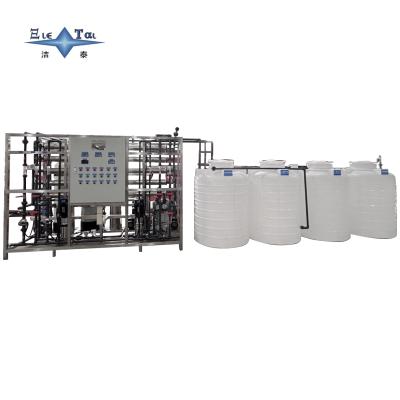
- Ultra-pure Water Closed-loop System: The final-stage flushing uses UP ultra-pure water (conductivity < 0.055μS/cm), combined with a 0.1μm ultrafiltration membrane and ultraviolet sterilization (wavelength of 254nm, irradiation intensity ≥ 40mJ/cm²). This ensures that the ion residue on the lens surface after flushing ≤ 5ppb (sodium ion Na⁺, chloride ion Cl⁻), conforming to NASA's low outgassing material standards.