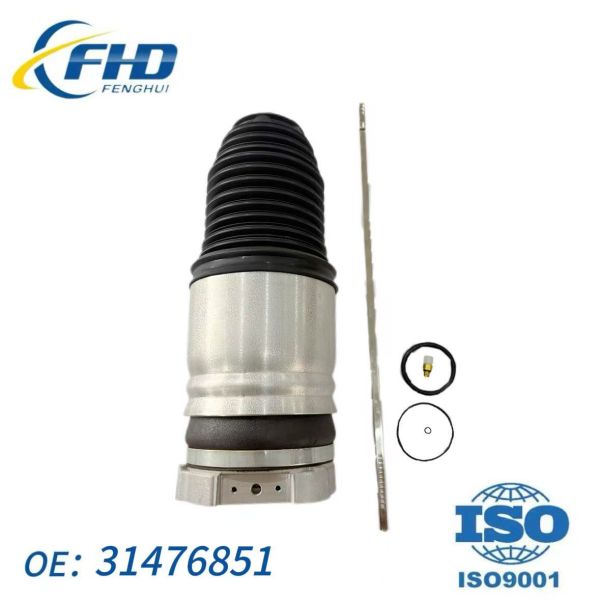
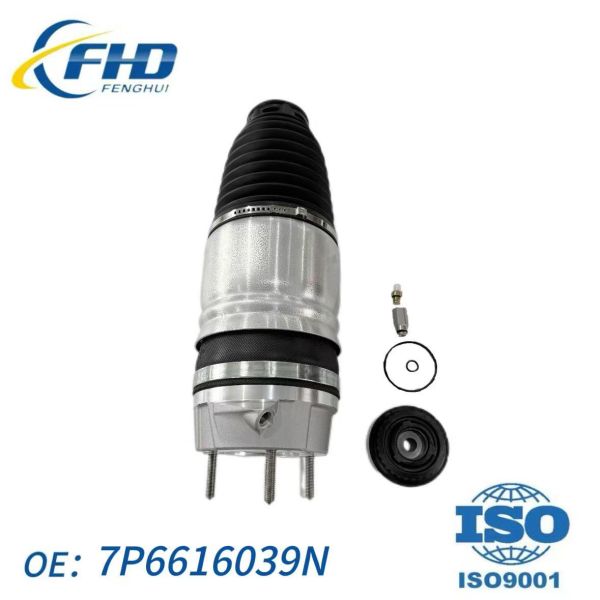
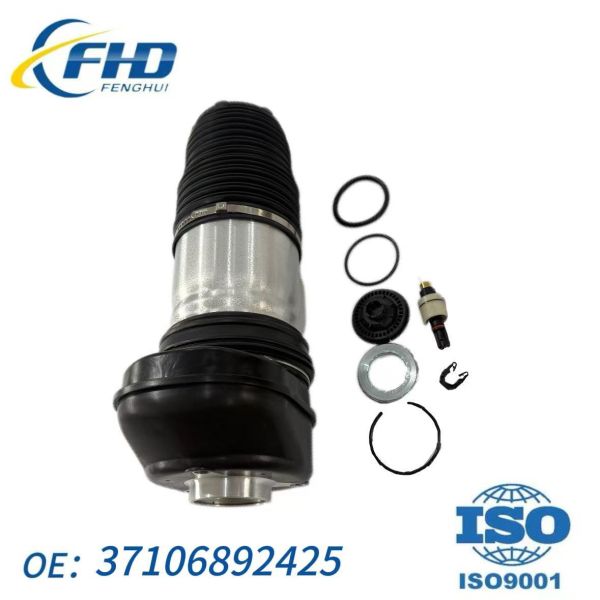
Q1: How can I tell whether the L405 front air suspension seals have already aged?
Common signs of aging include: slight sinking on one or both sides of the front axle after the vehicle sits overnight (but not fully deflated), the air compressor running slightly more frequently than normal after starting, occasional faint "hissing" sounds from the front wheels when going over bumps, and a "Suspension Fault" warning on the dashboard that sometimes disappears after restarting. The typical characteristic of seal aging is slow leakage - the air spring itself is intact, but air pressure retention time is reduced. A simple diagnostic method: after stopping the vehicle and turning off the engine, spray soapy water at the connection between the air spring upper cap and the air spring, and observe if fine bubbles slowly emerge.
Q2: Is it acceptable to replace only the repair kit and keep the old air spring?
Yes, they can be used together, but two conditions must be met: First, the original air spring must be in good condition - no obvious cracks, no bulging, no rubber hardening. Second, the air spring should generally have no more than 100,000 km of service. The L405 Range Rover, as a luxury SUV, has a relatively expensive air spring assembly. Replacing only the seals while the air spring is intact is an economical repair solution. However, if the air spring already shows rubber cracking, replacing the complete air spring assembly at the same time is recommended.
Q3: After replacing the repair kit, the instrument panel shows a "Suspension Fault" warning, but the vehicle drives normally. What is the cause?
This situation is usually not a problem with the repair kit itself, but rather the air suspension system has not been reset after installation. After replacing front seals on a Land Rover L405, a diagnostic tool (such as Land Rover factory SDD or a compatible device) is required to perform "height calibration" and "component learning" on the air suspension system. The L405's air suspension system has a self-diagnostic function, and after seal replacement, it may report an error due to height sensor zero-point offset. It is recommended to connect a diagnostic tool after installation, clear the fault codes, and perform front axle height initialization.
Q4: Is the L405 front repair kit suitable for different powertrain versions (3.0T petrol/diesel/5.0T supercharged)?
Yes, it is suitable. The front air spring seal specifications are the same for different powertrain versions, with identical mounting dimensions. This repair kit is manufactured to original equipment standards and covers all L405 powertrain versions. When purchasing, you only need to confirm that your vehicle is the L405 chassis and originally equipped with front air suspension.
Q5: What precautions should be taken when replacing the front repair kit?
The following precautions are recommended: 1) Avoid scratching the air spring upper cap and air line connector surfaces when removing old seals; 2) Apply a small amount of special lubricating grease to new seal rings before installation (do not use regular grease as it may corrode rubber); 3) Ensure air line connector seals are fully seated and re-lock clamps to specified torque; 4) Pay attention to dust boot orientation during installation, ensuring upper and lower grooves align; 5) Inspect the bump stop and replace it if hardened. The L405 front axle space is relatively tight, so professional installation is recommended.
Q6: After replacing the repair kit, the front suspension feels stiffer or bumpier than before. Is this normal?
This is uncommon. Replacing the repair kit does not change the air spring's load-bearing characteristics or the shock absorber core's damping settings, so it should not theoretically change suspension firmness or softness. If there is noticeable stiffness or bumpiness, possible causes include: 1) Height calibration has not been performed, resulting in incorrect air spring pressure; 2) The dust boot is misaligned and interfering with the shock absorber core; 3) The bump stop is installed incorrectly, changing the limit travel. It is recommended to first check the installation, then perform height calibration using a diagnostic tool.
Q7: There is a "creaking" or "squeaking" noise from the front wheel area while driving after replacing the repair kit. What is the cause?
This type of noise is usually not a problem with the repair kit itself, but rather caused during installation. Common causes include: 1) The dust boot is not installed properly and is rubbing against the shock absorber core body; 2) The air spring upper cap mounting bolts are not tightened to the specified torque; 3) The height sensor link was bent or stuck during removal; 4) The stabilizer bar link ball joint is aged - unrelated to the repair but misdiagnosed. It is recommended to first check the dust boot position and bolt torque, then inspect other accessories if the noise persists.
Q8: Is the L405 front repair kit suitable for the later generation Range Rover (L460)?
No, it is not suitable. The L460 is the next-generation Range Rover launched in 2022, with a completely different front suspension structure and seal specifications. Parts are not interchangeable with the L405. Before purchasing, please confirm that your vehicle is the L405 chassis (2013-2021 model years), which can be verified via VIN code or vehicle registration information.
Q9: Is a wheel alignment (chassis angle calibration) necessary after replacing the L405 front repair kit?
Generally not necessary. Replacing the repair kit only involves seals and protective accessories, not control arms, steering knuckles, or other alignment-related components. However, if the upper or lower control arm mounting bolts were disconnected during the replacement process, then a wheel alignment is recommended. If only seals and the dust boot were replaced, alignment is not required.
Q10: Is the L405 front repair kit interchangeable with the rear repair kit?
No, they are not interchangeable. The front and rear air spring seal specifications, dust boot dimensions, and bump stop heights are different. Parts are not interchangeable. This repair kit with OE part number LR060133 is specifically for the front axle and should not be used on the rear axle.
Q11: Do the seal rings in the repair kit need periodic replacement?
Seal rings are rubber wear parts with no fixed replacement interval. They are typically replaced when the air spring leaks or when the air spring is replaced. For L405 Range Rovers over 5 years old or with over 80,000 km, the risk of seal aging increases. It is recommended to inspect the seal condition when checking the air suspension system.
Q12: Why choose a repair kit instead of replacing the entire air spring assembly?
The repair kit is suitable for scenarios where the air spring is intact but only the seals have aged. Compared to replacing the entire air spring assembly, it can significantly reduce repair costs. The L405 Range Rover original air spring assembly is relatively expensive. If the air spring rubber itself shows no cracking, bulging, or hardening, replacing only the seals is an economical and effective repair solution. However, if the air spring already shows obvious signs of aging, replacing the complete air spring assembly at the same time is recommended.