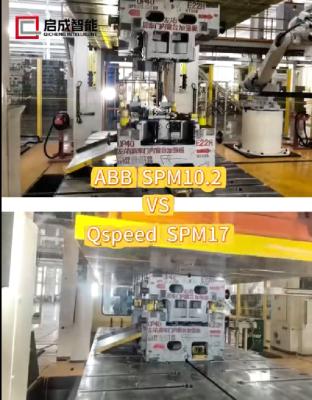
Chassis Parts Stamping Automation Equipment
Heavy-Duty Automation for Structural Integrity
Stamping automation for chassis components requires a robust balance of high tonnage and precision handling. Unlike aesthetic body panels, chassis parts—such as suspension pillars and engine cradles—are often manufactured from Thick-Gauge High-Strength Steel (HSS) or Advanced High-Strength Steel (AHSS). Automation equipment in this sector must manage extreme vibration and "snap-through" loads while ensuring synchronized transfer between heavy-duty press stations. By integrating specialized heavy-payload robots and reinforced NC feeders, manufacturers can maintain the rigorous safety tolerances required for vehicle structural integrity at high production volumes.
Technical Performance Matrix
Key benchmarks for evaluating chassis-grade stamping automation
| Feature |
Technical Specification |
Operational Advantage |
| Press Tonnage |
16,000kN - 35,000kN+ |
Necessary for cold-forming thick-gauge structural steel |
| Material Thickness |
2.0mm - 8.0mm+ |
Heavy-duty handling for high-load suspension parts |
| Robot Payload |
250kg - 500kg |
Manages heavy parts + complex magnetic/mechanical grippers |
| Feed Technology |
High-Torque NC Servo Feeders |
Prevents material slippage during heavy coil processing |
| Damping System |
Hydraulic/Active Shock Dampers |
Absorbs "Snap-Through" energy to protect automation gears |
| Transfer Type |
Large-Format Tandem / 3D Transfer |
Accommodates deep-draw geometries of chassis frames |
Engineering Advantages
Critical Innovations in Chassis Component Automation
- Reinforced End-of-Arm Tooling (EOAT): Given the weight and oil-coated nature of structural steel, our systems utilize Hybrid Grippers—combining high-power electromagnets with mechanical "Power Clamps"—to ensure zero part-shift during high-speed 1.5G transfers.
- Tonnage Signature Monitoring: Integrated sensors capture the force-curve of every stroke. For chassis parts, this is critical to detect "Micro-Cracks" or material inconsistencies that could compromise the vehicle's crash rating.
- Automated Scrap Management: Chassis stamping generates high volumes of heavy-gauge scrap. Our lines feature integrated Under-Die Shaker Conveyors and automated scrap cutters that operate in sync with the press cycle to prevent accumulation.
- Multi-Station Transfer Logic: For complex parts like control arms, our 3D transfer systems allow for part rotation and "re-striking" within the same press bed, reducing the need for multiple secondary machines and decreasing the total footprint.
Technical FAQ
Addressing core engineering and procurement concerns
How do you manage "Snap-Through" shock in heavy-gauge chassis stamping?
We implement Active Hydraulic Dampers and jerk-limited motion profiles in the automation. This absorbs the massive energy release that occurs the moment the material shears, protecting the robot's gearboxes and the press's tie-rods from fatigue and premature failure.
Can your automation equipment handle AHSS (Advanced High-Strength Steel)?
Yes. AHSS requires significantly higher holding pressures and specialized lubrication. Our automation is designed to integrate with High-Pressure Lubrication Systems and utilizes "Anti-Galling" coated grippers to handle the increased friction and heat associated with AHSS forming.
What is the benefit of a "Transfer" system vs. a "Tandem" line for chassis parts?
Transfer Systems (within a single large press) are typically faster and have a smaller footprint, making them ideal for medium-sized chassis components like brackets or control arms. Tandem Lines (multiple independent presses) are better for extremely large or deep-draw parts, like full-length frame rails, where more space is needed for part reorientation between stations.