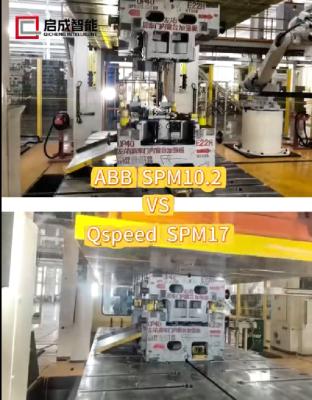
Precision Metal Stamping Automation For EV Battery Covers
As the electric vehicle (EV) market moves toward 800V+ architectures and higher energy densities, the battery cover has evolved from a simple lid to a complex safety barrier. Our Precision Stamping Automation solutions are specifically engineered to handle the unique challenges of EV battery housings: achieving ultra-tight tolerances in large-format parts while ensuring Zero-Defect quality for airtightness and EMI shielding. We specialize in high-speed tandem and transfer lines that process Advanced High-Strength Steel (AHSS) and 5000/6000 series Aluminum alloys. By integrating in-line dielectric testing and vision-guided burr detection, we ensure every cover provides a robust seal against thermal runaway and environmental ingress.
Technical Specification Matrix
Core metrics for EV-grade stamping performance.
| Feature |
Specification |
EV-Specific Benefit |
| Material Thickness |
0.6mm - 4.0mm |
Optimized for lightweighting vs. crash protection |
| Forming Precision |
±0.1 mm (Profile Tolerance) |
Ensures perfect seal mating with the battery tray |
| Flatness Control |
≤ 0.5 mm across 2000mm |
Prevents gaps in the FIPG (Form-in-Place Gasket) |
| Cycle Rate |
12 - 18 SPM |
High-volume throughput for global EV platforms |
| Edge Quality |
Precision Trimming & Shaving |
Burr-free edges to protect internal dielectric tapes |
| Dielectric Integrity |
In-line 100% Inspection |
Detects micro-cracks or pinholes in coatings |
| Cleanroom Standard |
ISO Class 7/8 Compatible |
Prevents metallic dust contamination in cells |
EV Battery Cover Application Scenarios
Specialized solutions for different pack architectures.
- Top Cover Plates: Ultra-lightweight aluminum stamping with integrated venting ports and reinforcement ribs for torsional stiffness.
- Structural Bottom Trays: Multi-stage deep drawing of high-strength steel to provide underbody impact protection and thermal management integration.
- EMI Shielding Covers: Precision forming of thin-gauge galvanized steel or specialized laminates to prevent electromagnetic interference with vehicle electronics.
- Internal Module Covers: Compact, high-speed progressive die stamping for module-level enclosures with integrated busbar pathways.
Technical FAQ: EV Battery Stamping Excellence
Expert insights into overcoming common manufacturing hurdles.
Q1: How do you manage the "Springback" effect in large-scale aluminum battery covers?
A: Aluminum has a significantly higher springback than traditional steel. We employ Digital Twin Die Simulation and integrated Servo-Cushion Technology in our presses. By precisely controlling the blank holder force during the draw, we compensate for elastic recovery in real-time, ensuring the cover remains perfectly flat for the final assembly sealing process.
Q2: Can your automation lines handle "Pre-coated" or "Pre-taped" dielectric materials?
A: Yes. We use specialized Non-marking Vacuum Grippers and polymer-coated die inserts to handle blanks pre-applied with dielectric PSA (Pressure Sensitive Adhesive) tapes. This allows the insulation to be formed with the part, eliminating the need for complex post-stamping coating processes and reducing the total factory footprint.
Q3: How do you ensure the 10-15 year airtightness required for EV battery packs?
A: The key is the flange quality. Our automation lines include an in-line Laser Profile Measurement system that inspects 100% of the sealing flanges for flatness and surface roughness. Any part that could compromise the Gasket-to-Cover interface is automatically flagged, ensuring every pack meets the IP67/IP69K protection standards over its entire service life.