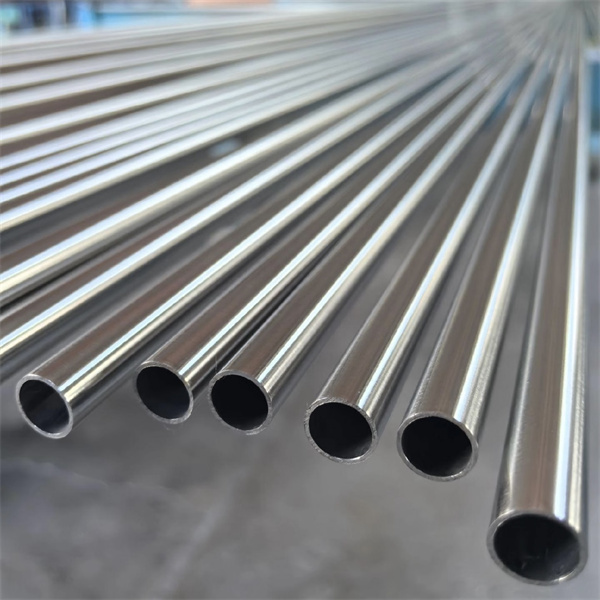
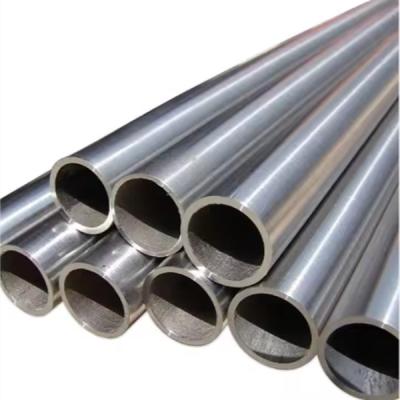
High-Pressure 316 Stainless Steel Pipes, SCH40, represent a superior class of industrial piping engineered to deliver exceptional performance in demanding environments. These pipes are specifically manufactured to withstand elevated internal pressures while offering outstanding resistance to a wide range of corrosive agents. The combination of the robust SCH40 wall thickness and the enhanced alloy composition of 316 stainless steel makes this product an ideal and reliable choice for critical high-pressure fluid and gas transfer applications across various heavy-duty industries. Their primary value lies in providing long-term system integrity, safety, and cost-effectiveness by minimizing downtime and maintenance needs. | | |
| | 316 / 316L Stainless Steel |
| | |
| | SCH40 (Standard Wall Thickness) |
| | |
| | 1/8" NPS to 24" NPS (Customizable) |
| | High-Pressure Service (Exact PSI varies with size) |
Features & Characteristics The defining characteristic of High-Pressure 316 Stainless Steel SCH40 Pipes is their remarkable strength and corrosion resistance. The SCH40 schedule provides a substantial wall thickness, granting these pipes high mechanical strength and durability under significant pressure loads. The inclusion of 2-3% Molybdenum in the 316 stainless steel alloy dramatically improves resistance to pitting and crevice corrosion, especially in chloride-containing environments. This product exhibits excellent formability and weldability, facilitating easier installation and fabrication. Furthermore, the pipes have a smooth internal surface, which reduces flow resistance and minimizes scaling or buildup. Key Advantages & Selling Points - 1. Superior Pressure Handling: The robust SCH40 wall thickness ensures reliable containment and transport of high-pressure media.
- 2. Enhanced Corrosion Resistance: Molybdenum content offers outstanding performance against chlorides, acids, and other corrosive elements, outperforming standard 304 stainless steel.
- 3. High Structural Integrity: Excellent tensile strength and durability contribute to a long service life, even in harsh operating conditions.
- 4. Wide Temperature Suitability: Maintains strength and corrosion resistance across a broad temperature range.
- 5. Low Maintenance & Longevity: Reduced risk of leaks, corrosion failures, and downtime translates to lower total cost of ownership.
Manufacturing Process & Technology These High-Pressure 316 Stainless Steel Pipes are produced using advanced manufacturing techniques. Seamless variants are typically created through extrusion or piercing processes, ensuring a homogeneous structure without a weld seam. Welded pipes (ERW) are formed from rolled plates and welded using high-precision automated technology, followed by full heat treatment to normalize the metallurgical structure. Modern non-destructive testing (NDT) methods, such as ultrasonic testing (UT) and hydrostatic pressure testing, are rigorously applied to every batch. This guarantees that each SCH40 pipe meets stringent standards for wall thickness uniformity, pressure integrity, and complete absence of defects. - • Oil & Gas Industry: Offshore platforms, downhole tubing, high-pressure flow lines.
- • Chemical & Petrochemical Processing: Transport of corrosive chemicals, solvents, and high-pressure process streams.
- • Power Generation: High-pressure steam lines, boiler tubes, and feedwater systems in thermal and nuclear plants.
- • Shipbuilding & Marine: High-pressure hydraulic lines, seawater handling systems, and fuel lines.
- • High-Purity Processing: Pharmaceutical, food & beverage where hygiene and corrosion resistance are critical under pressure.
Q: What is the main difference between SCH40 and SCH80 for 316 Stainless Steel Pipes? A: SCH80 has a thicker wall than SCH40, granting it a higher pressure rating but at increased weight and cost. SCH40 offers an optimal balance of pressure capability and material efficiency for many high-pressure applications. Q: Can High-Pressure 316 Stainless Steel SCH40 Pipes be used for high-temperature service? A: Yes. 316 stainless steel retains good strength and oxidation resistance at elevated temperatures, making these pipes suitable for many high-temperature, high-pressure services. Always consult specific temperature-pressure rating charts for your application. Q: How is corrosion resistance ensured? A: Corrosion resistance is inherent to the 316 alloy composition (Cr, Ni, Mo). Manufacturing processes include solution annealing and pickling to restore and maintain the protective chromium oxide layer on the surface.