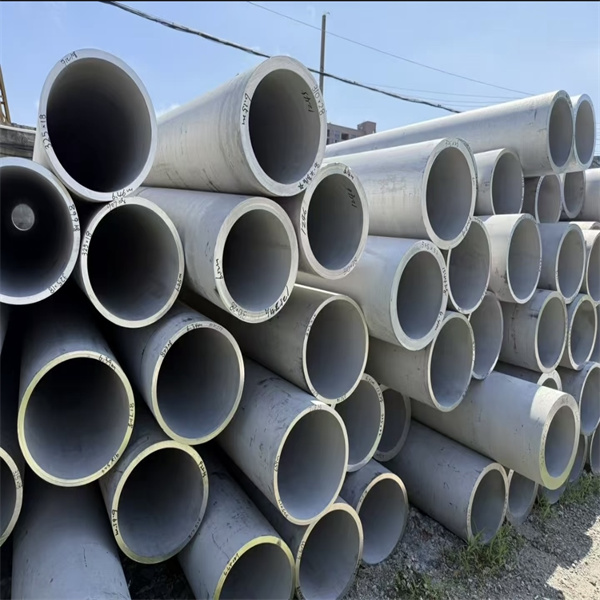
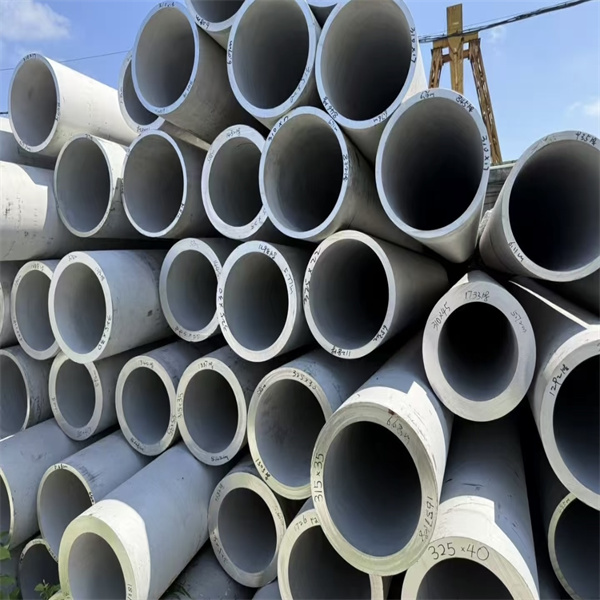
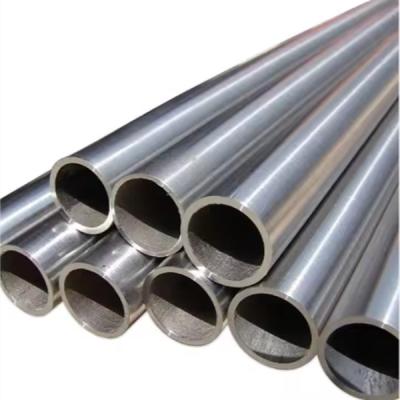
ASTM A312 Stainless Steel Pipes
Stainless Steel Pipes: Durable Conduits for Demanding Applications
Stainless Steel Pipes are engineered for superior performance in corrosive and high-pressure environments. These pipes offer exceptional strength, longevity, and hygiene, making them a fundamental component across critical industries. The product is manufactured from high-grade alloys, primarily iron, chromium, and nickel, providing an innate resistance to rust, oxidation, and a wide range of chemicals. This product description details the specifications, advantages, and diverse applications of stainless steel pipes. | | |
| | 304/304L, 316/316L, 310S, 321, 904L, Duplex 2205 |
| | ASTM A312, ASTM A269, ASTM A213, EN 10216-5 |
| | 6mm to 2000mm (Customizable) |
| | SCH 5S, 10S, 40S, 80S, etc., or as specified |
| | Random Length (5-7m), Fixed Length, or Cut-to-Size |
| | Seamless Pipes, Welded Pipes (ERW, SAW) |
| | Annealed & Pickled, Bright Annealed, Polished (180#-600#) |
Characteristics & Technology Stainless steel pipes are defined by their alloy composition, with a minimum of 10.5% chromium forming a passive, self-repairing oxide layer that prevents corrosion. Advanced manufacturing techniques ensure precise dimensional tolerances and consistency. The product is available in both seamless and welded forms. Seamless pipes are extruded, offering uniform strength for high-pressure applications. Welded pipes, formed from rolled and welded coils, provide excellent dimensional consistency for structural and conveying uses. The corrosion resistance is based on the passivation theory, where chromium reacts with oxygen to form an invisible, adherent surface layer. Key production processes include continuous casting, hot extrusion, cold drawing, and precision welding. Finished pipes undergo solution annealing to dissolve carbides and restore corrosion resistance, followed by pickling to remove scale and rejuvenate the passive layer. Applications & Advantages Applications: These pipes are essential in oil & gas pipelines, chemical processing plants, food & beverage processing lines, pharmaceutical manufacturing, architectural structures, water treatment systems, and shipbuilding. - • Withstands aggressive media, moisture, and extreme temperatures.
- • High pressure and mechanical stress resistance ensure a long service life.
- • Non-porous, smooth surface prevents bacterial growth, ideal for hygienic industries.
- • A clean, modern appearance suits both functional and architectural uses.
- • Resistance to degradation significantly reduces long-term maintenance expenses.
We provide comprehensive technical data sheets, material certifications (e.g., 3.1/3.2 Mill Certificates), and professional application consulting. Custom cutting, precision polishing, and non-destructive testing services are available. Products are packaged securely for international shipping. Q: What is the difference between 304 and 316 stainless steel pipes? A: 304 is versatile for general use. 316 contains Molybdenum, offering significantly higher resistance to chlorides and acids, making it suitable for marine and chemical environments. Q: Can stainless steel pipes be used for high-temperature service? A: Yes, grades like 310S and 321 are specifically designed for high-temperature stability and oxidation resistance. Q: How do I select between seamless and welded pipes? A: Seamless pipes are preferred for high-pressure, critical applications. Welded pipes are cost-effective for structural, low/medium pressure conveying, and architectural purposes. Our experts can assist in selection.