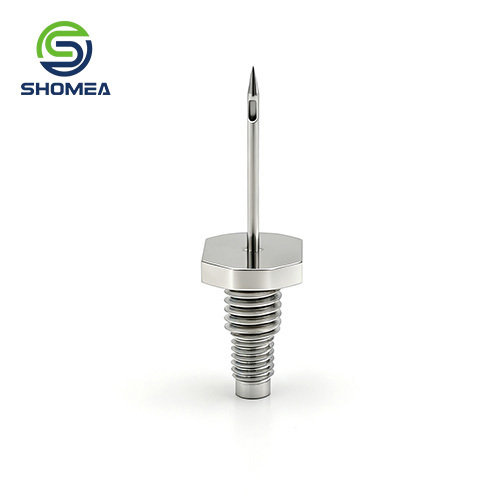
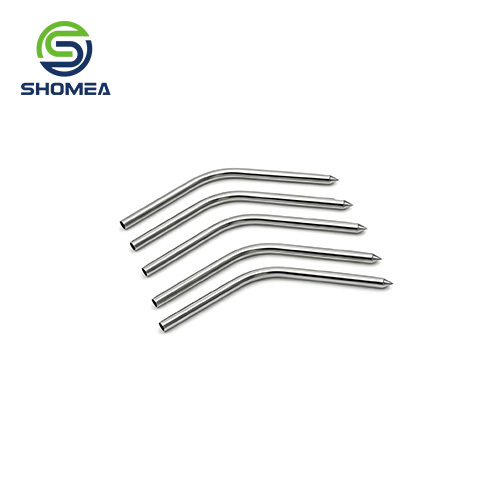
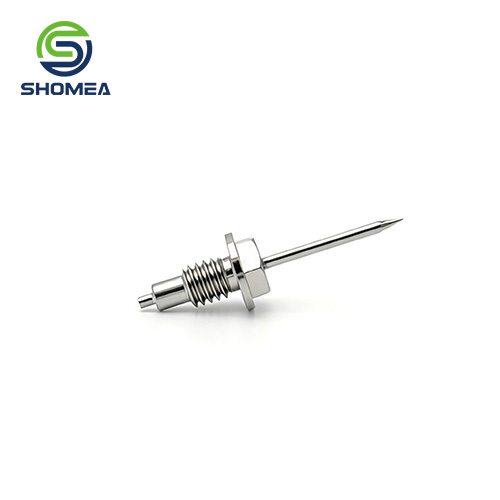
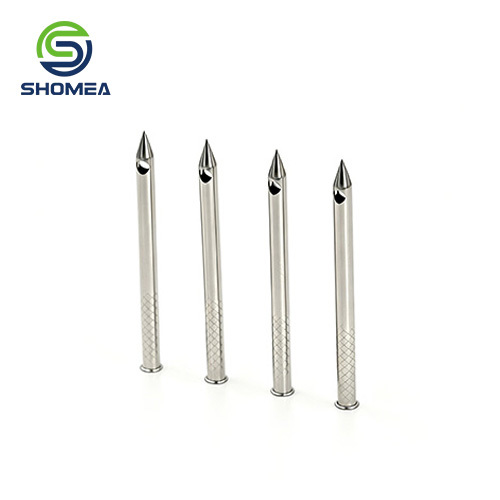
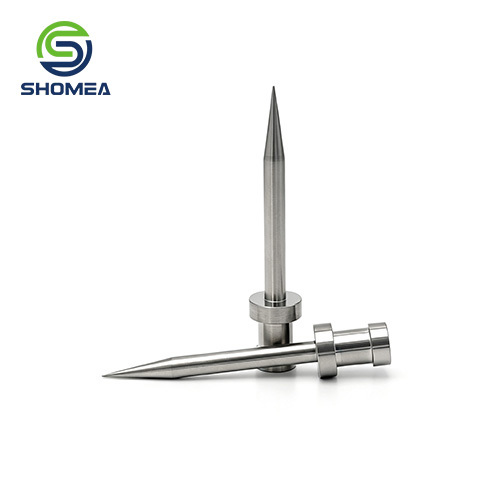
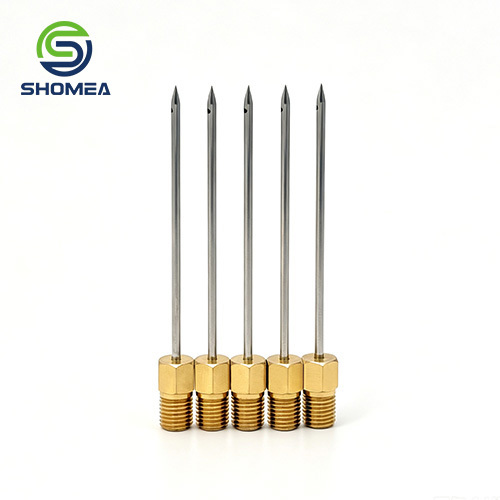
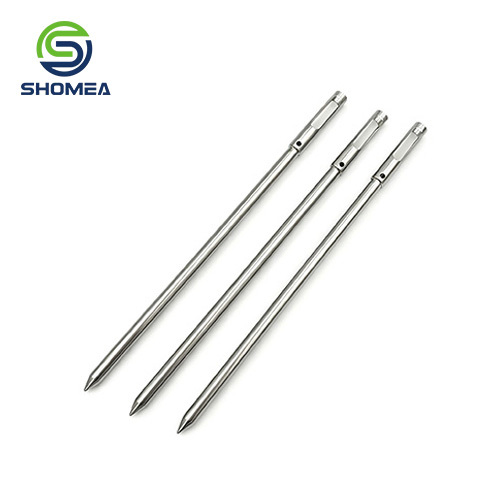
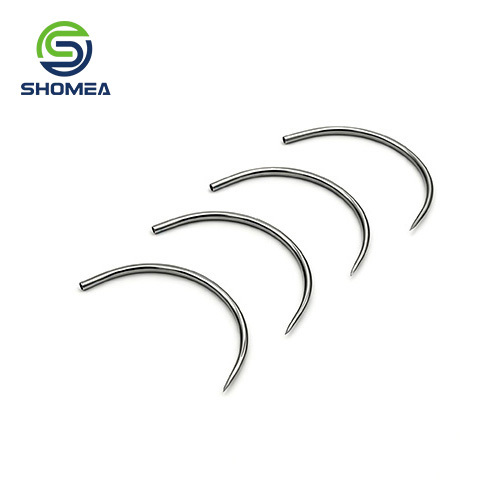
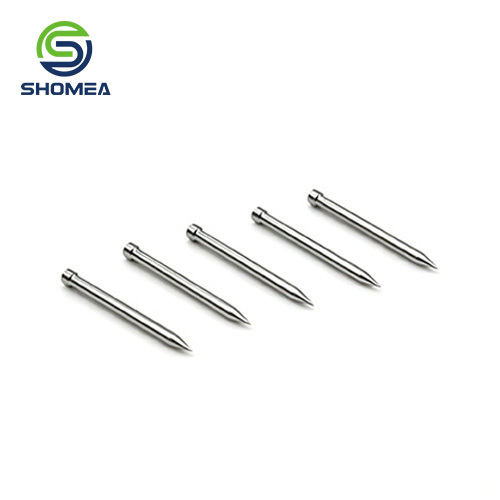
| Products Name | SHOMEA Customized Stainless Steel Veterinary-Grade Precision Side-Hole Cannula |
| Material | Stainless Steel, Brass, Aluminum, brass, copper ,etc |
| Surface treatment | Sandblasting, polishing, knurling, laser marking, etc |
| Tube Outer Diameter | 0.25-15mm |
| Tube wall Thickness | 0.05-3mm |
| Meta Base | Male and Female thread |
| Tolerance | OD/ID±0.02mm L±0.05mm or According to Drawing |
| Size | 3G-32G or Customized |
| LOGO | Can be customized according to your drawing |
| Samples | Usually provide 5-10pcs samples for testing before mass production |
| Delivery Time | usually 5-25days or according to quantity |
• Precision knurling on the tail, delivers excellent anti-slip grip and torque transmission
• High-precision side hole structure, enables directional and stable fluid delivery
• 316L medical-grade stainless steel, ensure biocompatibility and corrosion resistance
• Optimized mechanical structure design, improve puncture efficiency and operational comfort
FAQs:
Q: How do you ensure the stability and safety when using this needle on animals?
A: The tail section adopts a high-density diamond knurling design, significantly increasing the friction coefficient. Even when operators wear gloves or work in wet environments, it can effectively prevent slipping, ensuring precision and stability in puncture actions. Meanwhile, the tip features a high-precision side hole structure, guiding liquids to output smoothly in a specific direction, avoiding liquid splashing or backflow that may occur with end-opening designs, thereby reducing unintended disturbances to animal tissues and enhancing operational safety.
Q: What are the specific advantages of the side hole design compared to traditional end-opening needles?
A: The core advantage of the side hole design lies in directional control and stability of fluid delivery. Traditional end-opening needles tend to cause liquid splashing or backflow due to pressure changes after puncture, while the side hole structure guides liquid to spray smoothly and concentrically along the tangential direction of the tip, not only improving the targeting of liquid delivery, but also reducing the冲刷 or diffusion of liquid to the tissues surrounding the puncture site, especially suitable for scenarios requiring precise local treatment.
Q: Is the needle body resistant to sterilization? Can it adapt to common veterinary sterilization methods?
A: This product is made of medical-grade stainless steel (such as 304 or 316L) or special alloy materials, offering excellent corrosion resistance and chemical stability. It is fully compatible with mainstream veterinary sterilization methods such as autoclaving, ethylene oxide (ETO), and low-temperature plasma sterilization. After multiple sterilization cycles, it still maintains the rigidity of the needle body, surface finish, and geometric precision of the side hole, ensuring reliability for repeated use.
Q: Will the knurled part affect the connection stability with syringes or catheters?
A: No. The knurling is applied only to a section of the needle tail and does not participate in the structural interface. The connection part remains a smooth cylindrical surface or standard Luer Lock design, ensuring a tight, leak-free connection with syringes or catheters. The presence of the knurled area does not affect the sealing integrity or mechanical strength of the connection.
Q: Can the needle tip diameter or side hole size be customized according to specific animal species or usage scenarios?
A: Yes. We offer multiple standard specifications for selection, and also support non-standard customization services. Based on the animal's body size, tissue characteristics, or usage requirements, we can precisely adjust the outer diameter of the tip, side hole diameter, and hole position angle, ensuring the product achieves optimal performance and fit in your specific application scenario.