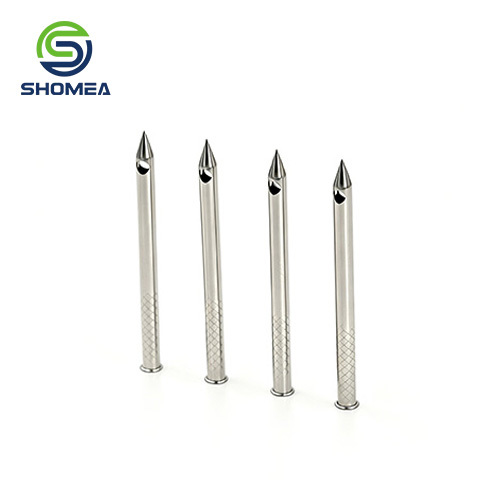
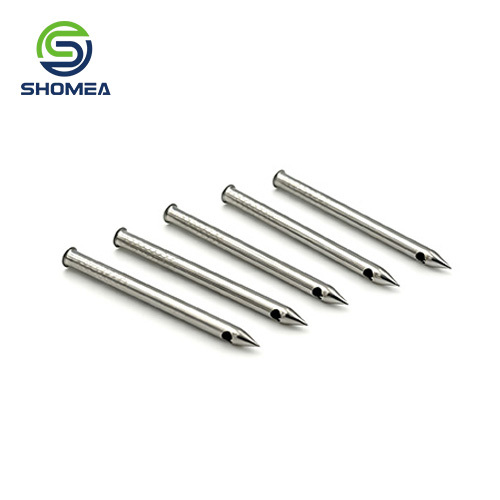
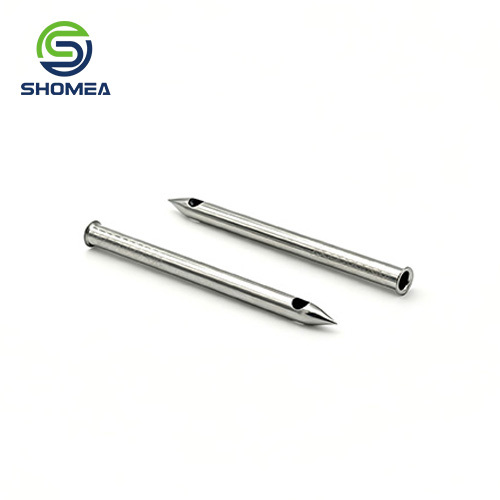
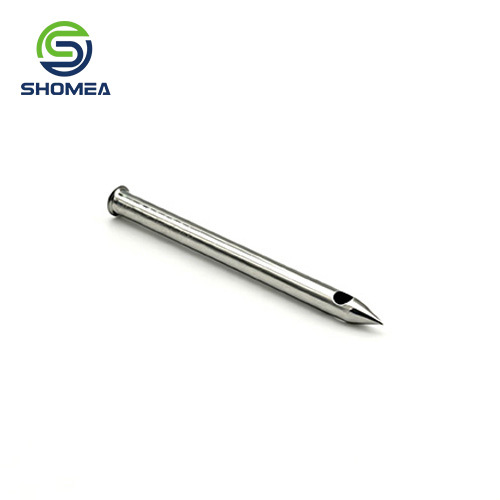
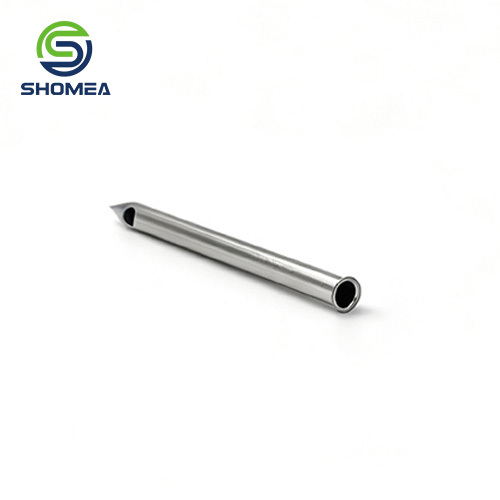
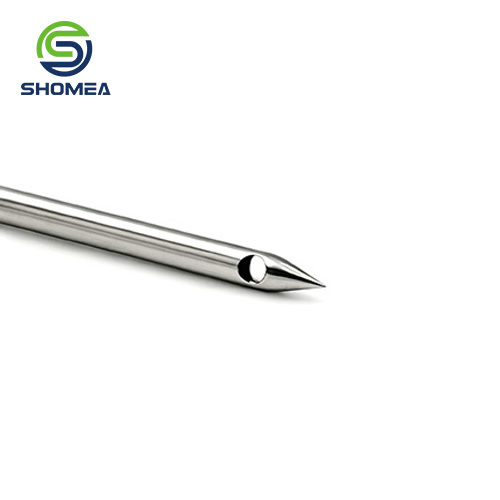
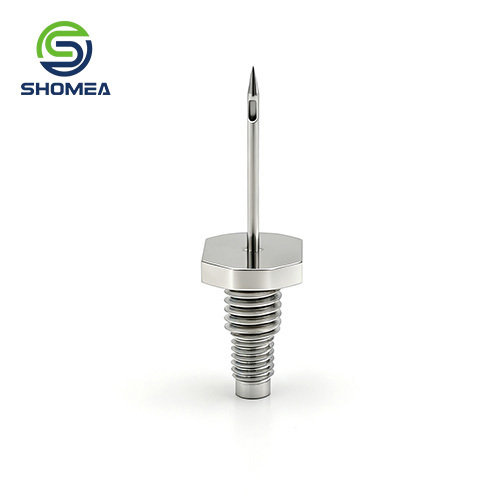
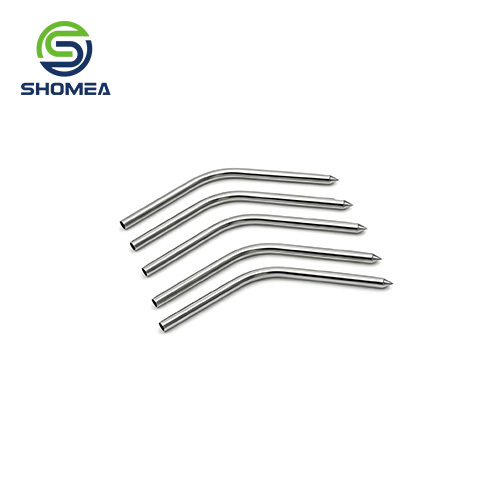
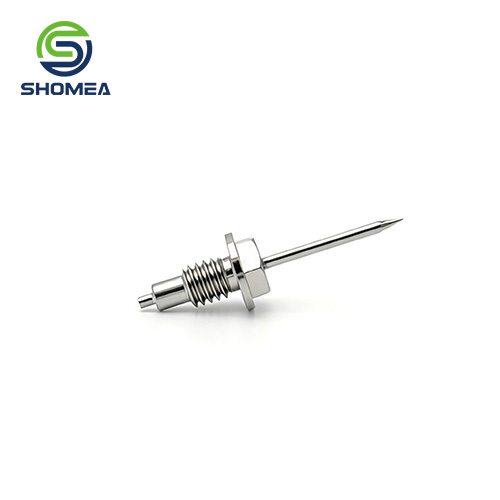
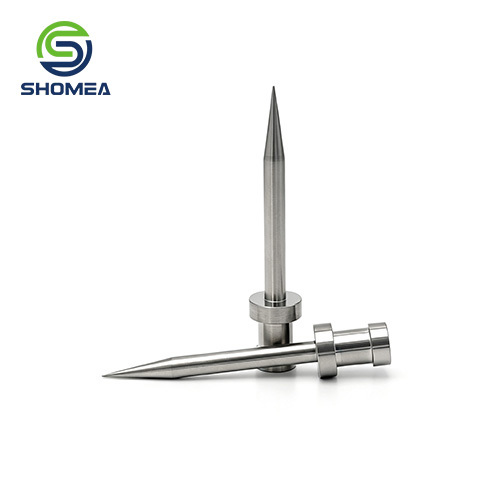
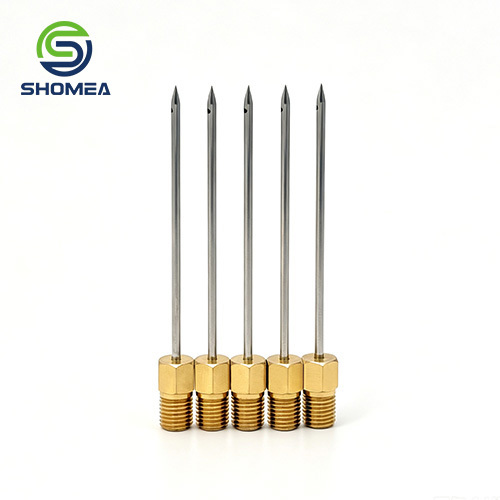
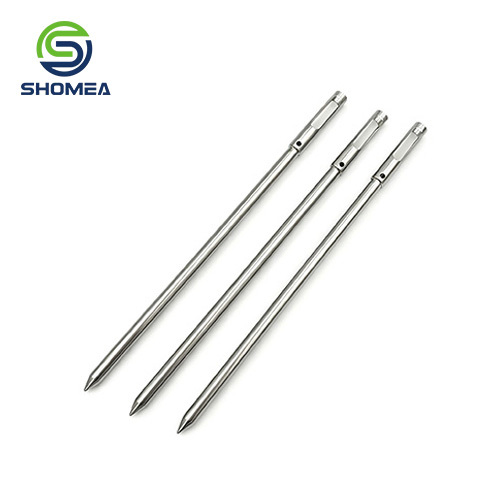
| Products Name : | SHOMEA Stainless Steel Flared Pencil Point Needle with Hole |
| Material: | Stainless Steel, Brass, Aluminum, brass, copper ,etc |
| Surface treatment : | Sandblasting, polishing, knurling, laser marking, etc |
| Tube Outer Diameter : | 0.25-15mm |
| Tube wall Thickness : | 0.05-3mm |
| meta Base | Male and Female thread |
| Tolerance : | OD/ID±0.02mm L±0.05mm or According to Drawing |
| Size: | 3G-32G or Customized |
| LOGO | Can be customized according to your drawing |
| Samples: | Usually provide 5-10pcs samples for testing before mass production |
| Delivery Time: | usually 5-25days or according to quantity |
Electrolytically polishing, sterilize and clean
The inner and outer surfaces are electrolytically polished to mirror-like smoothness, reducing protein or cell adhesion. It is easy to sterilize and clean, complying with ISO 10993 biocompatibility standards — suitable for long-term implantation or repeated use.
Standardized connection structure, strong adaptability
The tail of the needle features a standardized connection structure (e.g., Luer Lock or threaded interface), enabling seamless integration with mainstream medical devices (syringes, catheters, drainage systems, etc.) — enhancing clinical compatibility and operational efficiency.
FAQs:
Q: What are the main uses and advantages of the side-hole design?
A: The side hole is mainly used to avoid direct puncture or over-stimulation of the target (such as blood vessels or organ surfaces). It allows the perfusate or medicine to disperse more gently, preventing backflow or tissue damage, and is commonly used for epidural medicine delivery, subcutaneous infusion, or targeted flushing in specific anatomical locations.
Q: Is the material medical-grade stainless steel? Is it corrosion-resistant?
A: Yes, this product is manufactured from medical-grade stainless steel (e.g., 304/316L), featuring excellent acid and alkali corrosion resistance and high mechanical strength. It can withstand repeated high-temperature and high-pressure sterilization (e.g., autoclaving), complying with hygiene and safety standards in medical and scientific research fields.
Q: In which specific medical or experimental scenarios is this needle applicable?
A: It is widely used in neuroscience research (e.g., lateral ventricle injection via stereotactic apparatus), small animal surgery (e.g., epidural or subarachnoid space medicine delivery), local perfusion in ophthalmology or otolaryngology, as well as minimally invasive procedures requiring lateral drainage or flushing.
Q: Can customization services be provided? For example, changing the side hole size or needle tube length?
A: We support non-standard customization. If you have special requirements for side hole diameter, outer diameter (OD), inner diameter (ID) of the needle tube, or total length, please provide specific drawings or parameters, and we can design and manufacture exclusively according to your experimental plan.