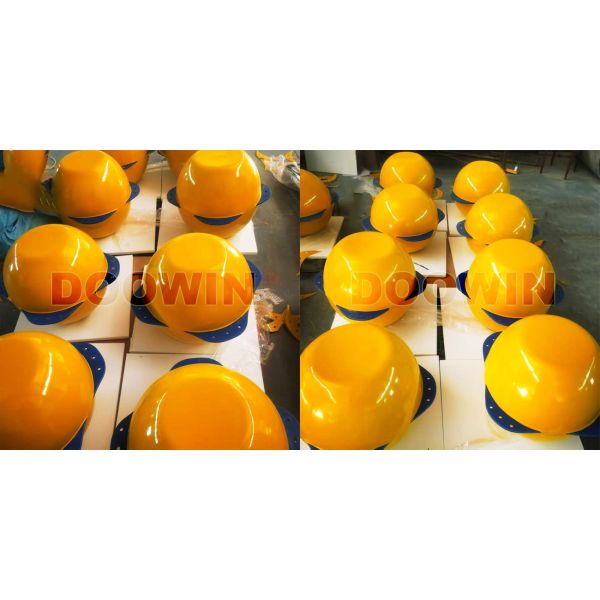
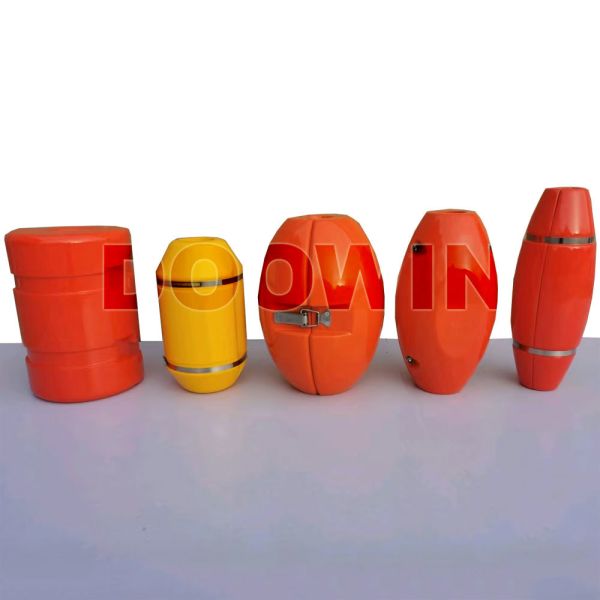
Subsea observation buoys are the component of the buoy system that provides buoyancy, ensuring the buoy maintains a stable attitude and position in the deep-sea environment.
Deep-sea observation buoys are widely used in marine scientific research, resource development, environmental protection, and other fields. Through sensors and data acquisition systems onboard the buoy, researchers can obtain real-time dynamic information about the ocean environment, including water temperature, salinity, current velocity, pressure, and light intensity. This data provides crucial support for marine scientific research, resource development, and environmental protection.

The subsea observation float is an indispensable component of the buoy. Its primary function is to provide the necessary buoyancy, enabling the buoy to maintain a stable attitude and position in the deep-sea environment. Furthermore, the float must possess excellent corrosion resistance, pressure resistance, and durability to withstand the complex and variable currents, water pressure, and temperature conditions of the deep-sea environment.
The subsea observation float is a key component of the deep-sea observation buoy. By providing buoyancy, maintaining stable attitude, and adapting to the deep-sea environment, it provides crucial support for marine scientific research, resource development, and other fields.
Subsea buoyancy material
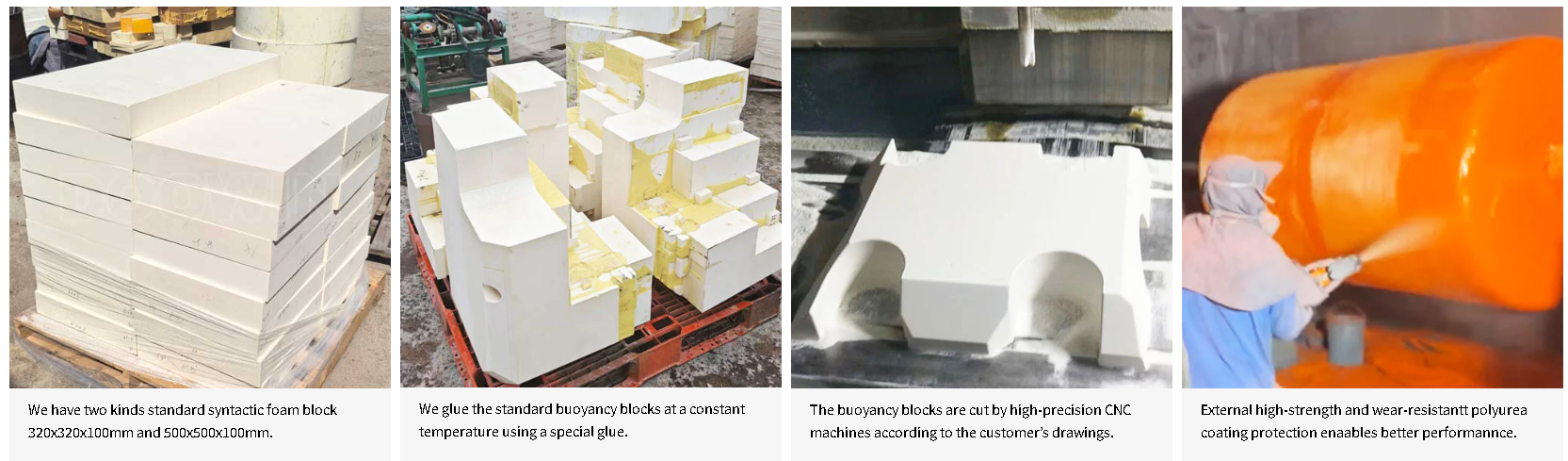
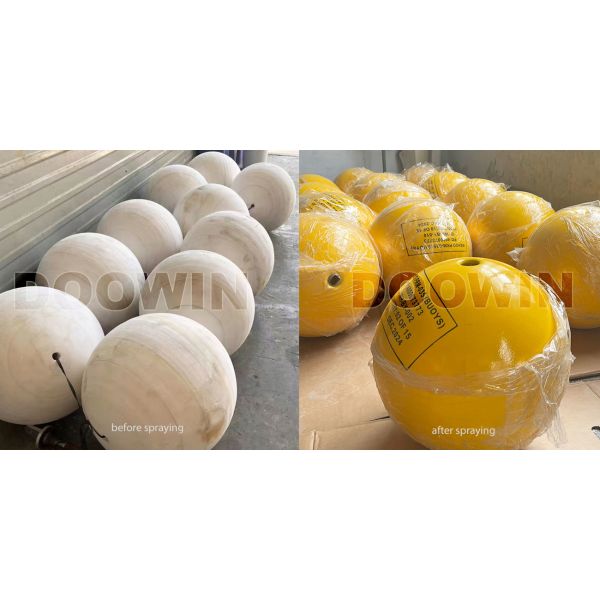
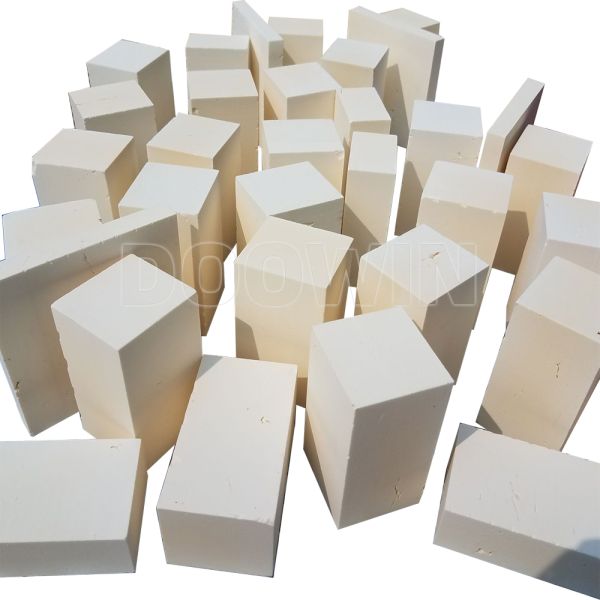
Solid buoyancy material is a low-density, high-strength porous structure, serving as a crucial counterweight for underwater equipment. This product is a solid compound formed by physical and chemical reactions between an inorganic lightweight filler and an organic polymer. Underwater exploration systems constructed with this high-performance solid buoyancy material not only enable greater dive depths, increase payload, and reduce energy consumption, but also maintain stable underwater operation, making it an indispensable component of 21st-century deep-sea diving technology.

Our solid buoyancy standard blocks feature low density, corrosion and weather resistance, low water absorption, high strength, and excellent plasticity, along with the ability to be machined to meet specific customer needs.
| Type | Model | Density (g/cm3) | Compression Strength (MPA) | Water Absorption (24 hours) | Submersible Depth (m) |
|---|---|---|---|---|---|
| Chemical Foam | CSBM-08 | 0.08 | / | ≤5% | Surface |
| Chemical Foam | CSBM-020 | 0.20 | 0.5 | ≤5% | 50 |
| Chemical Foam | CSBM-025 | 0.25 | 1 | ≤5% | 100 |
| Chemical Foam | CSBM-030 | 0.30 | 2 | ≤5% | 200 |
| Standard Performance | SBM-36 | 0.36 ± 0.01 | ≥ 16 | ≤1% | 500 |
| Standard Performance | SBM-38 | 0.38 ± 0.01 | ≥ 21 | ≤1% | 800 |
| Standard Performannce | SBM-43 | 0.43 ± 0.02 | ≥ 24 | ≤1% | 1 000 |
| Standard Performance | SBM-45 | 0.45 ± 0.02 | ≥ 28 | ≤1% | 1 500 |
| Standard Performannce | SBM-51 | 0.51 ± 0.02 | ≥ 45 | ≤1% | 3 000 |
| Standard Performance | SBM-54 | 0.54 ± 0.02 | ≥ 60 | ≤1% | 4 000 |
| Standard Performannce | SBM-58 | 0.58 ± 0.02 | ≥ 75 | ≤1% | 5 000 |
| Standard Performance | SBM-63 | 0.63 ± 0.02 | ≥ 90 | ≤1% | 6 000 |
| Standard Performannce | SBM-70 | 0.70 ± 0.02 | ≥ 145 | ≤1% | 11 000 |
| High Performance | SBM-43H | 0.42 ± 0.02 | ≥ 27 | ≤1% | 1 800 |
| High Performance | SBM-45H | 0.45 ± 0.02 | ≥ 35 | ≤1% | 2 000 |
| High Performance | SBM-48H | 0.48 ± 0.02 | ≥ 42 | ≤1% | 3 000 |