Low Voltage Shore Power Cable Reel System for Ship Shore Connection
Product Overview
Advanced shore power cable management system with PLC control, constant tension, and cybersecurity-compliant control architecture.
Designed for safe cable handling between ship and shore with automatic retraction and release.
Quick Specifications
Main Technical Parameters
For reference only, can be customized
| Component | Specification |
| Motor Power | 2.2 kW |
| Voltage | 380/440V |
| Speed | 1405–1730 rpm |
| Reducer Ratio | 146:1 |
| Torque | 2100 Nm |
| Cable Length | 50 m |
| Cable Diameter | ≤65 mm |
| Slip Ring | 3×350A + 1×200A + 4×20A |
| Protection | IP56 |
Selection Guide
Step 1 – Cable spec → Power requirement
Step 2 – Length → Berth distance
Step 3 – Current → Load capacity
Step 4 – Automation → PLC + tension
Step 5 – Safety → Cybersecurity requirement
Step 6 – Installation → Onboard/shore
Structure & Components
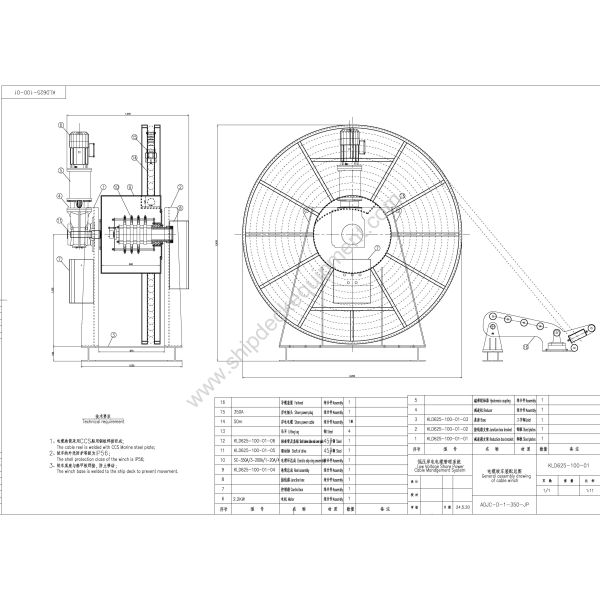
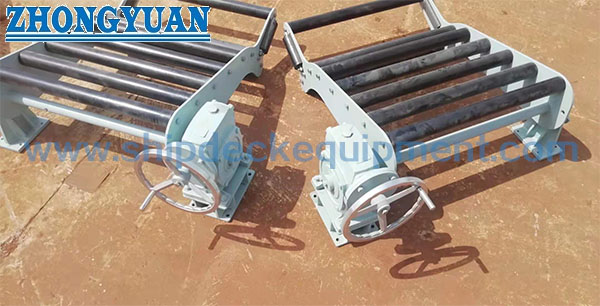
Cable reel | Motor & reducer | PLC system | Slip ring | Hysteresis coupling | Tension sensor | Length counter | Extendable guide frame
Custom Attributes
Inquiry Guide
Provide cable spec, length, current, automation and cybersecurity requirements.
How It Works
PLC monitors tension and controls motor. Extendable guide frame ensures smooth cable release and alignment.
Applications
Shore power | Smart ports | Container terminals | Offshore berthing
Certifications & Advantages
IEC compliant + cybersecurity compliant; automatic tension control, safe operation, intelligent monitoring.
Drawing & Photos
GA drawing | Electrical diagram


Ordering Information
MOQ:1 | Delivery:120 days
FAQ
Q1: Why is cybersecurity required for the cable reel system?
A: Cybersecurity ensures the PLC control system and communication interfaces are protected against unauthorized access and cyber attacks. This is essential for modern smart port and shore power systems to prevent operational disruption, data breaches, or malicious control interference.
Q2: What is the function of the constant tension system?
A: The constant tension system automatically adjusts cable length during ship movement (tide, wind, drift), preventing excessive tension or slack. This protects the cable from damage and ensures continuous and safe power supply.
Q3: What is the role of the hysteresis coupling?
A: The hysteresis coupling provides smooth torque transmission and absorbs shock loads, ensuring stable cable retraction and release while protecting the motor and gearbox.
Q4: Why is an extendable cable guide frame required?
A: The extendable cable guide frame ensures proper cable alignment during deployment and retrieval. It prevents cable twisting, uneven winding, and mechanical stress, especially when the vessel position changes.
Q5: Can the system operate automatically without manual intervention?
A: Yes. With PLC control, tension sensors, and length monitoring, the system can automatically control cable retraction and release, reducing crew workload and improving operational safety.
Q6: Is the system compliant with international shore power standards?
A: Yes. The system complies with IEC/ISO/IEEE 80005-3 standards and can be designed to meet classification society requirements such as CCS, ABS, DNV, and LR.
Q7: What monitoring functions are included?
A: The system includes real-time monitoring of cable length, tension, and operational status through a display screen, ensuring safe and controlled operation.