Screw-Type Anchor Chain Stopper for 50–102 mm Chain | CB/T 178-1996 Type B
Product Overview
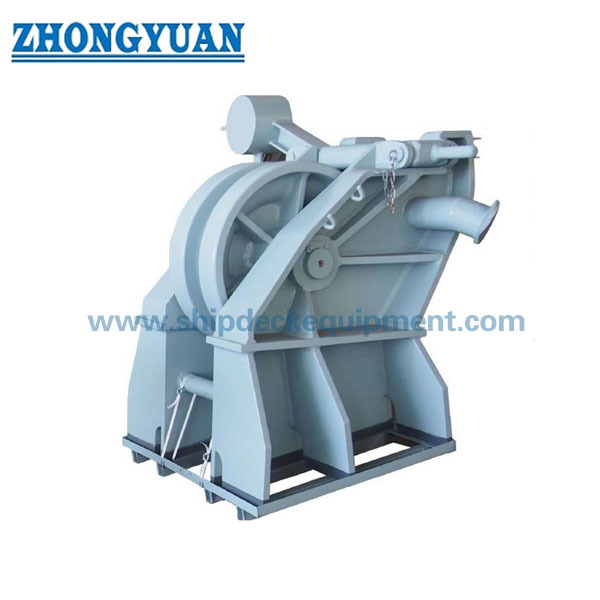
The CB/T 178-1996 Type B screw type anchor chain stopper is a deck-installed anchoring component used to secure large stud-link anchor chains and transfer chain load into the vessel structure when the stopper is engaged. The Type B range covers anchor chain diameters from 50 mm to 102 mm and is normally associated with higher-strength U3 anchor chain applications.
The assembly combines a screw-operated stopping mechanism, cast steel load-bearing parts, carbon-steel fabricated parts, and a front roller that supports smoother chain movement and reduces sliding contact during anchor handling. Final selection should be coordinated with the anchor windlass arrangement, chain grade, chain lead, deck foundation, welding details, inspection scope, and the applicable classification society rules.
Quick Specifications
Main Technical Parameters
| Anchor Chain Size |
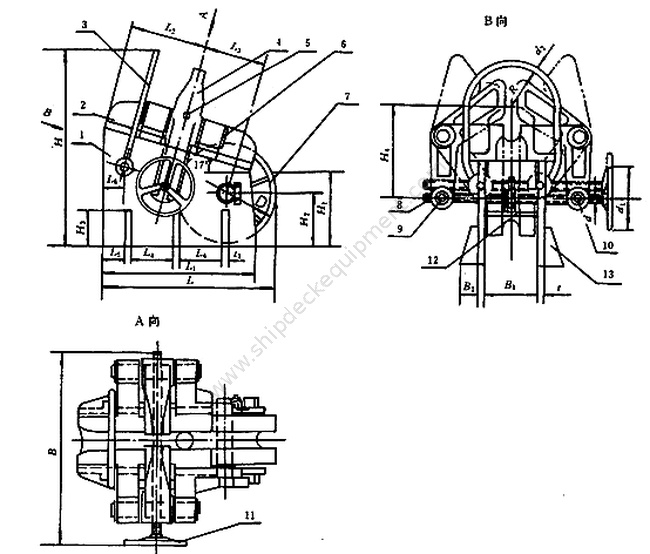
B | B1 | B2 | H | H1 | H2 | H3 | H4 | d | d1 | d2 | |
| 50~52 | 1020 | 333 | 150 | 1130 | 450 | 310 | 180 | 755 | T26 X 1 4/2 | 400 | 35 | |
| 54~ 56 | 1090 | 335 | 150 | 1210 | 485 | 330 | 205 | 746 | T55 X 14 /2 | 400 | 35 | |
| 58~60 | 170 | 371 | 150 | 1270 | 528 | 350 | 225 | 740 | T60 X 14 / 2 | 400 | 40 | |
| 62~ 64 | 1250 | 393 | 200 | 1360 | 555 | 370 | 245 | 725 | T65 X 16/ 2 | 500 | 40 | |
| 66 ~ 68 | l330 | 415 | 200 | 1430 | 580 | 390 | 265 | 715 | T70 X l 6/ 2 | 500 | 45 | |
| 70~73 | 1410 | 441 | 200 | 1510 | 605 | 415 | 285 | 700 | T70 X 16/ 2 | 500 | 45 | |
| 76~78 | 1500 | 463 | 250 | 1590 | 630 | 440 | 300 | 690 | T75 X J 6/ 2 | 500 | 50 | |
| 81 ~ 84 | 1600 | 485 | 250 | 1630 | 665 | ·470 | 325 | 680 | T 80 X 16/ 2 | 630 | 50 | |
| 87~ 90 | 1710 | 507 | 250 | 1670 | 700 | 500 | 350 | 670 | T85 X 18 / 2 | 630 | 55 | |
| 92~ 95 | 1820 | 529 | 300 | 1710 | 735 | 525 | 365 | 660 | T90X 18 / 2 | 630 | 55 | |
| 97~102 | 1940 | 551 | 300 | 1750 | 770 | 560 | 390 | 650 | T90 X 18 / 2 | 630 | 55 | |
| Anchor Chain Size |
L | L1 | L2 | L3 | L4 | L5 | L6 | D | t | t1 | R | Weight kg |
| 50~52 | 1040 | 980 | 440 | 370 | 275 | 200 | 120 | 520 | 26 | 12 | 245 | 1700 |
| 54~56 | 1120 | 1040 | 48 0 | 390 | 305 | 200 | 120 | 560 | 26 | 12 | 255 | 1805 |
| 58~ 60 | 1180 | 1100 | 520 | 410 | 315 | 220 | 120 | 600 | 28 | 12 | 260 | 1930 |
| 62~ 64 | 1270 | 1175 | 560 | 430 | 345 | 220 | 160 | 640 | 30 | 16 | 275 | 1960 |
| 66~68 | 1340 | 1240 | 600 | 450 | 365 | 230 | 160 | 680 | 30 | 16 | 285 | 2180 |
| 70~73 | 1420 | 1270 | 635 | 475 | 390 | 230 | 160 | 730 | 32 | 16 | 300 | 2420 |
| 76~78 | 1500 | 1340 | 670 | 500 | 415 | 340 | 160 | 780 | 34 | 16 | 310 | 2630 |
| 81~ 84 | 1610 | 1420 | 700 | 530 | 450 | 240 | 200 | 810 | 36 | 20 | 320 | 2860 |
| 87~90 | 1700 | 1490 | 730 | 560 | 475 | 250 | 200 | 900 | 38 | 20 | 330 | 3170 |
| 92~ 95 | 1800 | 1560 | 765 | 585 | 515 | 250 | 200 | 950 | 38 | 20 | 340 | 3420 |
| 97~102 | 1890 | 1 630 | 790 | 620 | 540 | 250 | 200 | 1020 | 40 | 20 | 350 | 3798 |
Selection & Inquiry Guide
Step 1: Confirm CB/T 178-1996 Type B and the anchor chain diameter group from 50-52 mm through 97-102 mm.
Step 2: Confirm anchor chain grade, minimum breaking load, anchor windlass arrangement, chain lead direction, and whether the project requires the 80% chain breaking-load design basis.
Step 3: Confirm deck installation form: direct deck welding or welded foundation, including deck reinforcement, weld details, available space, and alignment with the chain pipe and windlass.
Step 4: Confirm the part-by-part material specification, especially cast steel load-bearing parts, carbon-steel fabricated parts, screw / nut material, roller shaft, and any heat-treatment requirement.
Step 5: Confirm surface preparation, final coating system, lubrication points, maker certificate, material traceability, class inspection, load test, and witness requirements.
Step 6: Provide quantity, vessel type, installation drawing or GA drawing, classification society, delivery destination, and required delivery time.
Structure
Cast steel load-bearing body | Screw-operated stopping mechanism | Chain-contact stopping members | Front support roller | Roller shaft and bearing / bush interface | Welded deck base or foundation | Hand-operated screw and nut assembly | Protective coating and lubrication points
Anchoring, Operation & Quality Advantages
Custom Attributes
How It Works
Anchor chain approaches over the front roller → Operator turns the screw mechanism → Stopping members engage the selected chain link → Chain load is transferred through the stopper body and foundation into the reinforced deck → The windlass is relieved from sustained load → Screw mechanism is released before chain movement resumes
Applications
Merchant ships | Bulk carriers | Tankers | Container vessels | General cargo ships | Large anchor chain arrangements | Newbuilding projects | Anchor equipment replacement and retrofit
Certifications & Advantages
Certificates and inspection can be arranged according to project requirement, material traceability, approved test scope, and classification society approval procedure.
Certification: CCS, NK, BV, ABS, DNV, LR, KR, IRS, RS, RINA, CRS, Makers Test Certificate.
Drawing & Photos

FAQ
Q1: Is the 80% U3 chain breaking-load value the SWL of the chain stopper?
A1: No. It should be treated as a chain-related design or verification load basis. It is not a declared lifting SWL. The final load criterion, test method, allowable stress, and acceptance scope must follow the official standard, approved drawing, and classification society requirement.
Q2: Can Type B be used for both U2 and U3 anchor chain?
A2: Public product references generally associate Type B with 50-102 mm U3 chain, while the supplied description also mentions U2. For a U2 application, confirm the required type, chain minimum breaking load, dimensions, and class approval before quotation.
Q3: What information is required before quotation?
A3: Confirm CB/T 178-1996 Type B, chain diameter and grade, chain breaking-load data, material specification, installation / foundation drawing, coating system, quantity, certificate and test scope, classification society, destination, and required delivery date.