8" & 10" Double Bitt Bollards Without Horns for Barge Mooring | ASTM A27 Grade 70-36 Cast Steel
Product Overview
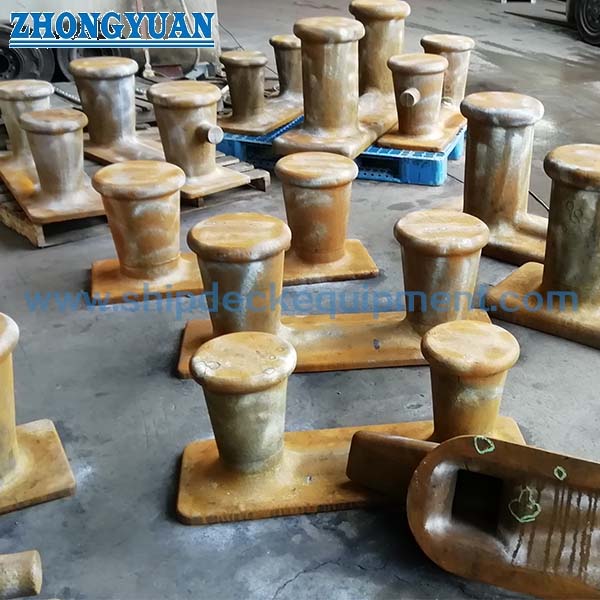
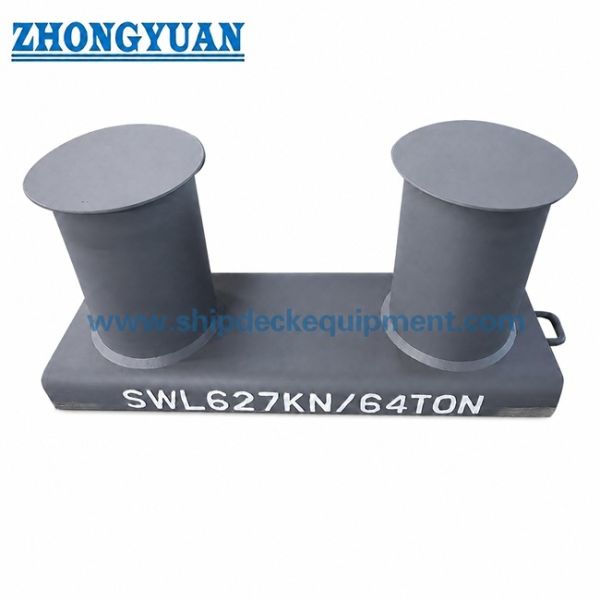
The ASTM A27-70-36 cast steel double bitt without horns is a compact two-post mooring fitting used on North American inland barges, push boats, towboats, workboats, and small service vessels. It is welded to the deck or suitable mounting structure and provides a secured point for mooring lines or wire lines used during barge coupling, checking, positioning, and harbor mooring operations.
This page is focused on the 8 inch and 10 inch cast steel double bitt without horns. The no-horn configuration is selected when the vessel arrangement requires a clean two-post bitt profile without additional horn projections. Because this is a cast steel deck fitting, casting soundness, heat treatment, NDT scope, deck weld preparation, and project load verification are more important than general appearance claims.
Quick Specifications
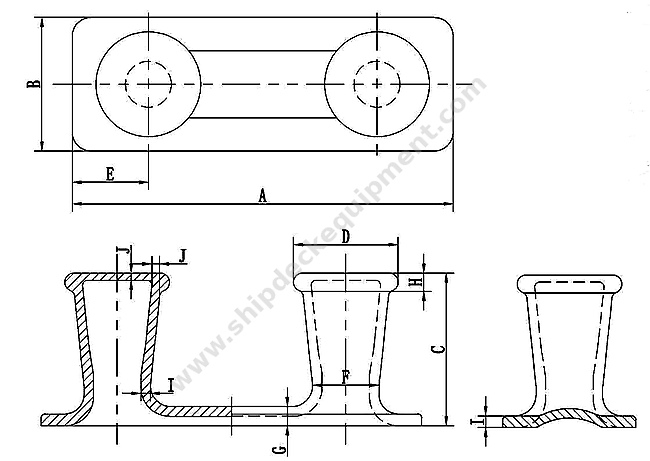
Main Technical Parameters
| Description | Type | Dimensions In Inches (MM) |
LBS (KGS) |
|||||||||
| A | B | C | D | E | F | G | H | I | J | |||
| Double Bitt | 8” |
40” (1016) |
14” (336) |
16” (406) |
11” Ø (279) |
8” (203) |
7” Ø (177) |
2” (51) |
2” (51) |
1-1/4” (32) |
3/4” (18) |
320 (145) |
| Double Bitt | 10” |
45” (1143) |
15” (381) |
18” (457) |
13-1/2ӯ (343) |
9” (228) |
9” Ø (228) |
2-1/4” (57) |
2” (51) |
1-1/4” (32) |
3/4” (19) |
574 (260) |
Selection & Inquiry Guide
Step 1: Confirm double bitt without horns and select 8 in or 10 in according to vessel arrangement, line size, and deck space.
Step 2: Confirm the application: inland barge, push boat, towboat, workboat, or small vessel, including bow, stern, gunnel, or deck installation position.
Step 3: Confirm mooring / coupling / checking use, rope or wire type, load direction, and project load basis. Strength calculation can be prepared after these details are confirmed.
Step 4: Confirm material requirement: ASTM A27-70-36 cast steel, cast stainless steel, fabricated mild steel, or stainless steel plate for other bitt types if required.
Step 5: Confirm casting and inspection scope: heat treatment, RT, MT, dimensional inspection, pull load test, witness inspection, and acceptance criteria.
Step 6: Confirm surface treatment, quantity, delivery destination, required delivery time, GA drawing, foundation drawing, and real deck installation photos if available.
Structure
Twin cast steel bitt posts | Common cast base | Without horn projections | Line-contact surface | Post-to-base transition | Deck welding interface | Optional coating or weld-ready finish
Casting, Testing & Engineering Advantages
Custom Attributes
How It Works
Mooring or checking line approaches the bitt → Line is turned around the twin posts according to vessel practice → Contact load is transferred through the cast posts and base → Welded deck structure and reinforcement carry the final load → Inspection and coating are completed according to project requirement
Applications
North American inland barges | River barges | Push boats | Towboats | Workboats | Small service vessels | Barge coupling stations | Bow and stern corner mooring positions | Gunnel-mounted line handling positions
Certifications & Advantages
Certificates can be arranged according to project requirement, material traceability, inspection witnessing, and class approval procedure.
Certification: CCS, NK, BV, ABS, DNV, LR, KR, IRS, RS, RINA, CRS, Makers Test Certificate.
For US inland barge projects, ABS approval, mill certificate, material certificate, heat treatment record, NDT report, and pull test report should be specified before quotation if required.
Drawing & Photos


FAQ
Q1: Is this double bitt suitable for ocean-going vessels?
A1: This page is positioned for US and Americas inland barges, push boats, towboats, workboats, and small service vessels. For ocean-going ships or classed offshore mooring systems, load basis, deck reinforcement, class rules, and alternative bollard standards should be reviewed before selection.
Q2: What is the difference between double bitt without horns and with horns?
A2: The without-horns type has two vertical bitt posts without additional side horn projections. It is selected when the deck arrangement or line-handling practice requires a cleaner twin-post profile. With-horns versions should be quoted separately when specified.
Q3: Can RT, MT, strength calculation, and pull load test be provided?
A3: Yes. RT, MT, strength calculation, and pull load test can be arranged according to project requirement. The customer should confirm load direction, test load, test fixture, acceptance criteria, witness requirement, and deck installation details before production.