Steel Double Bitt Bollard with Narrow Base | GB/T 554 Type C Ship Towing Equipment
Product Overview
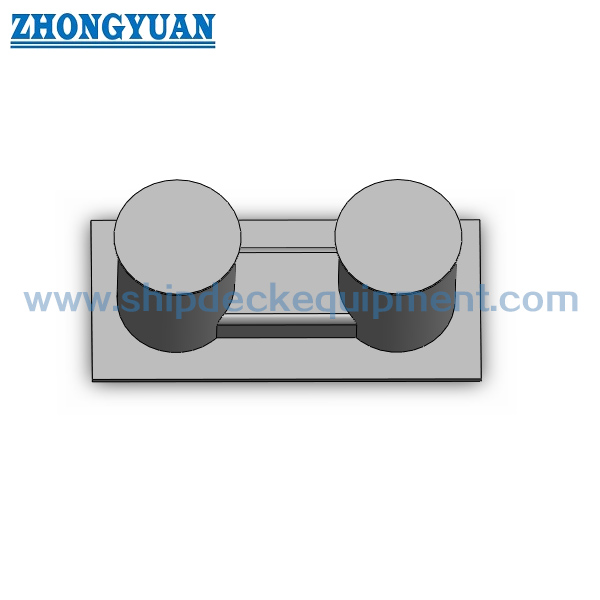
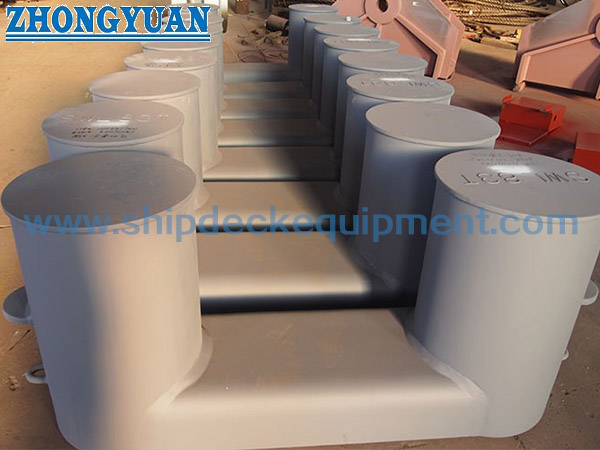
The GB/T 554 Type C steel double bitt bollard with narrow base is a compact welded steel bollard for ship mooring and towing arrangements where the deck layout requires two vertical bitts on one common base plate. It is mainly used on small vessels, inland waterway vessels, workboats, boats, and other compact shipboard mooring positions where the bollard footprint, deck reinforcement, and rope lead direction need to be checked together.
This page is prepared according to the supplied GB/T 554-2008 Type C data for nominal diameters 50 to 150 mm and SWL values from 13 to 43 kN. Public standard information indicates that GB/T 554-2023 has replaced GB/T 554-2008 and is related to welded steel bollards for sea-going vessels; therefore, the applicable project standard, old-standard replacement need, and whether the latest GB/T 554-2023 or ISO 13795:2020 should be followed must be confirmed before final quotation.
Quick Specifications
Main Technical Parameters
| Nominal Dia. | SWL kN |
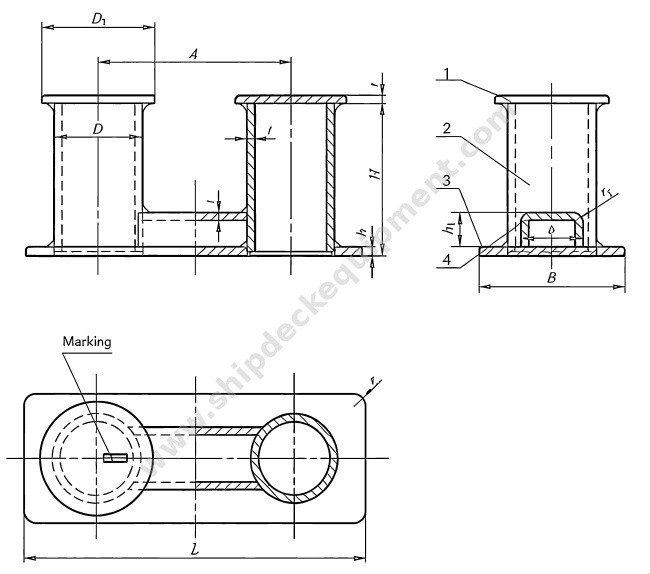
A | b | B | D | D1 | h | h1 | H | L | r | t | Weight kg |
| 50 | 13 | 180 | 32 | 100 | 50 | 65 | 9 | 26 | 115 | 310 | 20 | 6 | 4.5 |
| 75 | 18 | 275 | 50 | 125 | 75 | 95 | 12 | 43 | 170 | 430 | 20 | 7 | 10.8 |
| 100 | 25 | 350 | 65 | 160 | 100 | 120 | 14 | 51 | 220 | 540 | 25 | 7 | 18.6 |
| 125 | 34 | 430 | 80 | 200 | 125 | 145 | 15 | 60 | 275 | 676 | 28 | 9 | 34.3 |
| 150 | 43 | 500 | 100 | 230 | 150 | 170 | 16 | 70 | 330 | 800 | 35 | 9 | 49 |
Selection & Inquiry Guide
Step 1: Confirm GB/T 554 Type C steel double bitt bollard with narrow base and nominal diameter 50 / 75 / 100 / 125 / 150 mm according to vessel drawing.
Step 2: Confirm whether the project is an old-standard replacement based on GB/T 554-2008 or a new project requiring GB/T 554-2023 / ISO 13795:2020 review.
Step 3: Confirm mooring or towing duty, rope size, rope lead angle, intended load direction, nearby chocks or fairleads, and whether the bollard is used for normal mooring or towing assistance.
Step 4: Confirm deck installation interface: base footprint, weld detail, deck plate thickness, local reinforcement, available clearance, and shipyard installation method.
Step 5: Confirm material requirement: C-Mn steel, stainless steel, or special steel for low-temperature / icebreaker service if required.
Step 6: Confirm surface treatment: shop primer, final coating system, galvanized finish, mirror / satin polished stainless steel, or other project coating requirement.
Step 7: Confirm certificate scope before quotation: maker certificate, material certificate, class certificate, weld inspection, NDT, witness inspection, or other project requirement.
Step 8: Provide quantity, vessel type, installation drawing, delivery destination, required delivery date, and reference photos if available.
Structure
Two vertical bollard bitts | Narrow common base plate | Reinforced connecting structure | Welded deck interface | Rope-contact head radius | Compact deck footprint | Painted or specified surface treatment
Welding, Load Path & Engineering Advantages
Custom Attributes
How It Works
Mooring or towing line approaches the bollard → Rope is turned around one or both bitts according to the approved rope lead → Local rope force is transferred through the bitt body and reinforced base plate → Welded connection and deck reinforcement carry the load into the vessel structure → Coating and inspection are completed after installation
Applications
Small vessels | Inland waterway vessels | Workboats | Boats | Harbor service vessels | Compact deck mooring stations | Light towing assistance positions | Newbuilding and replacement projects
Certifications & Advantages
Certificates can be arranged according to project requirement, inspection scope, material traceability, and classification society approval procedure.
Certification: CCS, NK, BV, ABS, DNV, LR, KR, IRS, RS, RINA, CRS, Makers Test Certificate.
Drawing & Photos


FAQ
Q1: Is GB/T 554-2008 still the latest standard for this bollard?
A1: Public standard information shows that GB/T 554-2023 has replaced GB/T 554-2008. If the vessel drawing still specifies GB/T 554-2008 Type C, it can be reviewed as a replacement or project-specific requirement. For new projects, confirm whether GB/T 554-2023 or ISO 13795:2020 should be used.
Q2: Can the SWL table be used directly for towing?
A2: The supplied table provides SWL values for the Type C bollard. The actual towing or mooring use should still be checked against rope lead angle, load direction, deck reinforcement, weld details, and the project approval basis. SWL should not be mixed with rope breaking load or test load.
Q3: What information is needed before quotation?
A3: Confirm standard year, Type C narrow base, nominal diameter, SWL requirement, material grade, surface treatment, quantity, certificate requirement, deck installation drawing, delivery destination, and required delivery date.