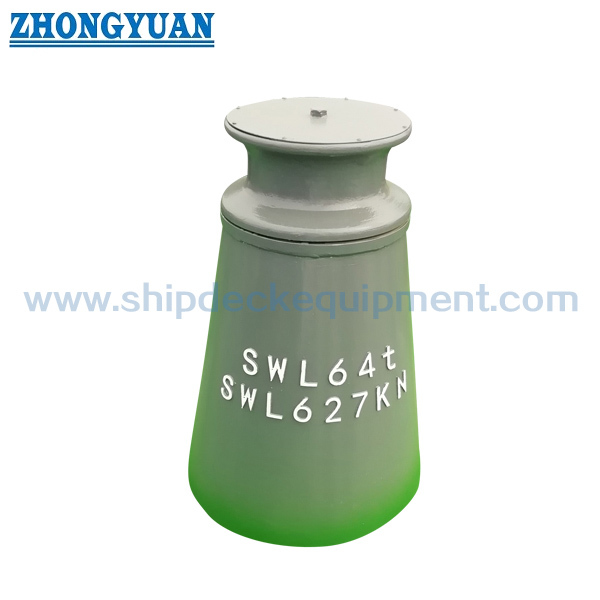
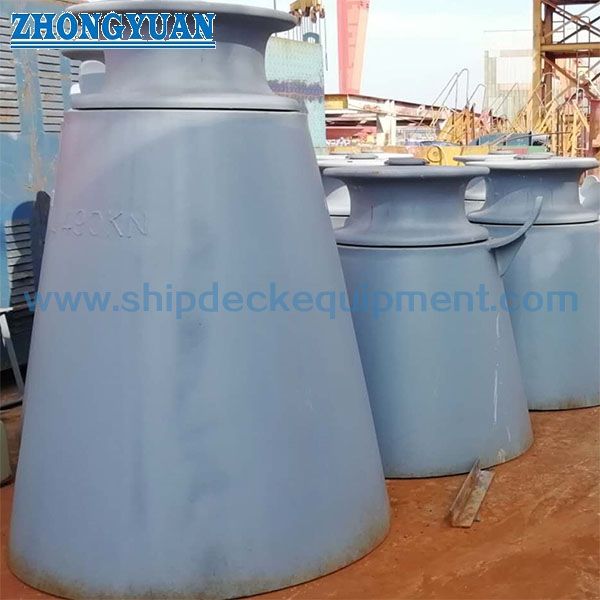
Single-Roller Pedestal Fairlead with Cleat | Ship Mooring and Towing Line Guide (CB/T 436 Type B)
Product Overview
The CB/T 436 Type B pedestal roller fairlead with cleat is a deck-mounted single-roller rope guide used to control the lead of mooring or towing lines at ship deck stations. The rotating roller is specified as a CB/T 3861 standard roller, while the pedestal and cleat-type rope-control structure support the line path and transfer local reactions into the deck foundation.
The supplied range covers nominal roller diameters from 150 to 450 mm, with reference rope sizes for fiber rope, Malina rope, and 6×24 or 6×37 steel wire rope. These rope sizes are reference compatibility data and are not the fairlead SWL or the rope breaking load. Final selection should also confirm the project design load, line direction, deck reinforcement, welding details, roller rotation, shaft and bearing arrangement, material allocation, coating system, and class inspection scope.
Quick Specifications
Main Technical Parameters
| oller Dia. |
Applicable Wire Rope Dia. (Max.) (For reference only) |
Dimensions | Weight kg |
|||||||||||||||||
| Fiber Rope Dia. |
Malina Rope Dia. |
SWR (GB /T 8918) Strength 1570 Mpa |
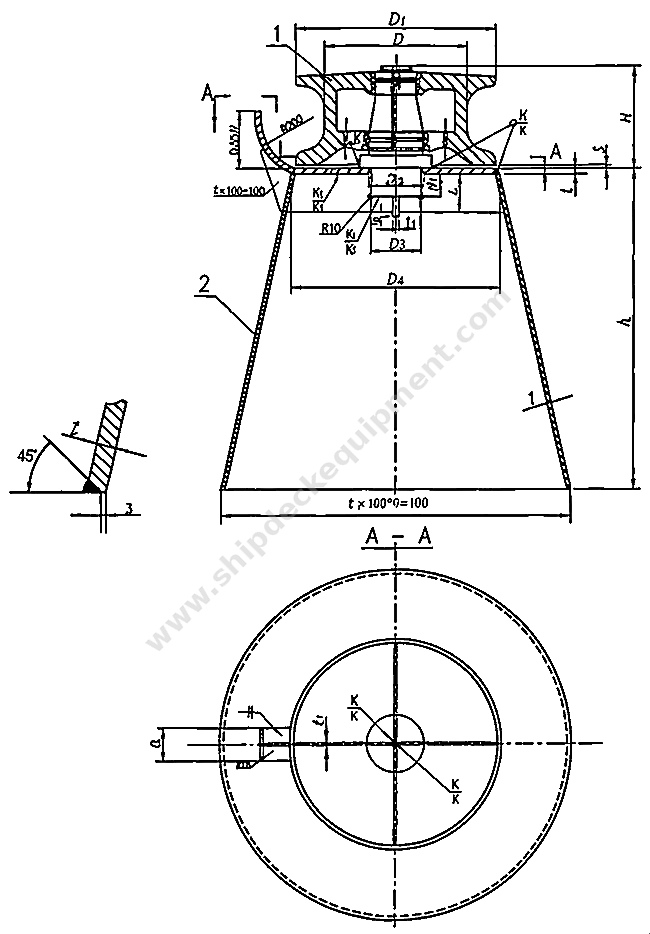
a | D1 | D2 | D3 | D4 | H | H1 | K | K1 | L | s | t | T1 | Roller | Pedestal | |||
| 6X24 | 6X37 | |||||||||||||||||||
| 150 | 32 | 45 | 16~18 | 14~16 | 60 | 240 | 90 | 85 | 264 | 154 | 30 | 9 | 7 | 75 | 5 | 12 | 8 | 24. 8 | 129 | |
| 200 | 40 | 55 | 22. 0 | 20 | 60 | 310 | 115 | 110 | 338 | 186 | 30 | 10 | 8 | 85 | 5 | 14 | 10 | 49. 3 | 178 | |
| 250 | 45 | 65 | 24 | 24. 0 | 80 | 380 | 135 | 130 | 408 | 230 | 35 | 10 | 8 | 100 | 6 | 14 | 10 | 92. 0 | 201 | |
| 300 | 50 | 70 | 30. 0 | 28 | 80 | 440 | 155 | 150 | 472 | 255 | 35 | 13 | 10 | 100 | 7 | 16 | 12 | 127. 0 | 265 | |
| 350 | 55 | 75 | 38 | 34 | 80 | 500 | 175 | 170 | 536 | 271 | 35 | 13 | 10 | 100 | 7 | 18 | 14 | 168. 0 | 332 | |
| 400 | 65 | 85 | 40~42 | 38~40 | 100 | 560 | 185 | 180 | 600 | 307 | 40 | 14 | 12 | 100 | 7 | 20 | 16 | 252,5 | 401.3 | |
| 450 | 80 | 95 | 44 | 42~44 | 100 | 630 | 210 | 205 | 670 | 316 | 40 | 14 | 12 | 120 | 7 | 20 | 16 | 310,0 | 452. 0 | |
Selection & Inquiry Guide
Step 1: Confirm CB/T 436-2000 Type B and select the nominal CB/T 3861 roller diameter from 150 to 450 mm according to the vessel drawing.
Step 2: Provide rope type, rope construction, rope diameter, rope MBL, operating line load, and expected line speed; use the supplied rope table only for initial compatibility checking.
Step 3: Confirm the approach and departure directions of the line, expected side lead, deck position, nearby equipment clearance, and the intended function of the cleat-type rope-control feature.
Step 4: Confirm pedestal foundation, deck reinforcement, weld detail, roller centerline, shaft-removal space, lubrication access, and inspection access before production.
Step 5: Confirm the exact material for the pedestal, roller, shaft, cleat, and rotating interface; do not assume every listed material option applies to every component.
Step 6: Confirm surface treatment, quantity, class society requirement, inspection and test scope, material certificates, destination, required delivery time, and provide a standard drawing, GA drawing, or reference photo if available.
Structure
Single CB/T 3861 roller | Pedestal support structure | Cleat-type rope-control feature | Roller shaft and rotating interface | Deck-welded base | Smooth rope-contact surfaces | Lubrication access to be confirmed | Specified coating system
Rope Guidance, Fabrication & Installation Advantages
Custom Attributes
How It Works
Mooring or towing line approaches the fairlead → The line contacts the rotating single roller → Roller rotation guides the change in line direction and reduces sliding contact → The cleat-type feature helps control lateral line position → Reactions transfer through the pedestal and welded base into the reinforced deck structure
Applications
Ship mooring stations | Approved towing line guide positions | Tugboats | Workboats | Coastal vessels | Inland vessels | Service ships | Newbuilding and replacement projects
Certifications & Advantages
Material certificates, maker documentation, dimensional records, inspection reports, class witnessing, and other certificates can be arranged according to project requirement and the agreed order scope. Certificate availability is subject to material traceability, inspection procedure, test requirement, and class approval.
Certification: CCS, NK, BV, ABS, DNV, LR, KR, IRS, RS, RINA, CRS, Makers Test Certificate.
Drawing & Photos


FAQ
Q1: How should the correct roller diameter be selected?
A1: Select the nominal roller diameter using the vessel drawing, line type, rope construction, rope diameter, operating lead direction, and available deck space. The reference rope table supports initial selection but does not replace a load calculation or approved arrangement drawing.
Q2: Can the cleat feature be used as the main line-securing point?
A2: This should not be assumed. The cleat-type feature is part of the fairlead rope-control arrangement. Any line-securing duty must be confirmed from the official standard drawing, design load, vessel mooring or towing plan, and class approval.
Q3: What information is required before quotation?
A3: Confirm standard and type, roller diameter, rope type and size, rope MBL, design line load, line directions, installation position, deck foundation, material allocation, shaft and rotating arrangement, surface treatment, certificate scope, quantity, destination, delivery time, and provide the vessel drawing or reference