Pneumatic Quick Release Disc Towing Hook with Side-Swing Movement for Tugboats
Product Overview
The pneumatic quick release disc towing hook is a deck-mounted towing connection for tugboats, harbour tugs, and vessels requiring controlled towline release. The disc-type release mechanism secures the towing line connection during operation and can be released locally by manual control or remotely through a pneumatic system, subject to the approved release arrangement and operating procedure.
The supplied range covers 30 to 100 t SWL and uses a side-swing mounting arrangement to follow changes in towline lead within the approved movement range. Selection should consider the required towing load, towline material and eye geometry, side lead, vessel deck foundation, remote-control arrangement, release-under-load test requirement, and classification scope. This equipment is for towing duty and must not be treated as a lifting hook or as a jetty quick release mooring hook.
Quick Specifications
Main Technical Parameters
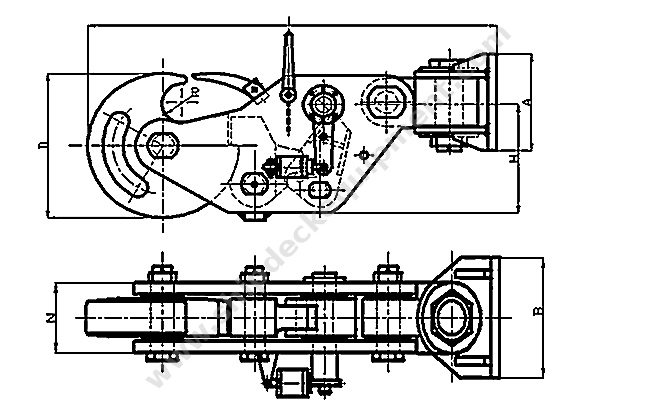
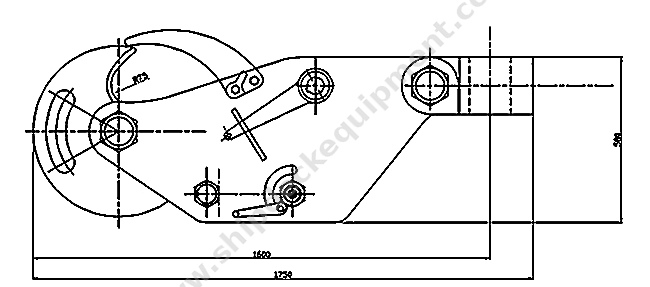
| S.W.L. (ton) | A | B | D | H | L | N | R |
| 30 | 300 | 285 | 470 | 355 | 1278 | 180 | 60 |
| 50 | 395 | 360 | 470 | 405 | 1395 | 214 | 60 |
| 60 | 400 | 380 | 600 | 450 | 1628 | 220 | 80 |
| 80 | 410 | 400 | 600 | 466 | 1703 | 260 | 80 |
| 90,100 | 450 | 430 | 650 | 502.5 | 1915 | 328 | 88 |
Selection & Inquiry Guide
Step 1: Confirm the required SWL, tug type, towing duty, design towline load, operating area, and whether the hook is for newbuilding or replacement.
Step 2: Confirm towline material and termination: polypropylene / nylon rope, steel wire rope, towing eye, shackle, or other connection. Provide the eye and end-fitting dimensions for compatibility review.
Step 3: Confirm side-swing direction, required movement angle, towline lead, hook installation height, surrounding clearance, deck opening, foundation, and vessel structural reinforcement.
Step 4: Confirm pneumatic control data: available air pressure, air quality, control voltage, solenoid requirement, local and wheelhouse release stations, manual release wire or lever, and alarm / indication requirement.
Step 5: Confirm test and certificate scope before quotation: proof or SWL test, release-under-load test, operation test, prototype break test, NDT method, class witnessing, material certificates, and maker documentation.
Step 6: Provide material grade, coating system, quantity, vessel type, classification society, installation drawing, delivery destination, and required delivery time.
Structure
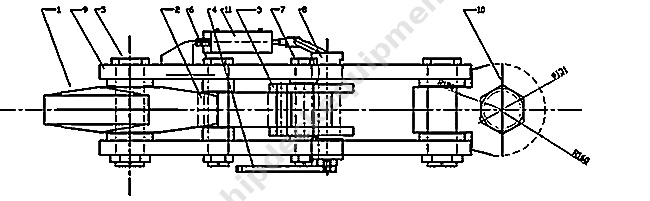
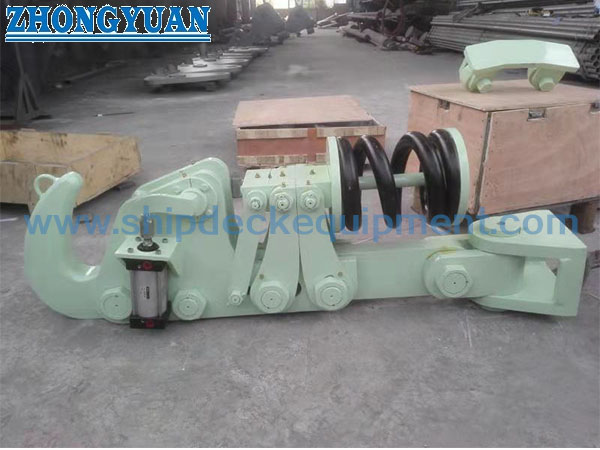
Rotating disc release member | Keeper and locking mechanism | Release lever and reset lever | Side-swing mounting / swivel arrangement | Pneumatic actuator and control interface | Local manual release arrangement | Deck foundation and structural connection
Towing Safety, Release & Engineering Advantages
Custom Attributes
How It Works
Towline eye or connection is placed on the disc hook → Keeper and locking mechanism secure the connection → Towing load passes through the side-swing mounting and vessel foundation → Local or pneumatic remote command operates the release mechanism → Disc rotates and the towing connection disengages → Hook is inspected and reset after the area is safe
Applications
Harbour tug towing | Port ship-assist operations | Tugboat aft towing stations | Coastal towing vessels | Project-specific emergency towing duties | Newbuilding and retrofit towing arrangements
Certifications & Advantages
Certificates and witnessed tests can be arranged according to project requirement, approved test procedure, material traceability, and classification society acceptance. The certificate and inspection scope must be agreed before quotation.
Certification: CCS, NK, BV, ABS, DNV, LR, KR, IRS, RS, RINA, CRS, Makers Test Certificate.
Drawing & Photos


FAQ
Q1: Can the pneumatic disc towing hook release the towline at full SWL?
A1: The design is intended for loaded release, but full-SWL release must be confirmed by the approved hook configuration, pneumatic system, towline connection, test procedure, and class requirement. The release load should be stated separately from proof and break loads.
Q2: How should the correct 30 to 100 t SWL model be selected?
A2: Selection should use the approved towing design load, dynamic effects, towline type, lead direction, side-swing range, foundation reaction, deck reinforcement, and class rule. Tug bollard pull alone is not a complete selection basis.
Q3: Is this product the same as a quick release mooring hook?
A3: No. This product is a vessel-mounted towing hook for tug and towing operations. A jetty quick release mooring hook is a different terminal mooring product with different installation, load monitoring, and operating arrangements.