Double Bitt Mooring Bollard with Optional Horns | ASTM A27 Grade 70-36 Cast Steel
Product Overview
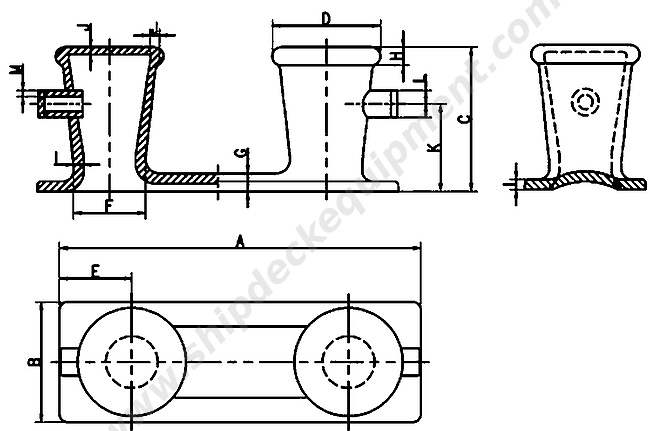
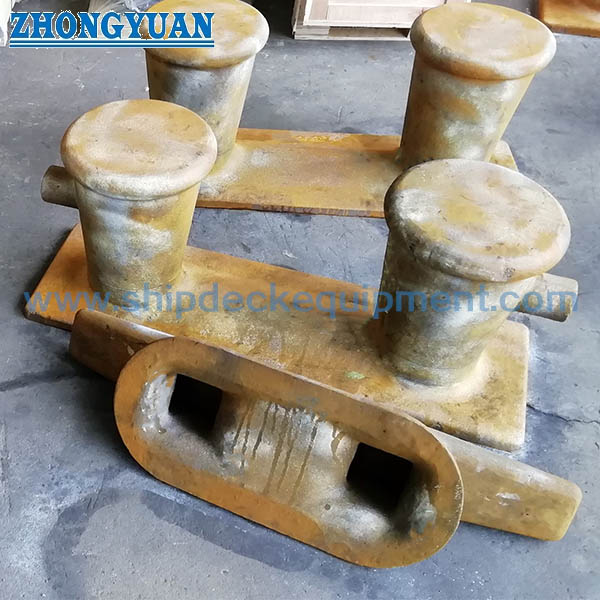
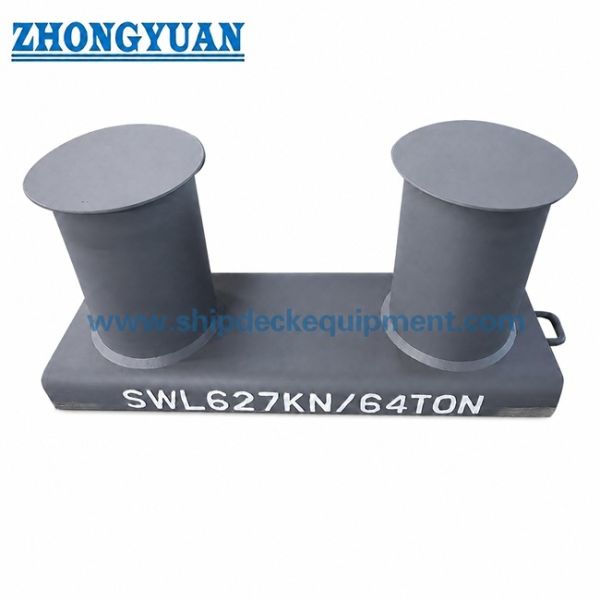
The cast steel double bitt bollard is a ship mooring deck fitting used to secure and control mooring ropes at deck mooring stations. This page covers the 8 inch and 10 inch double bitt configurations manufactured from ASTM A27-70-36 C-Mn cast steel or equivalent, with optional horn arrangements for projects that require additional rope-retention support around the bitt area.
Compared with a large inland-barge bollard page, this product page focuses on the compact 8 inch and 10 inch ship mooring range, the optional horn structure, controlled cast-steel surface quality, and project-based inspection such as dye penetrant testing, magnetic particle examination, localized X-ray inspection, FEA strength review, and pull test verification when required by the order specification.
Quick Specifications
Main Technical Parameters
| Description |
Dimensions In Inches (mm) |
LBS (KGS) |
||||||||||||
| A | B | C | D (Ø) | E | F (Ø) | G | H | I | J | K | L (Ø) | M | ||
| Double Bitt 8” |
40” (1016) |
14” (336) |
16” (406) |
11” (279) |
8” (203) |
7” (177) |
2” (51) |
2” (51) |
1.25” (32) |
.72” (18) |
- | - | - |
320 (145) |
| Double Bitt 8” With Horns |
40” (1016) |
14” (336) |
16” (406) |
11” (279) |
8” (203) |
7” (177) |
2” (51) |
2” (51) |
1.25” (32) |
.72” (18) |
10” (254) |
3.5” (89) |
.3” (8) |
331 (150) |
| Double Bitt 10” |
45” (1143) |
15” (381) |
18” (457) |
13.5” (343) |
9” (228) |
9” (228) |
2.25” (57) |
2” (51) |
1.25” (32) |
.75” R (19) |
- | - | - |
574 (260) |
| Double Bitt 10” With Horns |
45” (1143) |
15” (381) |
18” (457) |
13.5” (343) |
9” (228) |
9” (228) |
2.25” (57) |
2” (51) |
1.25” (32) |
.75” R (19) |
11” (279) |
3.5” (89) |
.3” (8) |
579 (262) |
Selection & Inquiry Guide
Step 1: Confirm double bitt bollard size: 8 inch or 10 inch, and whether the project requires the horned or non-horned configuration.
Step 2: Confirm vessel type, deck mooring arrangement, rope lead direction, rope wrap condition, and installation position according to the vessel drawing.
Step 3: Confirm material requirement: ASTM A27-70-36 C-Mn cast steel or equivalent material grade acceptable to the project specification.
Step 4: Confirm surface treatment: sandblasting, shop primer, final coating system, color, and any special corrosion-protection requirement.
Step 5: Confirm quality control and inspection scope: mechanical property test, heat treatment record, dye penetrant test, magnetic particle examination, localized X-ray test, FEA report, and pull test verification if required.
Step 6: Confirm certificate scope before quotation: ABS approval, mill certificate, maker certificate, class witness inspection, or other approval requirement according to order and project procedure.
Step 7: Provide quantity, delivery destination, required delivery time, GA drawing, deck foundation drawing, and reference photos if available.
Structure
Cast steel double bitt body | Optional horn arrangement | Smooth rope-contact surface | Heat-treated C-Mn cast steel | Deck mounting base | Force-concentration transition area | Sandblasted / shop-primed surface
Casting, Inspection & Engineering Advantages
Custom Attributes
How It Works
Mooring rope is led around the double bitt → Smooth cast-steel surface supports rope contact → Horned type helps rope retention when specified → Mooring force is transferred through the bitt body and base into the deck foundation → Inspection and coating are completed according to project requirement
Applications
Ship mooring stations | Deck mooring arrangements | Cargo vessels | Tugboats | Workboats | Inland and coastal vessels | Shipyard newbuilding projects | Replacement of existing 8 inch or 10 inch double bitt bollards
Certifications & Advantages
Certificates can be arranged according to project requirement, inspection scope, material traceability, ABS approval procedure, and class society review. Certificate wording and witness scope should be confirmed before order release.
Certification: CCS, NK, BV, ABS, DNV, LR, KR, IRS, RS, RINA, CRS, Makers Test Certificate.
Drawing & Photos


FAQ
Q1: What is the main difference between the horned and non-horned double bitt bollard?
A1: The main bollard body and nominal size range are the same, while the horned type adds horn dimensions K, L, and M. The horned type should be selected only when the vessel drawing or rope-handling arrangement requires this additional rope-retention geometry.
Q2: Can NDT, FEA calculation, and pull test verification be supplied?
A2: Yes, these items can be arranged according to project requirement. The inspection method, acceptance criteria, FEA load case, pull test load, loading direction, fixture method, and witness scope should be confirmed before quotation or production.
Q3: Does this page provide a fixed SWL for the bollard?
A3: No fixed SWL is added because the supplied data provides model type, dimensions, material, inspection items, and weight only. Final mooring load basis should be checked with the vessel mooring arrangement, deck foundation design, rope wrap condition, and project approval requirement.