Specifications
Polymer Dosing :
Optional
Control System :
PLC Automatic Control
Operation :
Continuous Automatic
Separation Type :
2-Phase Solid-Liquid Separation
Drive System :
Dewatering,separation,filtration
Application :
Carbon Black Slurry Dewatering
MOC :
SS304 / SS316L / Duplex Optional
Brand Name :
Peony
Model Number :
PDC
Certification :
ISO,CE, ISO
Place of Origin :
China
MOQ :
1 set
Price :
please contact me
Payment Terms :
L/C,T/T,Western Union
Supply Ability :
100sets per month
Delivery Time :
60 days
Packaging Details :
Standard wooden case
Sealing :
Enhanced Sealing Optional
Solids Discharge :
Continuous Scroll Discharge
Product Name :
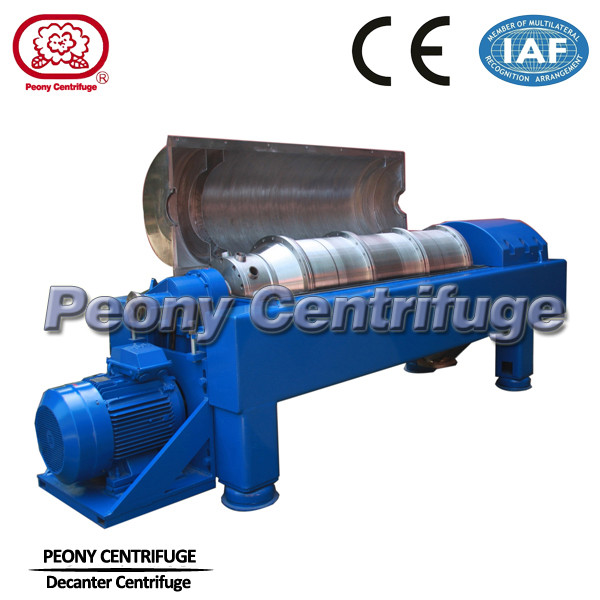
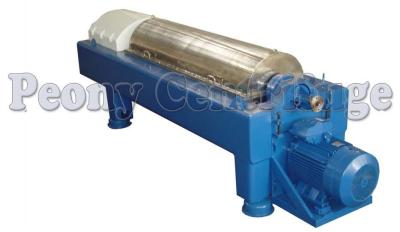
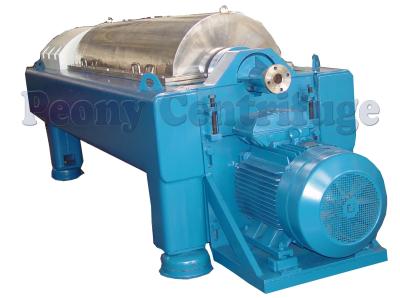
Carbon Black Slurry Decanter Centrifuge
Description
Decanter Centrifuge for Carbon Black Slurry Dewatering
Description

The Decanter Centrifuge for Carbon Black Slurry Dewatering is designed for continuous solid-liquid separation, carbon black recovery, slurry thickening, and process-water clarification.

It is suitable for carbon black production, pigment slurry treatment, rubber and plastic masterbatch processes, conductive carbon material recovery, ink and coating wastewater treatment, and carbon-black-containing process water.

The centrifuge continuously separates carbon black solids from the liquid phase. Thickened carbon black slurry is discharged for filtration, drying, pelletizing, reuse, or further processing. Clarified liquid can be returned to the washing process, slurry preparation section, recycle-water tank, or wastewater treatment system.


Typical Applications
  • Carbon black washing slurry dewatering
  • Carbon black pelletizing process water recovery
  • Carbon black fines recovery
  • Carbon black pigment slurry treatment
  • Conductive carbon slurry recovery
  • Rubber and plastic masterbatch wastewater treatment
  • Ink, coating, and colorant process-water clarification
  • Recovered carbon black processing
  • Pyrolysis carbon black washing and dewatering
  • Carbon-black-containing wastewater thickening

Why Use a Decanter Centrifuge for Carbon Black Slurry?
Process Requirement Decanter Centrifuge Solution
Fine carbon black particles Continuous high-force separation and thickening
Variable slurry concentration Adjustable bowl speed and differential speed
Process-water recycle Clarified liquid for reuse or further treatment
High-throughput operation Continuous feed and solids discharge
Lower drying load Reduced liquid content before downstream drying
Reduced manual handling PLC-controlled automatic operation
Fine-particle recovery Optional polymer dosing for difficult settling duty

Carbon Black Slurry Dewatering Solution

Peony provides continuous solid-liquid separation for carbon black recovery, slurry thickening, and process-water recycle.

Peony can provide:

  • Decanter centrifuge selected according to carbon black particle size and slurry condition
  • Agitated slurry buffer tank for stable feeding
  • Controlled feed pump and flow regulation system
  • Optional polymer dosing and mixing arrangement
  • Adjustable differential speed and pond depth control
  • Sealed feed and discharge configuration
  • Clarified liquid collection and recycle connection
  • PLC and VFD automatic control system
  • Connection to filter press, dryer, pelletizing, storage, or wastewater treatment system

How the Decanter Centrifuge Works

1. Carbon Black Slurry Feeding

Carbon black slurry enters the rotating bowl through a controlled feed pipe.

An agitated slurry tank is usually recommended upstream to maintain stable solids concentration and prevent uneven feed conditions.

2. Centrifugal Sedimentation

Inside the rotating bowl, centrifugal force separates carbon black solids from the liquid phase.

The solids move outward and form a settled layer against the bowl wall, while clarified liquid remains closer to the center.

3. Continuous Solids Conveying

The internal screw conveyor rotates at a controlled differential speed relative to the bowl.

This differential movement transports settled carbon black solids toward the conical end for continuous discharge.

4. Clarified Liquid Discharge

The separated liquid leaves through the liquid outlet.

It can be recycled to washing, slurry preparation, or process-water storage, or routed to further clarification and wastewater treatment.

5. Thickened Carbon Black Solids Discharge

The concentrated carbon black solids are continuously discharged from the solids outlet.

The recovered material can be sent to a filter press, vacuum filter, dryer, pelletizer, storage tank, or further processing section.

Decanter Centrifuge for Carbon Black Slurry Dewatering


Technical Parameter
Model Diameter (mm) Length (mm) Length-to-diameter rate G force Max solid discharge (m³/h) Weight (kg) Dimension (L*W*H) (mm)
PDC-10 250 1000 4 4080 0.4 1000 2410*800*1080
PDC-12 4200 1350 4 3500 0.6 1200 2610*800*1080
PDC-12 4200 1350 4.5 3180 1.2 1800 3495*840*1180
PDC-18 4000 1600 4.5 3180 1.2 3200 3497*1020*1385
PDC-18 450 2150 4 2500 2 3800 4447*1080*1385
PDC-20 400 2250 4.5 2500 3.5 4000 4580*1140*1470
PDC-21 530 2280 4.3 2500 5 5000 4924*1170*1540
PDC-26 655 2800 4.3 2270 8 7000 4300*1900*1350

Key Selection Considerations

Fine Particle Recovery

Carbon black particles can be very fine and may remain suspended in water, especially when the slurry contains dispersants or surfactants. Separation testing is recommended when high recovery or strict clarified-water quality is required.

Slurry Viscosity and Dispersion

High-viscosity slurry may reduce settling performance and throughput. Feed concentration, shear sensitivity, and mixing conditions should be considered during selection.

Polymer Compatibility

Polymer can improve solids recovery and liquid clarity in some duties, but overdosing can affect downstream filtration, drying, product purity, or water reuse. Polymer selection should be based on slurry testing.

Final Solids Condition

A decanter centrifuge is mainly used for continuous thickening and primary dewatering. When lower final moisture is required, it can be combined with a filter press, vacuum filter, centrifuge dryer, or thermal dryer.

Water Reuse Requirement

For wash-water or process-water recycle, the clarified liquid quality should be evaluated based on suspended solids, residual additives, conductivity, pH, and the next process requirement.


Main Advantages

Continuous Carbon Black Recovery

The decanter continuously recovers suspended carbon black solids from slurry, washing water, and wastewater streams without stopping for manual discharge.

Stable Operation for Variable Feed

Carbon black slurry may vary in solids concentration, dispersion condition, viscosity, surfactant content, or residual chemicals. The bowl speed, differential speed, pond depth, and feed rate can be adjusted to support stable separation.

Process-Water Recycle

The clarified liquid can be routed back to slurry preparation, washing, cooling, or process-water storage. Where stricter water quality is needed, it can be sent to polishing filtration or further treatment.

Optional Polymer Dosing

Fine carbon black particles may remain suspended, especially in low-solids or highly dispersed slurry. A polymer dosing and mixing system can be added where testing confirms that flocculation improves recovery or liquid clarity.

Closed and Clean Handling

The enclosed design helps reduce slurry splashing and keeps carbon black-containing liquid inside the separation system, supporting a cleaner production environment.


What Data Is Needed for Selection?

Please provide the following information for a suitable carbon black slurry dewatering solution:

  • Carbon black type and product application
  • Particle-size distribution and fine-particle content
  • Slurry solids concentration and viscosity
  • Required processing capacity
  • Required carbon black recovery rate
  • Target solids concentration after centrifugation
  • Clarified liquid quality and water-recycle requirement
  • Surfactant, dispersant, or additive content
  • Polymer or flocculant currently used
  • Downstream filter press, dryer, pelletizing, or storage arrangement
  • Required material of construction
  • Electrical and control standard

FAQ

Can a decanter centrifuge recover silicon carbide powder from process water?

Yes. It can continuously recover silicon carbide solids from grinding water, wash water, classification slurry, and abrasive wastewater. Recovery performance depends on particle size, slurry concentration, settling behavior, and clarified-liquid target.

Is wear protection necessary for silicon carbide slurry?

In most cases, yes. Silicon carbide is highly abrasive, especially at high solids concentration. Wear-resistant protection for the scroll, feed zone, bowl cone, and solids discharge zone is strongly recommended.

Can the clarified liquid be reused?

The clarified liquid can often be recycled to grinding, washing, or slurry preparation. When stricter water quality is required, additional polishing filtration or treatment may be added downstream.

Can the centrifuge replace a filter press?

The decanter centrifuge is suitable for continuous slurry thickening and primary dewatering. When lower final moisture is required, it is commonly used before a filter press, vacuum filter, or dryer.

Can this machine handle fine silicon carbide particles?

Yes, but very fine SiC requires evaluation of particle size, solids concentration, slurry viscosity, polymer use, and required recovery rate before final equipment selection.


Contact Peony for Partnership

Peony welcomes distributor and agent cooperation with carbon black producers, recovered carbon black processors, pigment and colorant manufacturers, rubber and plastic masterbatch plants, conductive carbon material suppliers, ink and coating manufacturers, wastewater treatment companies, and industrial separation partners.

We support partners with carbon black slurry testing, decanter centrifuge selection, fine-particle recovery evaluation, polymer dosing design, sealed feed and discharge configuration, process-water recycle integration, installation guidance, commissioning support, spare parts, and after-sales service.

Send us your carbon black type, particle size, solids concentration, slurry viscosity, required capacity, recovery target, clarified-water requirement, additive content, and downstream handling arrangement. Our engineering team will recommend a suitable decanter centrifuge solution for your carbon black slurry dewatering process.

Send your message to this supplier
Send Now

Decanter Centrifuge for Carbon Black Slurry Dewatering

Ask Latest Price
Watch Video
Polymer Dosing :
Optional
Control System :
PLC Automatic Control
Operation :
Continuous Automatic
Separation Type :
2-Phase Solid-Liquid Separation
Drive System :
Dewatering,separation,filtration
Application :
Carbon Black Slurry Dewatering
Contact Supplier
video
Decanter Centrifuge for Carbon Black Slurry Dewatering

ZHANGJIAGANG CITY PEONY MACHINERY CO.,LTD

Verified Supplier
14 Years
jiangsu, nanjing
Since 1990
Business Type :
Manufacturer, Distributor/Wholesaler, Exporter, Trading Company, Seller, Other
Total Annual :
35Million -40Million
Employee Number :
50~100
Certification Level :
Verified Supplier
Contact Supplier
Submit Requirement