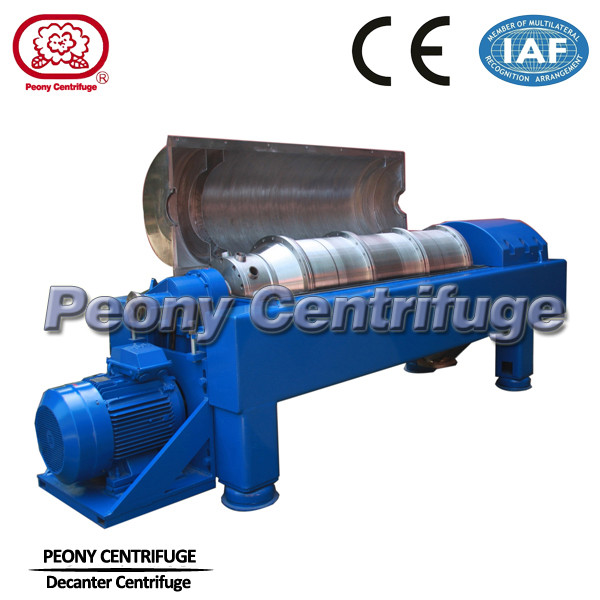
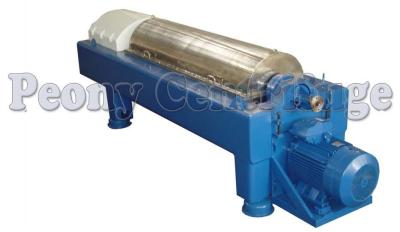
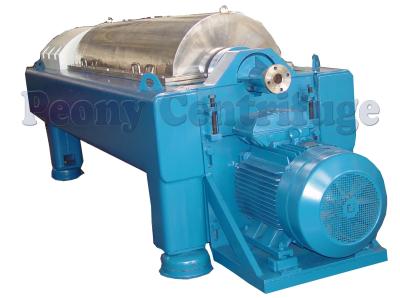
The Decanter Centrifuge for Graphite Slurry Recovery is designed for continuous solid-liquid separation, graphite fines recovery, slurry thickening, and process-water clarification in graphite beneficiation, wet grinding, anode material processing, and graphite-containing wastewater treatment.
Graphite slurry often contains fine particles, variable solids concentration, residual flotation reagents, abrasive mineral impurities, or process water with high recycle value. A decanter centrifuge separates and concentrates the graphite solids continuously while discharging clarified liquid for reuse, further treatment, or return to the process circuit.
The system is suitable for recovering graphite-bearing solids from washing water, grinding slurry, classification overflow, tailings streams, polishing slurry, and production wastewater.
| Process Requirement | Decanter Centrifuge Solution |
|---|---|
| Continuous graphite recovery | Continuous solids discharge without batch interruption |
| Variable slurry concentration | Adjustable bowl speed and differential speed |
| Fine graphite loss reduction | High centrifugal force improves recovery of suspended solids |
| Process-water reuse | Clarified liquid can return to washing or grinding circuits |
| Abrasive mineral impurities | Optional wear protection for bowl, scroll, and discharge zone |
| Labor reduction | Automatic operation with PLC control |
| Slurry volume reduction | Concentrates graphite slurry before filtration or drying |
Peony provides continuous graphite slurry recovery and process-water clarification for graphite grinding, washing, classification, and beneficiation lines.
Graphite Slurry Tank → Optional Polymer Dosing → Decanter Centrifuge → Thickened Graphite Solids → Filter Press / Dryer / Storage
Clarified Liquid → Process Water Tank → Recycle to Grinding, Washing, or Slurry Preparation
The decanter centrifuge continuously recovers graphite solids from wash water, classification overflow, or process slurry, reducing graphite loss and downstream liquid handling.
Peony can provide:
Graphite slurry enters the rotating bowl through a controlled feed pipe.
A slurry tank with agitation is normally recommended upstream to prevent graphite settling and maintain stable feed concentration.
Inside the high-speed rotating bowl, centrifugal force separates graphite solids from the liquid phase.
Graphite particles move outward and form a solids layer against the bowl wall, while the clarified liquid remains closer to the center.
The internal screw conveyor rotates at a controlled differential speed relative to the bowl.
This differential movement transports the settled graphite solids toward the conical end for continuous discharge.
The separated liquid flows through the liquid outlet.
Depending on the process requirement, it can be returned to the washing circuit, grinding system, recycle-water tank, wastewater treatment stage, or further clarification equipment.
The concentrated graphite solids are continuously discharged from the solids outlet.
The recovered graphite slurry can be sent to a filter press, vacuum belt filter, dryer, purification section, milling system, or further classification stage.

| Model | Diameter (mm) | Length (mm) | Length-to-diameter rate | G force | Max solid discharge (m³/h) | Weight (kg) | Dimension (L*W*H) (mm) |
|---|---|---|---|---|---|---|---|
| PDC-10 | 250 | 1000 | 4 | 4080 | 0.4 | 1000 | 2410*800*1080 |
| PDC-12 | 4200 | 1350 | 4 | 3500 | 0.6 | 1200 | 2610*800*1080 |
| PDC-12 | 4200 | 1350 | 4.5 | 3180 | 1.2 | 1800 | 3495*840*1180 |
| PDC-18 | 4000 | 1600 | 4.5 | 3180 | 1.2 | 3200 | 3497*1020*1385 |
| PDC-18 | 450 | 2150 | 4 | 2500 | 2 | 3800 | 4447*1080*1385 |
| PDC-20 | 400 | 2250 | 4.5 | 2500 | 3.5 | 4000 | 4580*1140*1470 |
| PDC-21 | 530 | 2280 | 4.3 | 2500 | 5 | 5000 | 4924*1170*1540 |
| PDC-26 | 655 | 2800 | 4.3 | 2270 | 8 | 7000 | 4300*1900*1350 |
Fine graphite particles can remain suspended for a long time, especially when the slurry contains a high fraction of ultra-fine graphite. For very fine material, flocculant selection, residence time, bowl speed, and pond depth should be evaluated during testing.
Natural graphite processing streams may contain quartz, mica, feldspar, silica, or sand. These particles can accelerate wear on the feed zone, scroll flights, solids discharge zone, and bowl cone. Wear protection should be selected according to the actual slurry composition.
A decanter centrifuge can handle variable slurry concentration, but feed stability improves separation consistency. An agitated buffer tank and controlled feed pump are recommended.
A decanter centrifuge is mainly used for continuous thickening and slurry dewatering. When very low final moisture is required, a filter press, vacuum filter, or thermal dryer may be installed downstream.
When the clarified liquid must meet strict reuse standards, the decanter can be combined with settling, flotation, membrane filtration, polishing filtration, or chemical treatment.
The centrifuge continuously separates graphite solids from the liquid phase. It helps reduce graphite loss in wash water, overflow streams, and production wastewater.
Graphite slurry solids concentration can change due to grinding, washing, flotation, classification, or process-water fluctuations. Bowl speed, differential speed, pond depth, and feed rate can be adjusted to maintain stable separation.
The clarified liquid can be reused as process water, returned to a washing stage, sent to a recycle-water tank, or routed to further clarification.
Graphite itself is relatively soft, but natural graphite slurry may contain quartz, silicate minerals, sand, or other abrasive impurities. Wear-resistant tiles, hardfacing, tungsten carbide protection, or replaceable wear liners can be configured for high-abrasion duties.
The enclosed structure helps reduce slurry splashing, floor contamination, and operator exposure. It is suitable for cleaner processing environments and controlled material recovery.
Please provide the following information for a suitable graphite slurry recovery solution:
Yes. A decanter centrifuge can recover suspended graphite solids continuously. However, the recovery efficiency for ultra-fine graphite depends on particle size, settling behavior, slurry viscosity, solids concentration, and whether polymer conditioning is used.
In many graphite processing systems, the clarified liquid can be returned to the washing or grinding circuit. The final reuse decision depends on turbidity, residual reagents, dissolved salts, and the required process-water quality.
It depends on the slurry composition. Pure graphite is not highly abrasive, but graphite beneficiation slurry may contain quartz, silica, sand, or mineral impurities. Wear protection is recommended when abrasive solids are present.
A decanter centrifuge can reduce slurry volume and produce thickened solids continuously. When lower final moisture is required, it is commonly used before a filter press, vacuum filter, or dryer rather than replacing them completely.
Yes. It can recover graphite fines from washing water and separate reusable liquid for return to the process system or further treatment.
Peony welcomes distributor and agent cooperation with graphite producers, mineral processing plants, battery anode material manufacturers, graphite beneficiation contractors, wastewater treatment companies, and industrial separation partners.
We support partners with graphite slurry testing, decanter centrifuge selection, fine-particle recovery evaluation, polymer dosing design, wear-resistant configuration, process-water recycle integration, installation guidance, commissioning support, spare parts, and after-sales service.
Send us your graphite type, particle size, slurry solids concentration, abrasive impurity content, required capacity, clarified-water target, target solids concentration, and downstream handling arrangement. Our engineering team will recommend a suitable decanter centrifuge solution for your graphite slurry recovery process.