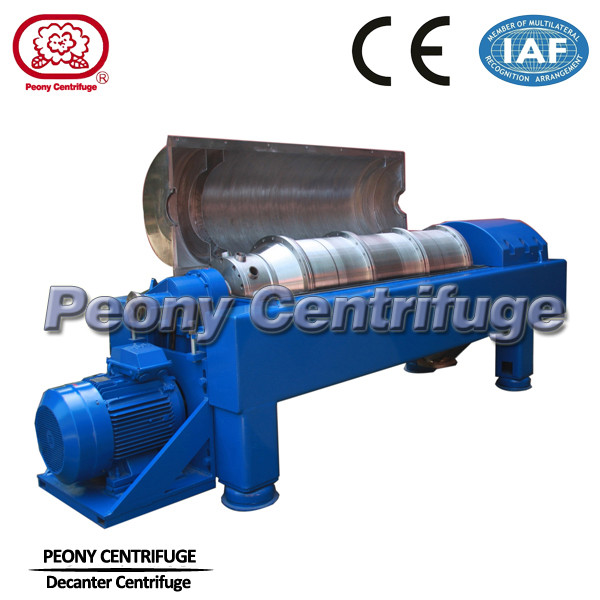
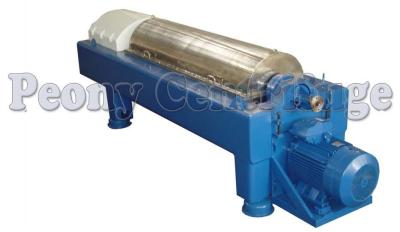
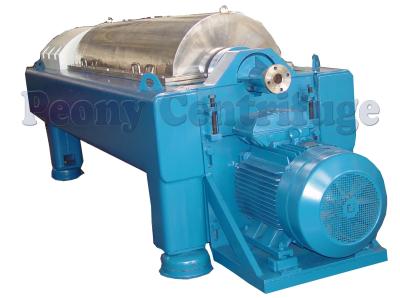
The Decanter Centrifuge for Concrete Slurry Recycling is designed for continuous cement-fines separation, concrete sludge thickening, wash-water clarification, and process-water recovery.
It is suitable for ready-mix concrete plants, precast concrete factories, concrete cutting and grinding wastewater, mixer and truck washout water, aggregate washing systems, and concrete recycling facilities.
Concrete washout slurry may contain gravel, coarse sand, hardened cement pieces, wire, and other foreign materials.
Recommended pretreatment includes:
Coarse particles should be removed before the slurry enters the centrifuge.
Concrete slurry normally contains cement, lime, and alkaline wash water.
The pH, chloride content, admixtures, and cleaning chemicals should be checked before selecting wetted materials and seals.
Cement particles settle quickly and may begin to hydrate or harden inside tanks, pipes, and equipment.
Continuous agitation, regular flushing, controlled retention time, and automatic cleaning help reduce deposits and blockages.
Sand, quartz, crushed stone, and aggregate fines can wear the feed zone, scroll flights, bowl beach, and discharge ports.
Recommended protection may include:
Wash-water concentration changes according to production schedule, cleaning frequency, and the number of trucks or mixers being washed.
An agitated equalization tank and controlled feed pump help maintain stable centrifuge operation.
Peony provides continuous separation solutions for concrete sludge thickening, cement-fines recovery, wash-water clarification, and process-water recycling.
Concrete Washout / Cutting / Grinding / Aggregate Washing
→ Aggregate Separation or Coarse Screening
→ Agitated Equalization Tank
→ Optional Slurry Conditioning
→ Decanter Centrifuge
→ Thickened Concrete Sludge
→ Filter Press / Solidification / Reuse Evaluation / Disposal
Clarified Water
→ Recycled-Water Tank
→ Mixer or Truck Washing / Aggregate Washing / Dust Control / Further Treatment
Water used again in concrete production should be checked against the plant’s mix-design and water-quality requirements.
Pretreated concrete slurry enters the rotating bowl through a controlled feed pipe.
An agitated tank keeps cement fines and stone powder suspended and maintains a stable feed concentration.
High-speed rotation separates cement particles, sand fines, and mineral solids from the water phase.
The denser solids move outward and form a layer against the bowl wall, while clarified water remains closer to the center.
The internal screw conveyor rotates at a controlled differential speed.
It continuously transports settled concrete sludge toward the conical end for further dewatering.
The separated water leaves through the liquid outlet.
It can be returned to mixer washing, truck washing, aggregate washing, dust suppression, or transferred to further treatment.
Concentrated concrete sludge is discharged continuously.
The solids can be sent to a filter press, solidification system, sludge container, disposal area, or evaluated for suitable reuse.

| Model | Diameter (mm) | Length (mm) | Length-to-diameter rate | G force | Max solid discharge (m³/h) | Weight (kg) | Dimension (L*W*H) (mm) |
|---|---|---|---|---|---|---|---|
| PDC-10 | 250 | 1000 | 4 | 4080 | 0.4 | 1000 | 2410*800*1080 |
| PDC-12 | 4200 | 1350 | 4 | 3500 | 0.6 | 1200 | 2610*800*1080 |
| PDC-12 | 4200 | 1350 | 4.5 | 3180 | 1.2 | 1800 | 3495*840*1180 |
| PDC-18 | 4000 | 1600 | 4.5 | 3180 | 1.2 | 3200 | 3497*1020*1385 |
| PDC-18 | 450 | 2150 | 4 | 2500 | 2 | 3800 | 4447*1080*1385 |
| PDC-20 | 400 | 2250 | 4.5 | 2500 | 3.5 | 4000 | 4580*1140*1470 |
| PDC-21 | 530 | 2280 | 4.3 | 2500 | 5 | 5000 | 4924*1170*1540 |
| PDC-26 | 655 | 2800 | 4.3 | 2270 | 8 | 7000 | 4300*1900*1350 |
The centrifuge continuously removes cement fines and suspended solids from concrete washout water.
Continuous separation reduces sludge accumulation and lowers dependence on large settling basins.
Pre-thickening produces a more consistent sludge concentration and reduces the hydraulic load on downstream filtration.
Protected feed, conveying, and discharge areas help extend service life under sand, quartz, and aggregate-fines conditions.
Clarified water can be reused for suitable washing and plant-cleaning applications after confirming water quality.
Please provide:
Yes. Coarse aggregate, hardened concrete pieces, and foreign objects should first be removed by screening or an aggregate separator.
Possibly. Its solids content, pH, chloride level, admixture residues, and effect on the concrete mix should be tested before production reuse.
Continuous agitation, short slurry retention time, regular flushing, and automatic cleaning help reduce cement buildup and blockage.
The decanter is mainly used for fine cement and mineral solids. Coarse sand and gravel should be removed before centrifugation.
It depends on the sludge composition, contamination level, local regulations, and intended application. Laboratory testing is recommended before reuse.
Peony welcomes distributor and agent cooperation with ready-mix concrete plants, precast factories, concrete recycling companies, stone and concrete cutting contractors, aggregate processors, wastewater-treatment companies, and industrial separation partners.
We support partners with concrete slurry testing, centrifuge selection, aggregate pretreatment, wear-resistant configuration, wash-water recycling, filter press integration, installation guidance, commissioning, spare parts, and after-sales service.
Send us your concrete slurry information, including the slurry source, particle size, solids concentration, required capacity, abrasive content, water-reuse target, and downstream sludge-handling arrangement. Our engineering team will recommend a suitable decanter centrifuge solution for your concrete slurry recycling process.