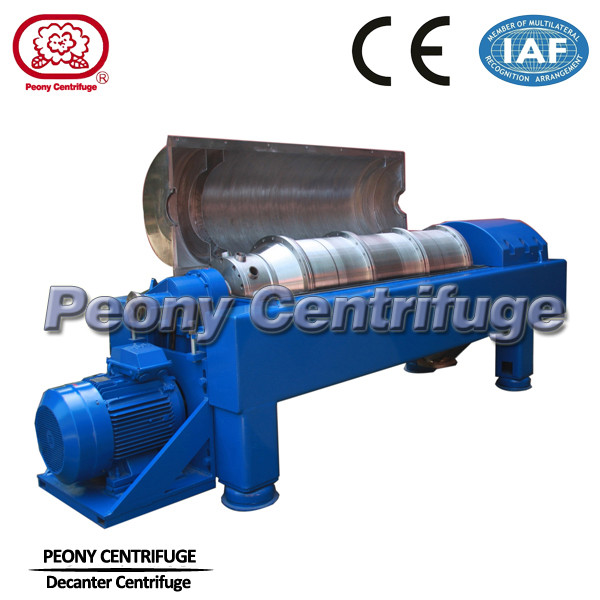
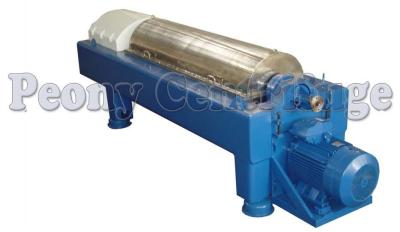
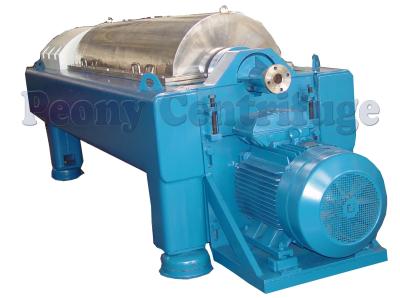
The Decanter Centrifuge for MBR Sludge Treatment is designed for efficient solid-liquid separation of membrane bioreactor sludge generated from advanced wastewater treatment systems.
It provides continuous sludge dewatering by separating concentrated biological solids from water, helping reduce sludge volume, improve sludge handling efficiency, and support downstream treatment such as drying, disposal, or resource recovery.
MBR sludge contains high concentrations of fine biological particles that require effective centrifugal separation.
Biological sludge holds significant bound water, making dewatering more difficult compared with conventional sludge.
Excess sludge removal is important for maintaining stable MBR operation and reducing system loading.
Sludge concentration and viscosity can change depending on wastewater conditions and biological activity.
MBR systems require reliable equipment for continuous sludge withdrawal and automatic operation.
MBR Excess Sludge
↓
Polymer Conditioning System
↓
Decanter Centrifuge
↓
Dewatered Sludge Cake + Separated Water
Dewatered Sludge Cake
→ Drying / Disposal / Resource Recovery
Separated Water
→ Return to Wastewater Treatment System
Concentrated MBR sludge enters the rotating bowl through a controlled feeding system.
Under centrifugal force, biological solids move toward the bowl wall and form a concentrated sludge layer.
Separated water remains in the inner liquid zone and moves toward the clarified liquid area.
The scroll continuously transports concentrated sludge toward the discharge end.
Dewatered sludge and separated water are continuously discharged for further treatment.

| Model | Diameter (mm) | Length (mm) | Length-to-diameter rate | G force | Max solid discharge (m³/h) | Weight (kg) | Dimension (L*W*H) (mm) |
|---|---|---|---|---|---|---|---|
| PDC-10 | 250 | 1000 | 4 | 4080 | 0.4 | 1000 | 2410*800*1080 |
| PDC-12 | 4200 | 1350 | 4 | 3500 | 0.6 | 1200 | 2610*800*1080 |
| PDC-12 | 4200 | 1350 | 4.5 | 3180 | 1.2 | 1800 | 3495*840*1180 |
| PDC-18 | 4000 | 1600 | 4.5 | 3180 | 1.2 | 3200 | 3497*1020*1385 |
| PDC-18 | 450 | 2150 | 4 | 2500 | 2 | 3800 | 4447*1080*1385 |
| PDC-20 | 400 | 2250 | 4.5 | 2500 | 3.5 | 4000 | 4580*1140*1470 |
| PDC-21 | 530 | 2280 | 4.3 | 2500 | 5 | 5000 | 4924*1170*1540 |
| PDC-26 | 655 | 2800 | 4.3 | 2270 | 8 | 7000 | 4300*1900*1350 |
Optimized bowl design provides effective separation for high-concentration MBR sludge.
Lower moisture content helps reduce sludge transportation and disposal costs.
The decanter centrifuge enables unmanned continuous operation with stable performance.
Differential speed, torque, and operating parameters can be adjusted according to sludge characteristics.
The system requires less installation space compared with traditional sludge dewatering equipment.
Enclosed design helps reduce odor, splashing, and operator exposure.
Please provide:
A decanter centrifuge provides continuous dewatering of MBR sludge, reducing sludge volume and improving downstream treatment efficiency.
Yes. The decanter centrifuge is suitable for separating fine suspended solids commonly found in MBR systems.
In most applications, polymer conditioning improves floc formation and enhances dewatering performance.
The final moisture content depends on sludge characteristics and operating conditions. MBR sludge commonly achieves around 75% to 82% moisture content after centrifuge dewatering.
Yes. The decanter centrifuge is designed for automatic continuous feeding, separation, and sludge discharge.
Peony provides decanter centrifuge solutions for MBR wastewater plants, EPC contractors, and industrial water treatment projects.
We support sludge characterization, equipment selection, process optimization, and customized dewatering solutions.
Contact us for your MBR sludge treatment requirements and long-term cooperation opportunities.