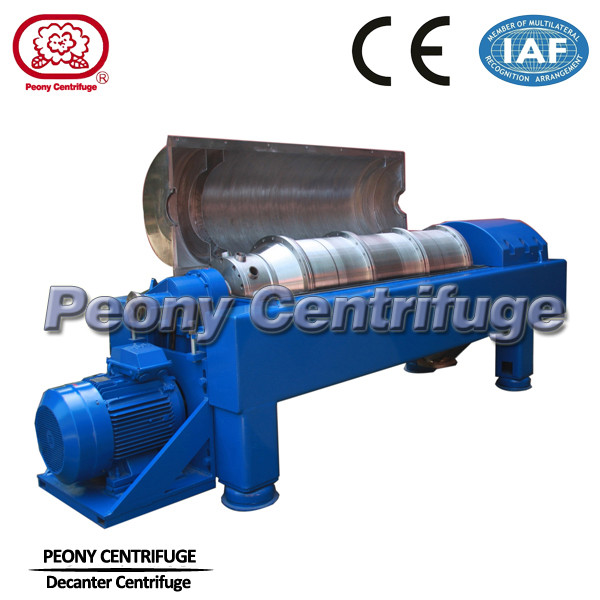
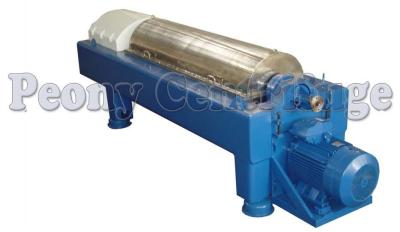
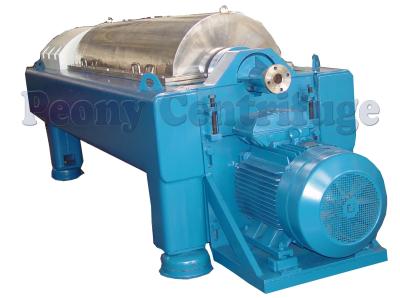
The Decanter Centrifuge for Stone Cutting Slurry Dewatering is designed for continuous stone-powder separation, sludge thickening, filter press feed preparation, and cutting-water clarification.
It is suitable for granite, marble, quartz stone, engineered stone, ceramic slab, and artificial stone processing wastewater generated during sawing, cutting, grinding, and polishing.
Stone-processing wastewater may contain coarse chips, broken fragments, wire-saw pieces, and other foreign objects.
Screening, grit removal, or desanding is recommended before centrifugation to protect the feed pipe, scroll, and solids outlets.
Granite and engineered quartz slurry may contain hard quartz, feldspar, silica, and polishing abrasives.
Recommended protection may include:
Slurry concentration can change significantly when several cutting or polishing machines discharge into the same collection tank.
An agitated buffer tank, regulated feed pump, and automatic torque control help maintain stable operation.
Fine calcium carbonate, silica, and polishing particles may remain suspended and reduce clarified-water quality.
Flocculant dosing or downstream polishing filtration may be required when cleaner recycled water is needed.
Engineered-stone slurry may contain resin, pigments, coolants, waxes, surfactants, and polishing chemicals.
The slurry composition should be checked before selecting seals, wetted materials, and cleaning arrangements.
Peony provides continuous separation solutions for stone-powder recovery, sludge thickening, filter press feed preparation, and cutting-water recycling.
Stone Cutting / Grinding / Polishing
→ Coarse Screening or Desanding
→ Agitated Slurry Tank
→ Optional Flocculant Dosing
→ Decanter Centrifuge
→ Thickened Stone Sludge
→ Filter Press / Sludge Container / Drying / Reuse
Clarified Water
→ Process-Water Tank
→ Recycle to Cutting or Polishing / Polishing Filtration / Further Treatment
Screened stone slurry enters the rotating bowl through a controlled feed pipe.
An agitated tank prevents stone powder from settling and maintains a stable feed concentration.
High-speed rotation separates stone powder and mineral particles from the water phase.
The denser solids move outward and form a layer against the bowl wall, while clarified water remains closer to the center.
The internal screw conveyor rotates at a controlled differential speed.
It continuously transports settled stone sludge toward the conical end for further dewatering.
The separated water leaves through the liquid outlet.
It can be returned to cutting or polishing machines, sent to polishing filtration, or transferred to further wastewater treatment.
Concentrated stone sludge is discharged continuously.
The solids can be sent to a filter press, sludge container, drying system, disposal area, or suitable reuse process.

| Model | Diameter (mm) | Length (mm) | Length-to-diameter rate | G force | Max solid discharge (m³/h) | Weight (kg) | Dimension (L*W*H) (mm) |
|---|---|---|---|---|---|---|---|
| PDC-10 | 250 | 1000 | 4 | 4080 | 0.4 | 1000 | 2410*800*1080 |
| PDC-12 | 4200 | 1350 | 4 | 3500 | 0.6 | 1200 | 2610*800*1080 |
| PDC-12 | 4200 | 1350 | 4.5 | 3180 | 1.2 | 1800 | 3495*840*1180 |
| PDC-18 | 4000 | 1600 | 4.5 | 3180 | 1.2 | 3200 | 3497*1020*1385 |
| PDC-18 | 450 | 2150 | 4 | 2500 | 2 | 3800 | 4447*1080*1385 |
| PDC-20 | 400 | 2250 | 4.5 | 2500 | 3.5 | 4000 | 4580*1140*1470 |
| PDC-21 | 530 | 2280 | 4.3 | 2500 | 5 | 5000 | 4924*1170*1540 |
| PDC-26 | 655 | 2800 | 4.3 | 2270 | 8 | 7000 | 4300*1900*1350 |
Protected feed, conveying, and discharge areas support continuous operation with granite, quartz, silica, and polishing abrasives.
Clarified water can be returned to cutting, grinding, or polishing equipment when it meets the required quality.
Continuous pre-thickening provides a more consistent sludge concentration and reduces hydraulic fluctuations.
The centrifuge separates stone powder continuously, reducing sludge accumulation and dependence on large settling ponds.
Thickened stone sludge occupies less volume and is easier to pump, transport, filter, dry, or dispose of.
Please provide:
Yes, but the operating settings may differ. Granite slurry is usually more abrasive, while marble slurry often contains finer calcium carbonate particles.
Yes. Coarse fragments, wire pieces, and foreign objects should be removed by screening or desanding before the slurry enters the centrifuge.
Yes, when its suspended-solids level and particle size meet the machine requirements. Additional polishing filtration may be needed for cleaner water.
It depends on the stone type, particle size, purity, color, and chemical additives. Separate slurry collection is recommended when powder reuse is planned.
It may. Resin, pigments, surfactants, and polishing chemicals can affect separation, cleaning, and seal compatibility. Slurry testing is recommended.
Peony welcomes distributor and agent cooperation with granite and marble factories, engineered-stone manufacturers, ceramic slab plants, stone fabrication workshops, stone-water-treatment contractors, and industrial separation partners.
We support partners with stone slurry testing, centrifuge selection, coarse-particle pretreatment, wear-resistant configuration, cutting-water recycling, filter press integration, installation guidance, commissioning, spare parts, and after-sales service.
Send us your stone slurry information, including stone type, particle size, solids concentration, required capacity, abrasive content, water-reuse requirement, and downstream sludge-handling arrangement. Our engineering team will recommend a suitable decanter centrifuge solution for your stone cutting slurry dewatering process.