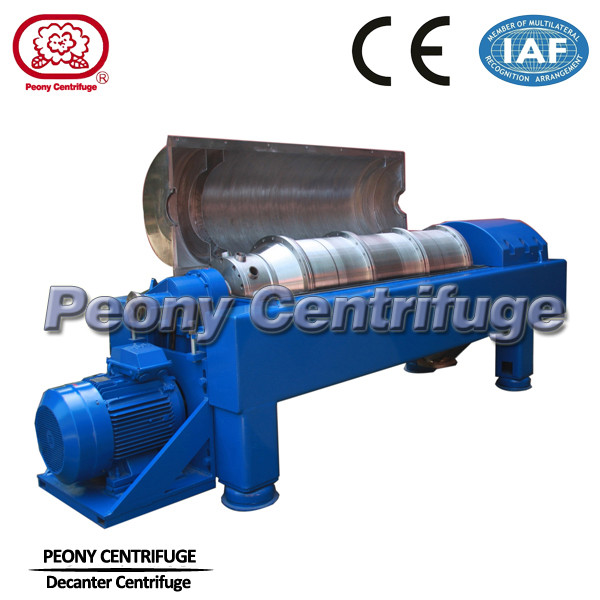
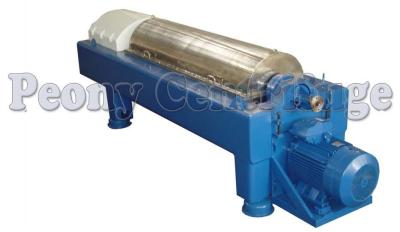
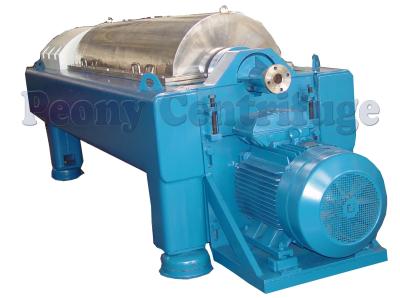
The Decanter Centrifuge for Sunflower Oil Separation is designed for continuous separation of oil, water, and solid impurities during sunflower oil processing.
It is suitable for sunflower seed oil production, crude oil clarification, oil sludge treatment, and oil recovery applications. The centrifuge separates fine solids and moisture from sunflower oil through high centrifugal force, improving oil purity and reducing valuable oil loss.
Sunflower oil may contain fine solid particles from seed crushing and pressing processes, which are difficult to remove completely.
Residual sunflower oil trapped in solid impurities can reduce product yield and increase production costs.
Moisture and processing additives may create stable oil-water mixtures that affect separation efficiency.
Crude sunflower oil and sludge streams may contain excess water, affecting storage and downstream refining.
Different sunflower seeds, pressing methods, and production stages create changes in viscosity and solid concentration.
Edible oil processing requires hygienic equipment materials and clean separation conditions.
Sunflower Oil Feed
→ Pretreatment
→ Feed Tank
→ Decanter Centrifuge
→ Clarified Sunflower Oil + Water Phase + Solid Residue
Recovered Oil → Refining / Storage
Separated Solids → Disposal / Further Processing
Separated Water → Treatment / Recycling
Crude sunflower oil containing moisture and solid impurities enters the rotating bowl.
Under centrifugal force, heavier solid particles move toward the bowl wall and form a concentrated solids layer.
Oil and water separate according to density differences inside the rotating bowl.
The scroll continuously transports separated solids toward the discharge outlet.
Clarified sunflower oil, separated water, and solid residues are discharged continuously.

| Model | Diameter (mm) | Length (mm) | Length-to-diameter rate | G force | Max solid discharge (m³/h) | Weight (kg) | Dimension (L*W*H) (mm) |
|---|---|---|---|---|---|---|---|
| PDC-10 | 250 | 1000 | 4 | 4080 | 0.4 | 1000 | 2410*800*1080 |
| PDC-12 | 4200 | 1350 | 4 | 3500 | 0.6 | 1200 | 2610*800*1080 |
| PDC-12 | 4200 | 1350 | 4.5 | 3180 | 1.2 | 1800 | 3495*840*1180 |
| PDC-18 | 4000 | 1600 | 4.5 | 3180 | 1.2 | 3200 | 3497*1020*1385 |
| PDC-18 | 450 | 2150 | 4 | 2500 | 2 | 3800 | 4447*1080*1385 |
| PDC-20 | 400 | 2250 | 4.5 | 2500 | 3.5 | 4000 | 4580*1140*1470 |
| PDC-21 | 530 | 2280 | 4.3 | 2500 | 5 | 5000 | 4924*1170*1540 |
| PDC-26 | 655 | 2800 | 4.3 | 2270 | 8 | 7000 | 4300*1900*1350 |
Recovers hydrocarbons from sludge and reduces oil loss before disposal or further treatment.
Heating and high-torque conveying support viscous sludge containing wax, asphaltenes, and heavy oil.
Wear-protected components handle abrasive sand, scale, rust, and tank sediment.
Adjustable bowl speed, differential speed, and phase interface adapt to changing oil, water, and solids ratios.
Removing oil and solids reduces the volume sent to thermal treatment, wastewater treatment, or hazardous-waste disposal.
Please provide:
It is commonly recommended for waxy or high-viscosity sludge. The required temperature depends on the crude-oil properties and plant safety limits.
Yes, after coarse foreign materials are removed. Wear-resistant protection is recommended for highly abrasive feeds.
Stable emulsions may require heating, demulsifier dosing, dilution, and controlled mixing before centrifugation.
Not automatically. Water, sediment, salt, and contaminant levels should be tested before blending or reprocessing.
Usually not. Residual oil, suspended solids, COD, salts, and chemicals may require further oily-water treatment.
Peony welcomes cooperation with refineries, crude-oil storage terminals, tank-cleaning contractors, oil-sludge processors, hazardous-waste companies, and environmental engineering partners.
Send us your sludge composition, viscosity, temperature, required capacity, recovery target, and downstream arrangement. Our engineering team will recommend a suitable three-phase decanter centrifuge solution.