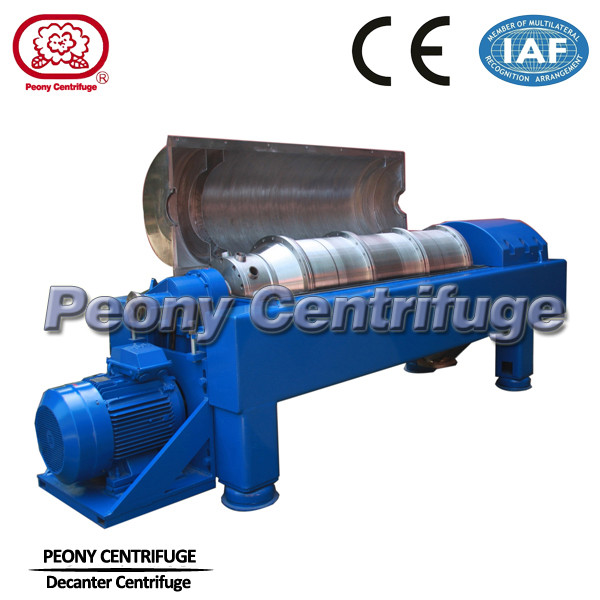
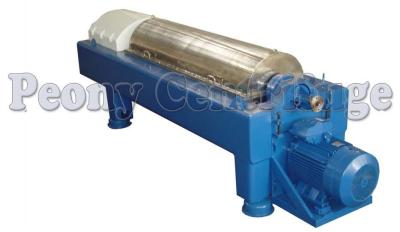
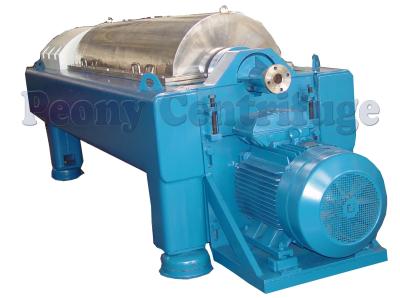
The Decanter Centrifuge for Rare Earth Slurry Recovery is designed for continuous solid-liquid separation, valuable rare earth solids recovery, slurry thickening, and process-liquid clarification.
It is suitable for rare earth leaching residue, precipitation slurry, washing slurry, extraction wastewater, polishing-material slurry, and mineral beneficiation wastewater.
The centrifuge separates rare earth compounds, mineral fines, hydroxide precipitates, leaching residues, and suspended impurities from the liquid phase.
| Process Requirement | Decanter Centrifuge Solution |
|---|---|
| Valuable solids recovery | Continuous high-force separation |
| Fine particle capture | Adjustable bowl speed and optional dosing |
| Variable feed concentration | Adjustable differential speed and feed rate |
| Stable slurry thickening | Controlled pond depth and solids conveying |
| Process-liquid recovery | Clarified liquid for reuse or treatment |
| Corrosive liquid handling | Customized wetted materials and seals |
| Lower filtration load | Pre-thickening before filter press or dryer |
| Automatic operation | PLC and VFD-controlled continuous running |
Peony provides continuous separation solutions for rare earth solids recovery, slurry thickening, process-liquid clarification, and downstream filtration preparation.
Rare Earth Leaching / Precipitation / Washing
→ Agitated Slurry Tank
→ Optional Conditioning or Flocculant Dosing
→ Decanter Centrifuge
→ Thickened Rare Earth Solids
→ Filter Press / Dryer / Reprocessing / Storage
Clarified Liquid
→ Process-Liquid Tank
→ Recycle / Metal Recovery / Further Treatment
Rare earth slurry enters the rotating bowl through a controlled feed pipe.
An agitated tank helps prevent solids settling and maintains a stable feed concentration.
High-speed rotation separates rare earth solids and mineral particles from the liquid phase.
The denser solids move outward and form a layer against the bowl wall, while clarified liquid remains closer to the center.
The internal screw conveyor rotates at a controlled differential speed.
It continuously transports settled solids toward the conical end for further dewatering.
The separated liquid leaves through the liquid outlet.
It can be returned to washing or extraction, sent to metal recovery, or transferred to further wastewater treatment.
Concentrated solids are discharged continuously.
The recovered material can be sent to washing, filter pressing, drying, calcination, reprocessing, or storage.

| Model | Diameter (mm) | Length (mm) | Length-to-diameter rate | G force | Max solid discharge (m³/h) | Weight (kg) | Dimension (L*W*H) (mm) |
|---|---|---|---|---|---|---|---|
| PDC-10 | 250 | 1000 | 4 | 4080 | 0.4 | 1000 | 2410*800*1080 |
| PDC-12 | 4200 | 1350 | 4 | 3500 | 0.6 | 1200 | 2610*800*1080 |
| PDC-12 | 4200 | 1350 | 4.5 | 3180 | 1.2 | 1800 | 3495*840*1180 |
| PDC-18 | 4000 | 1600 | 4.5 | 3180 | 1.2 | 3200 | 3497*1020*1385 |
| PDC-18 | 450 | 2150 | 4 | 2500 | 2 | 3800 | 4447*1080*1385 |
| PDC-20 | 400 | 2250 | 4.5 | 2500 | 3.5 | 4000 | 4580*1140*1470 |
| PDC-21 | 530 | 2280 | 4.3 | 2500 | 5 | 5000 | 4924*1170*1540 |
| PDC-26 | 655 | 2800 | 4.3 | 2270 | 8 | 7000 | 4300*1900*1350 |
Confirm whether the slurry contains rare earth oxides, hydroxides, carbonates, phosphates, polishing powders, or leaching residues.
Fine rare earth particles may settle slowly. Particle-size distribution and settling tests should be checked before selection.
High solids concentration or viscosity may reduce processing capacity. Stable feeding helps maintain consistent separation.
The liquid phase may contain acids, alkalis, chlorides, sulfates, ammonium salts, extractants, or residual metal ions.
Corrosion-resistant materials and wear protection should be selected according to the slurry chemistry and mineral impurity content.
High centrifugal force continuously recovers valuable rare earth solids and reduces material loss.
Adjustable operating parameters maintain stable separation under changing feed conditions.
Pre-thickening reduces the liquid volume entering filter presses, dryers, or calcination systems.
Clarified liquid can be returned to washing, extraction, or further metal recovery.
Customized materials and internal protection support acidic, alkaline, and abrasive slurry conditions.
Please provide:
Yes. It can continuously recover rare earth precipitates from reaction, washing, and classification slurries.
Yes. The decanter can thicken leaching residue before filter pressing, metal recovery, or further treatment.
Yes. SS316L, duplex steel, titanium, or other materials can be selected according to the liquid composition.
Yes. It can be recycled to washing, extraction, or metal-recovery stages after confirming the liquid quality.
Stable feeding, suitable bowl speed, differential-speed control, and optional flocculant dosing improve fine-solids recovery.
Peony welcomes cooperation with rare earth processing plants, mineral beneficiation companies, polishing-material producers, metal recovery companies, wastewater treatment contractors, distributors, and industrial separation partners.
We support partners with slurry testing, centrifuge selection, corrosion-resistant materials, wear protection, process-liquid recycling, installation guidance, commissioning, spare parts, and after-sales service.
Send us your rare earth slurry information, including material type, particle size, solids concentration, liquid composition, required capacity, recovery target, and downstream arrangement. Our engineering team will recommend a suitable decanter centrifuge solution for your rare earth slurry recovery process.