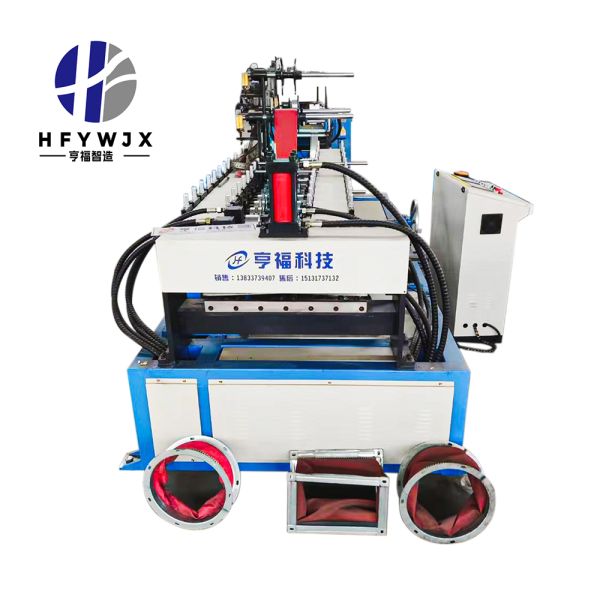
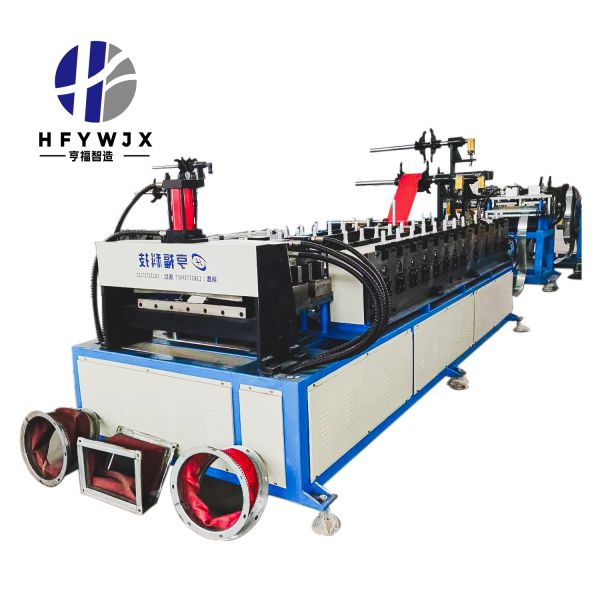
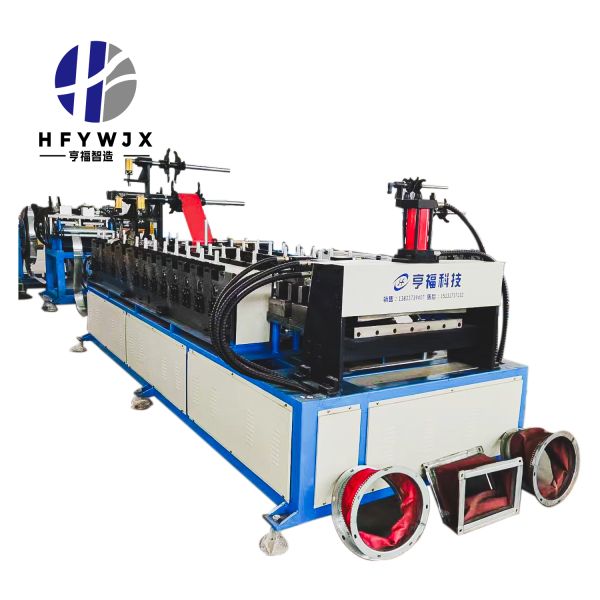
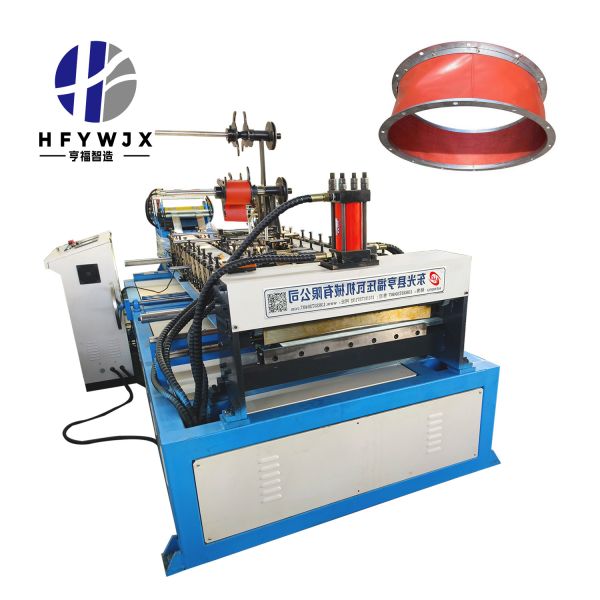
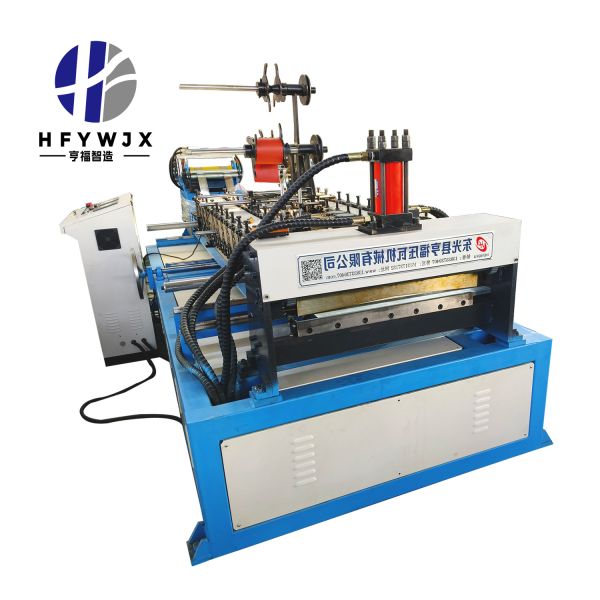
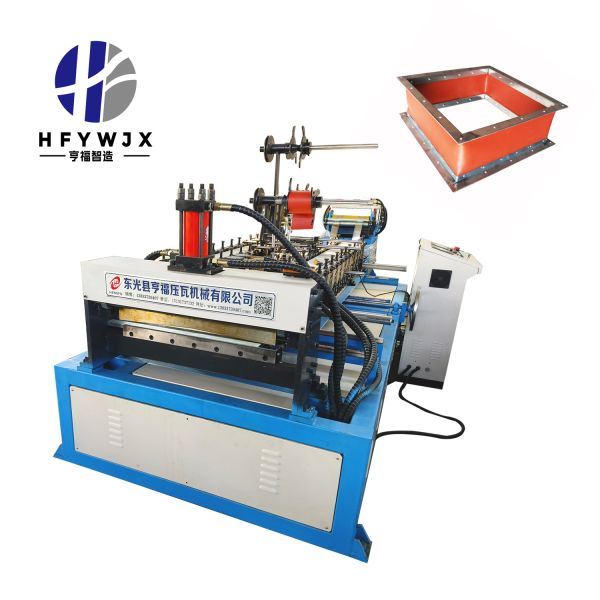
Industrial Flexible Connection Production Line Heavy Duty Automatic HVAC Connector Assembly Machine
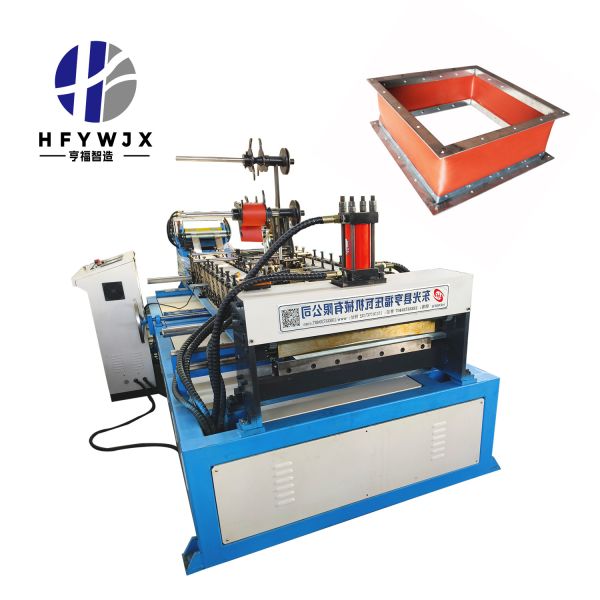
This fully automatic flexible connector production line is professionally developed and manufactured by Dongguang Hengfu Roll Forming Machine Co., Ltd. It is specially designed for manufacturing high-quality flexible connectors used in ventilation, pipeline, dust removal and other supporting systems. The machine can stably process galvanized steel sheets and fire-resistant fabric, with high forming precision, stable operation and long service life, providing customers with efficient and reliable one-stop production solutions.
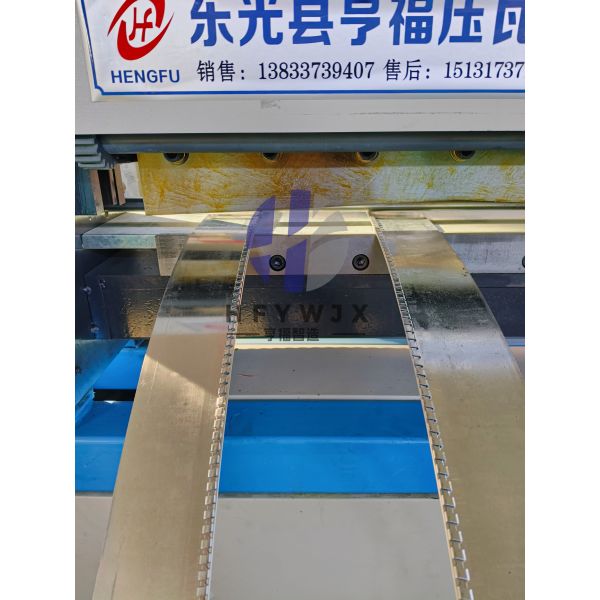
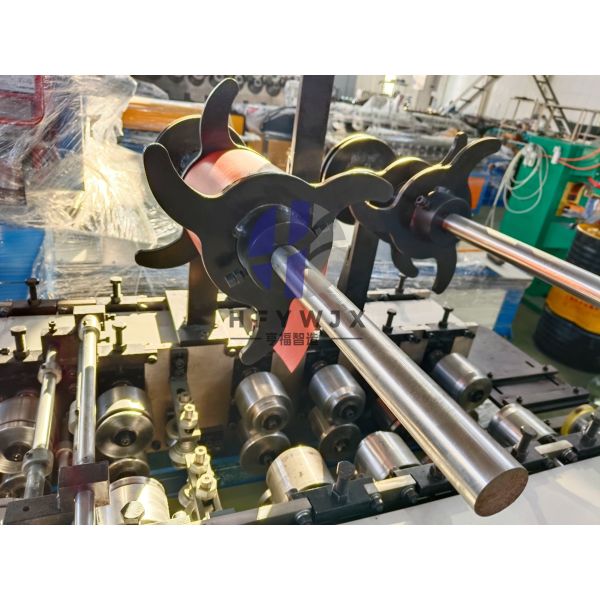
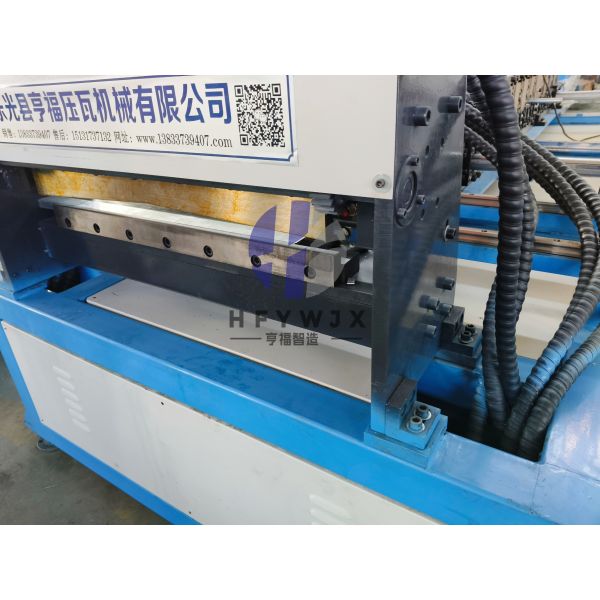
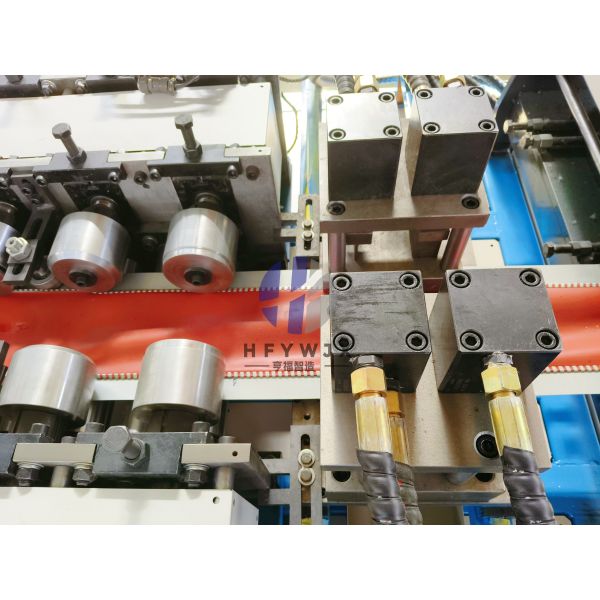
The machine supports galvanized steel sheets with a thickness of 0.3-0.6 mm and a width of 50-105 mm, and is compatible with fire-resistant fabric of 120-450 mm. The width of finished flexible connectors can be adjusted between 180-600 mm to meet different application requirements. The whole production line integrates a complete and smooth process: uncoiling, servo feeding and punching, roll forming, secondary punching, cutting and material collecting, which greatly improves production efficiency and product consistency.
Robust Construction & Precision Engineering
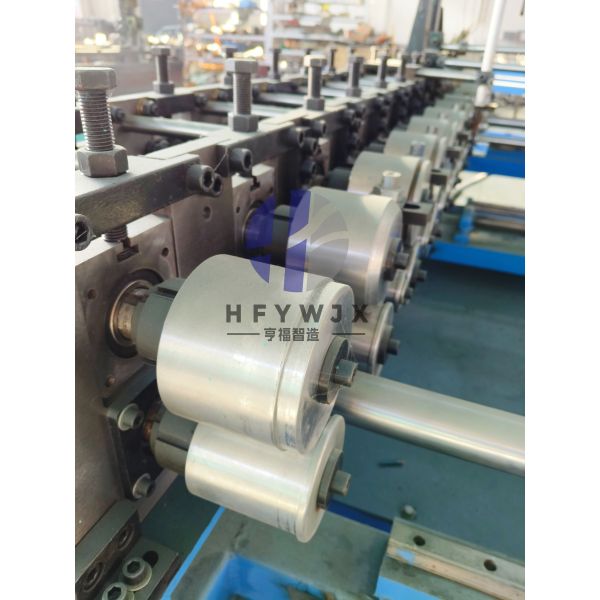
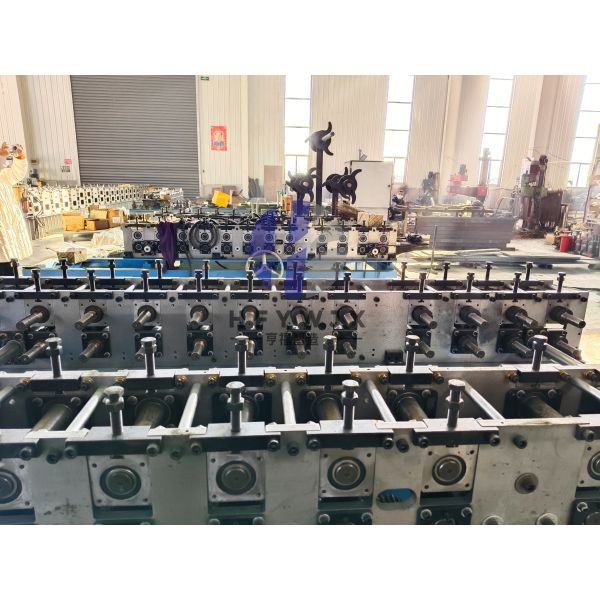
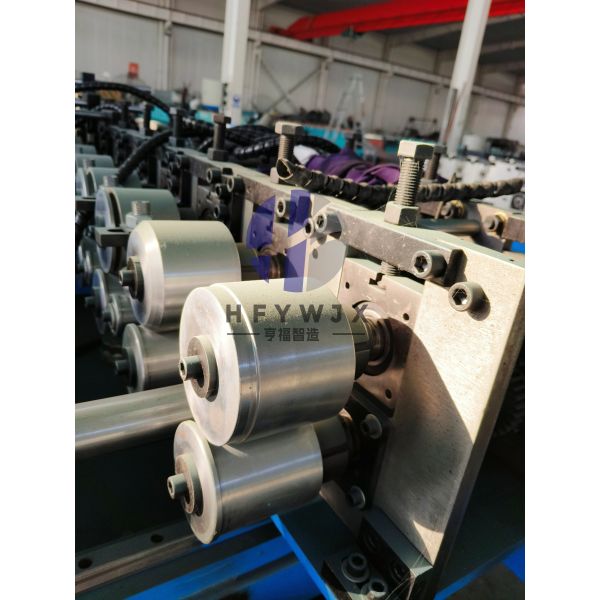
With a heavy-duty industrial design, the machine is equipped with 12 forming stands for accurate and stable profile forming. The main shaft adopts high-strength Cr40 steel with fine machining, and the rollers are made of high-grade Gcr15 bearing steel with 0.05 mm hard chrome plating, ensuring strong wear resistance and long service life. The frame is welded with 80*80 square tubes and 14 mm thick vertical plates, providing excellent rigidity and stability during continuous production.
Advanced Drive & Control System
The equipment is driven by a 3 KW main motor with a cycloidal pinwheel reducer, and runs at a stable forming speed of 6-8 m/min. It adopts an intelligent PLC control system to realize fully automatic coordination of feeding, punching, forming and cutting. The standard voltage is 380V/50Hz/3Phase, which can be customized according to customer requirements. The compact structure (about 3.5m * 2m * 1.5m) saves space and is easy to install and maintain.
Technical Specifications
| Item |
Specification |
| Applicable Material |
Galvanized steel sheet; Fire-resistant fabric |
| Material Thickness |
Galvanized sheet: 0.3-0.6 mm |
| Material Width |
Galvanized sheet: 50-105 mm
Fire-resistant fabric: 120-450 mm |
| Finished Product Width |
180-600 mm |
| Forming Stands |
12 stands |
| Main Shaft |
Cr40 steel, precision machined |
| Rollers |
High-grade Gcr15 bearing steel, 0.05 mm hard chrome plating |
| Main Motor |
3 KW with cycloidal pinwheel reducer |
| Forming Speed |
6-8 m/min |
| Machine Frame |
80*80 square tube welded structure; vertical plate 14 mm thick |
| Voltage |
380V / 50Hz / 3Phase (customizable) |
| Overall Dimensions |
Approx. 3.5 m * 2 m * 1.5 m |
| Working Flow |
Uncoiling -> Servo feeding & punching -> Roll forming -> Punching -> Cutting -> Collecting |
| Equipment Configuration |
- Main forming machine: 1 set
- Punching & cutting dies: 4 sets
- Control system: 1 set
- Servo feeding & punching unit: 1 set
- Hydraulic power unit: 1 set
- Electric uncoiler: 2 sets
- Electric coiler: 1 set
|
Frequently Asked Questions
How can issues such as skewed or off-center sheet feeding be resolved?
The equipment is equipped with a hydraulic alignment system or a manually adjustable feed guide mechanism, allowing for easy correction.
What's the delivery time?
Normally it takes about 45 days.
Is there a leveling device at the material inlet?
It is equipped with a set of leveling rollers to ensure flat feeding and prevent waves or distortion in the sheet material.
Can the machine produce stainless steel sheets? What are the requirements for the equipment?
Yes, it can; however, it requires reinforcing the forming frames, increasing the hardness of the rollers, and adjusting the forming process.
Is it normal for burrs to appear on the cut edges of the sheet metal after cutting?
Minor burrs are normal and acceptable; however, severe burrs are typically caused by a dull cutting blade or improper blade clearance.