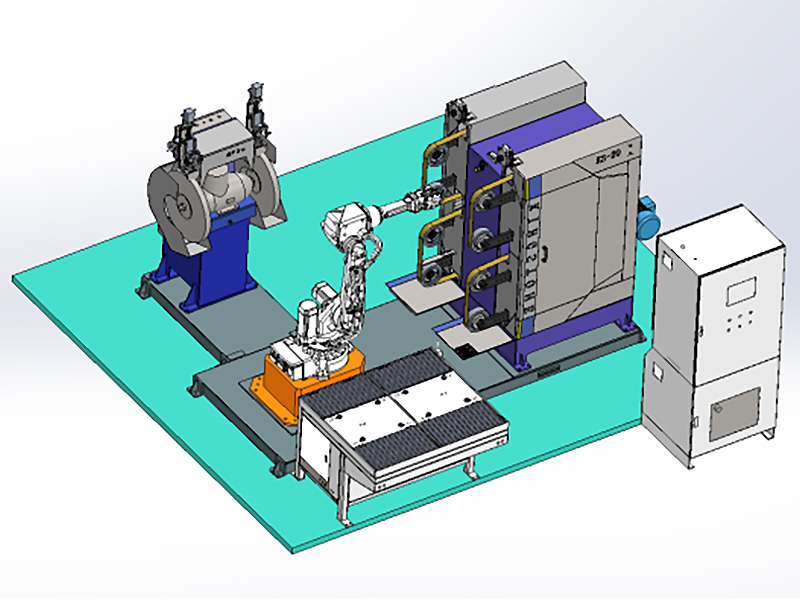
Flexible Robotic Deburring and Polishing Machine for Die Cast Housing
Not every die cast finishing line produces one part in high volumes all day. Most produce dozens of housing types — ECU enclosures, motor end covers, pump bodies, junction boxes, lighting housings, sensor brackets — in batches that shift from model to model across the week. A machine optimized for one part in one process configuration becomes a bottleneck the moment the production mix changes.
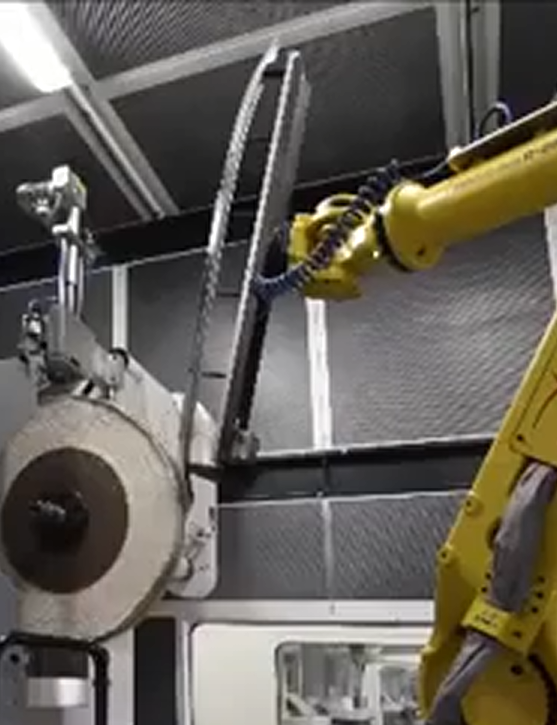
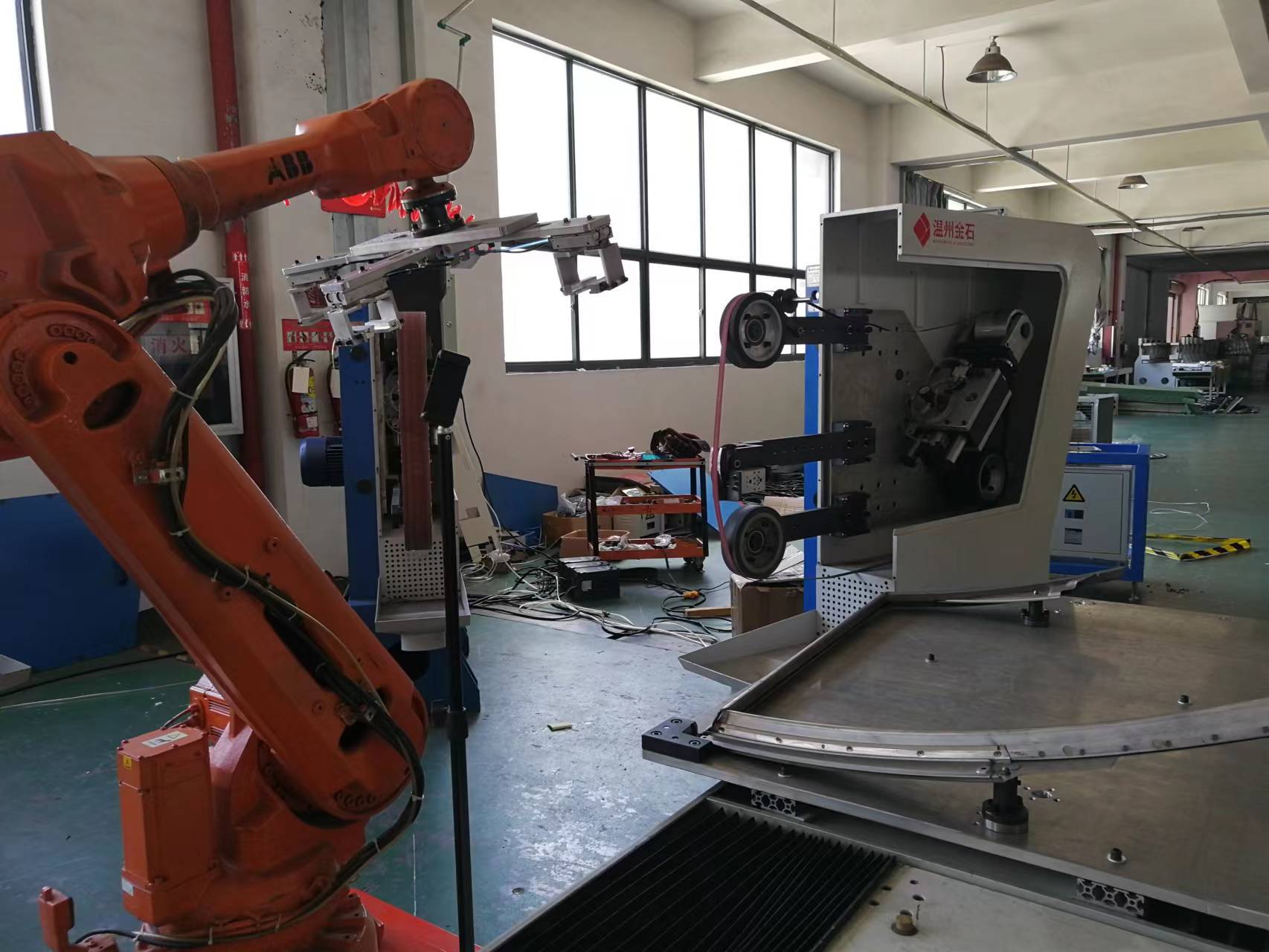
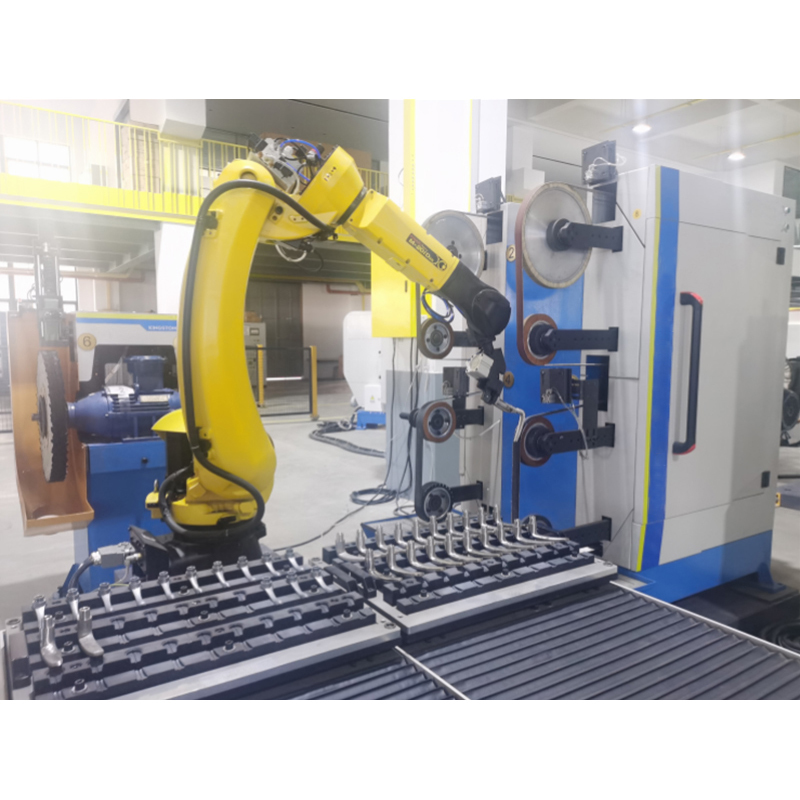
The LR-DP-FLEX-DCH is a flexible robotic deburring and polishing machine built for exactly this reality. Flexible means three things here:
- Fast model changeover: Recipe, fixture and tooling configured per housing model — changeover from one model to the next in under [TBC] minutes, not a day of re-teaching.
- Modular process activation: Deburr phases, polish phases or any combination can be activated or deactivated per model — a housing going to powder coat activates the deburr and pre-coat phases; a housing going to assembly activates deburr only; a housing going to PVD activates the full deburr-to-mirror sequence.
- Multi-material mixed lines: Aluminium A380, zinc Zamak and steel housings can run back-to-back on the same cell with material-flag recipe switching — no second machine for the second alloy.
The LR-DP-FLEX-DCH is the cell for die cast finishing shops that cannot afford to dedicate a machine per housing model — but cannot afford the quality drift, rework cost and throughput loss of manual finishing either.
Proprietary Selling Points
Phase-activation Matrix — Each Housing Gets Only the Process It Needs
The most common inefficiency in a die cast finishing cell is running phases that the current part does not require. A housing going to powder coat does not need a mirror polish phase. A forged housing with no gate stubs does not need a cut-off pass. A housing going to assembly needs only edge deburring, not a pre-coat Ra surface pass.
Quick-mount Modular Fixture — Sub-[TBC]-minute Changeover, No Re-calibration
Fixture changeover is the most common bottleneck in a high-mix finishing cell. Traditional fixtures require unbolting, re-positioning, re-clamping and re-calibrating — turning a product change into a half-shift event.
The LR-DP-FLEX-DCH uses a two-layer fixture architecture:
- Layer 1 — Universal base plate: Permanently mounted in the cell; never moved. Contains the common datum interface (precision kinematic coupling or dowel pattern [TBC]) that every model-specific insert references.
- Layer 2 — Model-specific insert: Lightweight, color-coded per housing model; snaps or locks onto the base plate in a single action without tools. The coupling geometry guarantees repeat position accuracy — the insert locates to ±[TBC] mm on the base plate every time.
Because every insert references the same common datum, the robot programme does not change when the fixture changes. No re-calibration is needed after a fixture swap. No verification part is required before the first production part. The new model's recipe is called and the first production part runs.
Deburr-only, Polish-only, or Full D+P — One Cell, Three Operating Modes
The flexibility of the phase-activation matrix extends to the cell's fundamental operating mode:
- Deburr-only mode: Phases D1-D4 and the vision gate active. Polish positions in the rack are not called. Suited to housings going to shot blast, vibratory finish, or direct to powder coat without surface preparation.
- Polish-only mode: Phases P1-P2 active. Deburr tools not called. Suited to pre-ground or pre-deburred housings that arrive needing surface finishing.
Frequently Asked Questions
What does "flexible" mean on this machine — isn't every robot flexible?
A robot arm can reach many positions, but that is not the same as process flexibility. On the LR-DP-FLEX-DCH, flexible means: model changeover in under [TBC] minutes using a quick-mount fixture insert and recipe switch; per-model phase activation so only the phases the part needs are run; multi-material recipes on one cell without hardware reconfiguration; and offline programming so new models are added without stopping production. Flexibility here is an operational property, not a mechanical one.
We run 30+ housing models per month in batches of 100-2,000. Is this machine suitable?
Yes — this is exactly the operating profile the LR-DP-FLEX-DCH is designed for. The recipe library holds [TBC] housing models. Each model has its own phase-activation matrix, material flag and Ra target. Changeover from one model to the next is a recipe call and a fixture insert swap. Batch sizes from [TBC] upwards are economical on the flexible cell — the changeover time is under [TBC] min, so even small batches recover their changeover overhead quickly.
Some of our housings only need deburring — no polish. Others need a full deburr-to-mirror sequence. Can one machine do both?
Yes — this is one of the three flexibility dimensions of the LR-DP-FLEX-DCH. Deburr-only housings run phases D1-D4 and skip P1-P2. Deburr-to-mirror housings run all active phases. The phase activation is per-model in the recipe; the cell hardware does not change between the two. The tool rack carries tools for both scenarios permanently — deburr-only recipes simply do not call the polish tool positions.