Specifications
Model Number :
KS-5000
Polishingtool :
Buffing wheel or polishing pad
Price :
68000-102000 USD
Packaging Details :
wooden cases
Safetyfeatures :
Emergency stop, safety enclosure, light curtain
Workpiecesizerange :
50 mm to 500 mm
Payment Terms :
L/C,D/A,D/P,T/T
Powersupply :
220V/380V, 50/60Hz
Controlsystem :
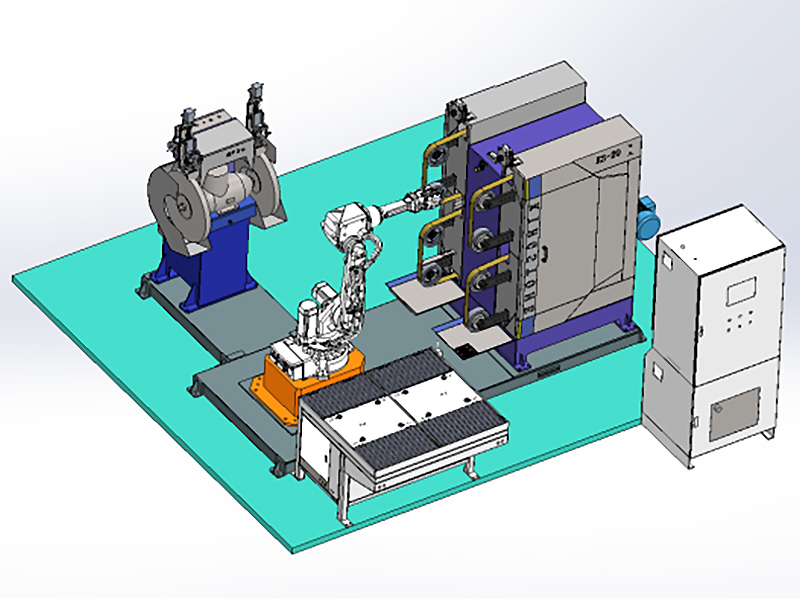
PLC and CNC integrated control
Place of Origin :
China
Softwarecompatibility :
Supports offline programming and simulation
Supply Ability :
200-300 sets per year
Precision :
±0.1 mm
Deburringtool :
Rotary abrasive brush or grinding wheel
Dimensions :
2000 mm x 1500 mm x 1800 mm
Robottype :
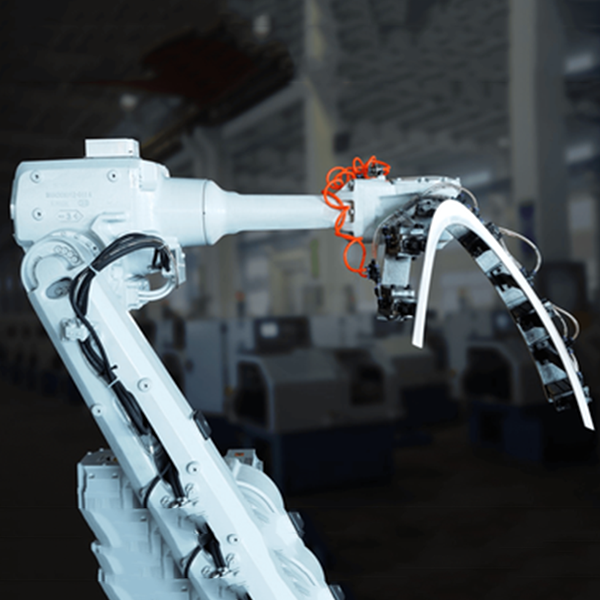
6-axis articulated robot
Delivery Time :
90 working days
Operatingspeed :
Adjustable, up to 1000 mm/s
Productname :
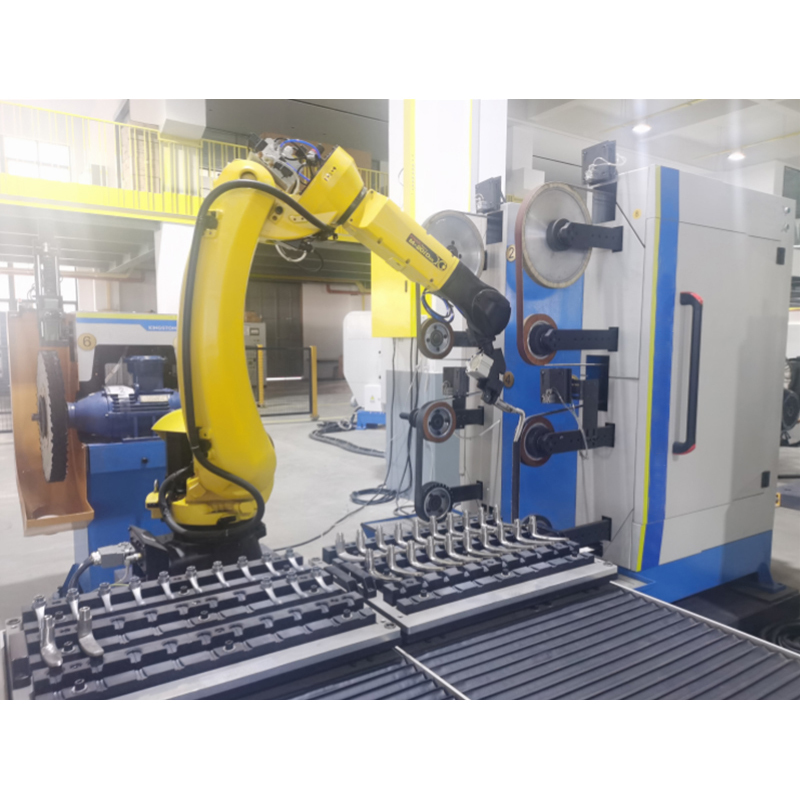
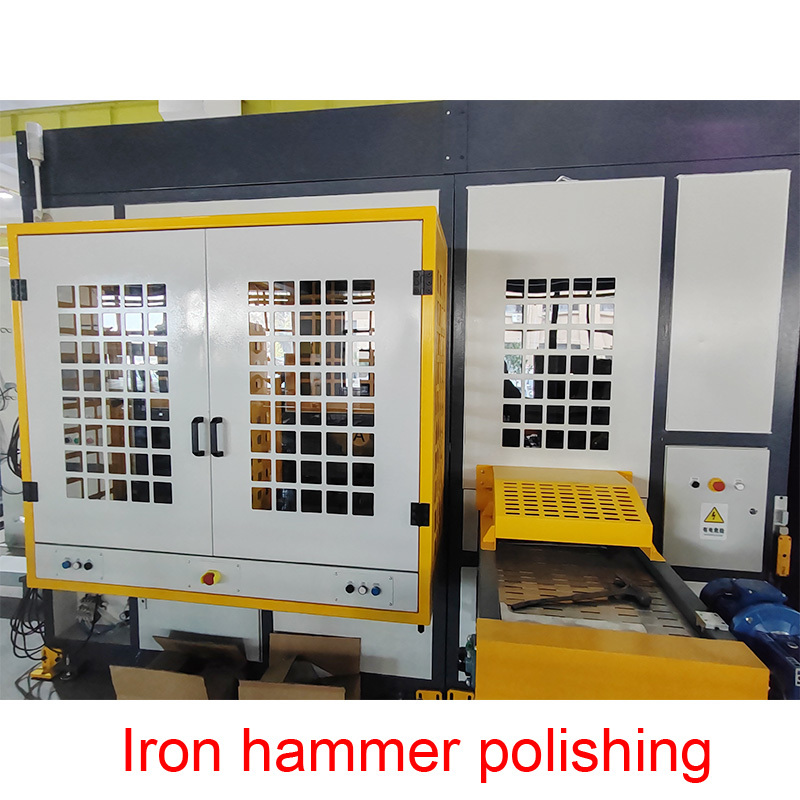
Robotic Deburring and Polishing Machine
Brand Name :
kingstone
Function :
Deburring and polishing of metal parts
Automationlevel :
Fully automated
MOQ :
1
Maximumloadcapacity :
20 kg
Description
Force-Controlled Robotic Deburring and Polishing Machine for Automotive Parts
Automotive parts arrive at the coating or assembly line with diverse defects. A die-cast housing may have parting-line flash, gate remnants, and thin-wall edges. A brake caliper features intersecting ports, machined bores, and sealing faces. A suspension bracket combines structural ribs, mounting holes, and cosmetic surfaces. An EV motor housing includes complex ribs, sealing flanges, and thermal-interface zones.
A single fixed-force deburring program cannot reliably finish all these features. Force sufficient to remove a tall gate may deform a thin wall. Force low enough to protect an O-ring groove may leave flash on a stiff boss. Approaching an internal port at the wrong angle can roll burrs into passages rather than removing them.
The LR-DP-FC-AUT is a force-controlled robotic deburring and polishing machine specifically designed for automotive parts. Equipped with a wrist-mounted force/torque sensor, it measures actual contact force and adjusts robot motion in real time. The cell removes gates, flash, ejector marks, bore burrs, and edge burrs, then conditions or polishes surfaces for downstream coating or assembly processes—applying precisely the force required by each local geometry, material, and defect condition.
The result is not merely faster deburring cycles, but a repeatable automotive finishing process that adapts to casting variations without compromising thin-wall integrity, sealing geometry, or surface quality.
How Force-Controlled Deburring Works in This Cell
Conventional robots follow programmed paths regardless of casting variations. If a casting differs by 0.15 mm from the nominal model, the tool still follows the same path, potentially resulting in under-deburring, over-cutting, or damaged edges.
The LR-DP-FC-AUT incorporates a force/torque feedback loop:
  1. The robot approaches the programmed feature
  2. The sensor measures actual contact force and torque
  3. The controller compares measured force with the target for that zone
  4. The robot advances, retracts, or changes feed rate within permitted parameters
  5. The tool removes burrs or surface defects while respecting the zone's force ceiling
  6. Actual force and correction events are recorded in the per-part process record
The path defines where the tool should work. Force control determines how hard it should work at the exact feature on the exact casting.
Force Controlled Robotic Deburring and Polishing Machine for Automotive Parts
Proprietary Selling Points
1. Adaptive Force Control for Variable Flash and Gate Height
Automotive casting variation is unavoidable. Die wear changes flash height, alloy temperature affects gate hardness, and casting position alters material presentation to the tool. Fixed deburring force is always a compromise.
The LR-DP-FC-AUT employs feature-specific force control:
  • Gate / riser zone: Higher force envelope for efficient material removal
  • Parting-line zone: Force follows actual flash engagement and avoids cutting into adjacent faces
  • Thin-wall zone: Lower force ceiling prevents wall deflection
  • Bore / hole edge: Controlled radial or axial force produces repeatable edge breaks
  • Sealing-zone edge: Low force and hard path boundaries protect sealing faces
When measured resistance increases due to heavier-than-nominal gates, the tool maintains permitted removal strategies. When resistance decreases due to lower flash, the tool avoids excessive force application.
Send your message to this supplier
Send Now

Force Controlled Robotic Deburring and Polishing Machine for Automotive Parts

Ask Latest Price
Watch Video
Model Number :
KS-5000
Polishingtool :
Buffing wheel or polishing pad
Price :
68000-102000 USD
Packaging Details :
wooden cases
Safetyfeatures :
Emergency stop, safety enclosure, light curtain
Workpiecesizerange :
50 mm to 500 mm
Contact Supplier
video
Force Controlled Robotic Deburring and Polishing Machine for Automotive Parts

Zhejiang Kingstone Robot & Technology Co., Ltd.

Verified Supplier
1 Years
zhejiang, wenzhou
Since 2010
Business Type :
Manufacturer
Total Annual :
150000-1000000
Employee Number :
80~105
Certification Level :
Verified Supplier
Contact Supplier
Submit Requirement