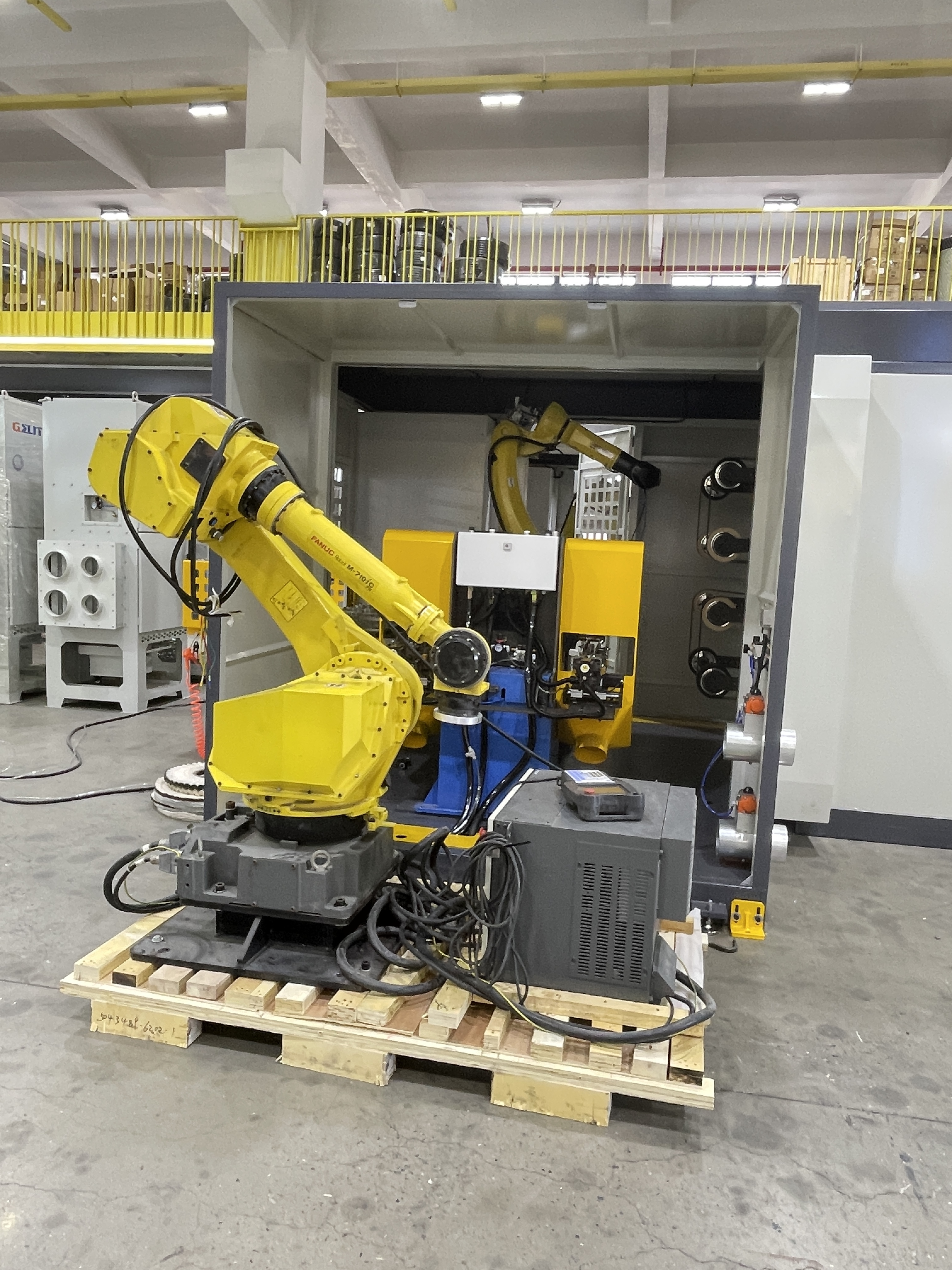
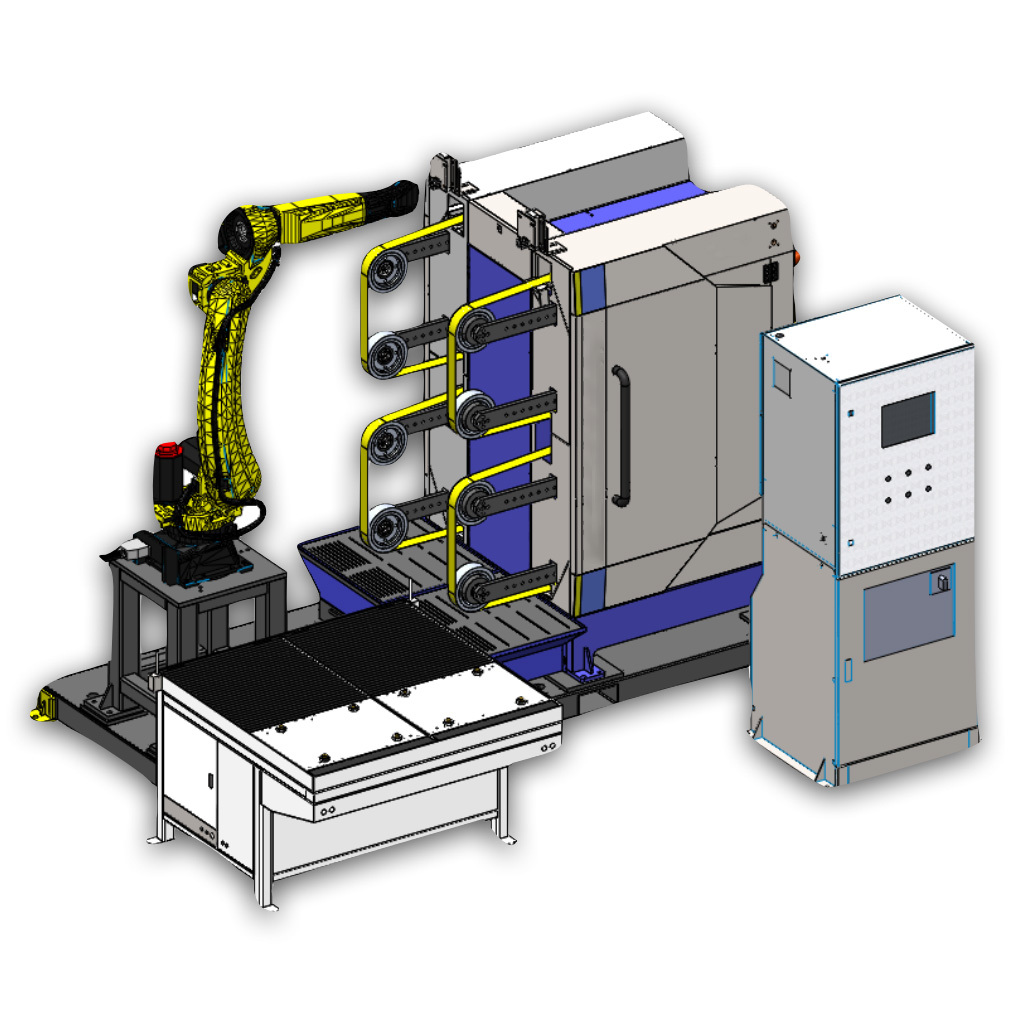
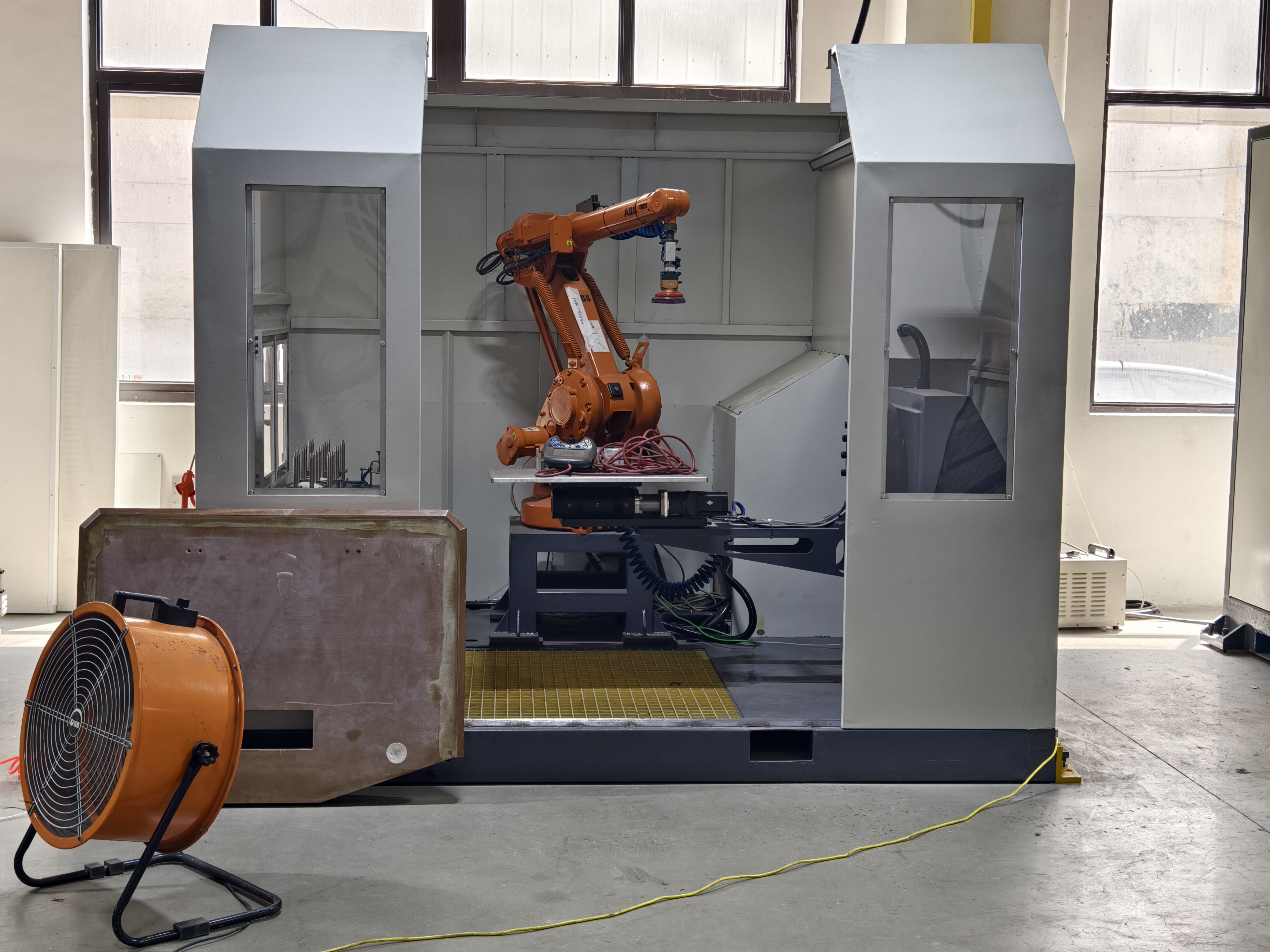
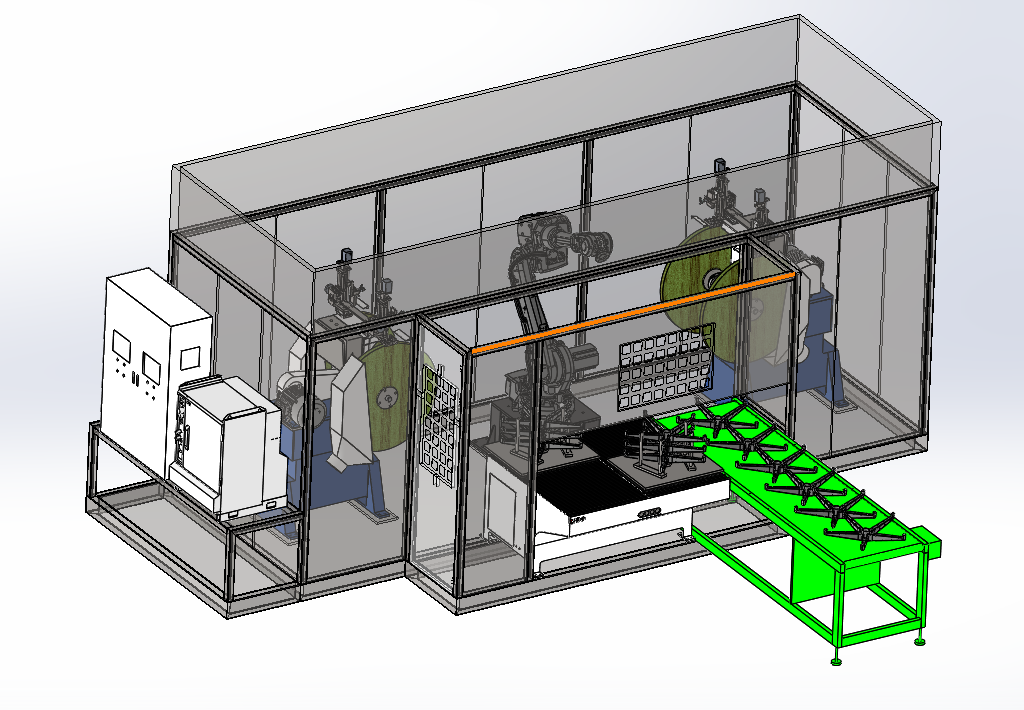
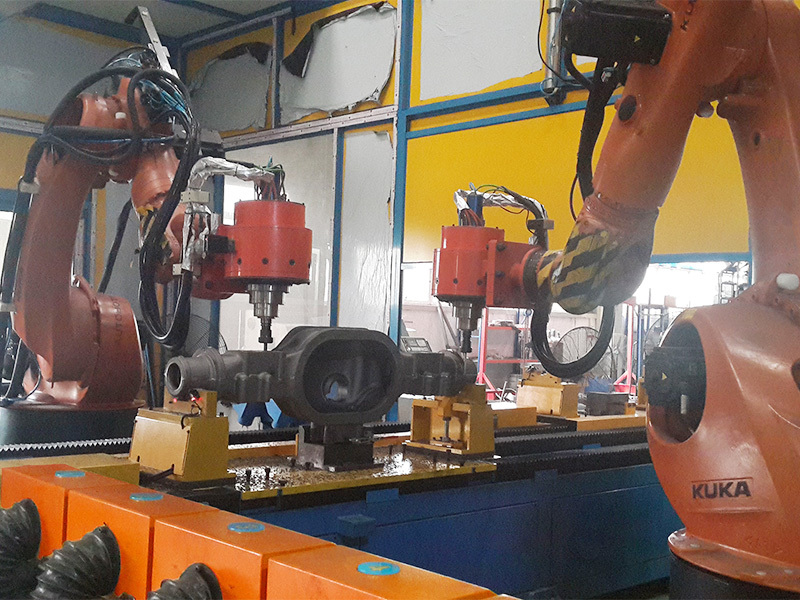
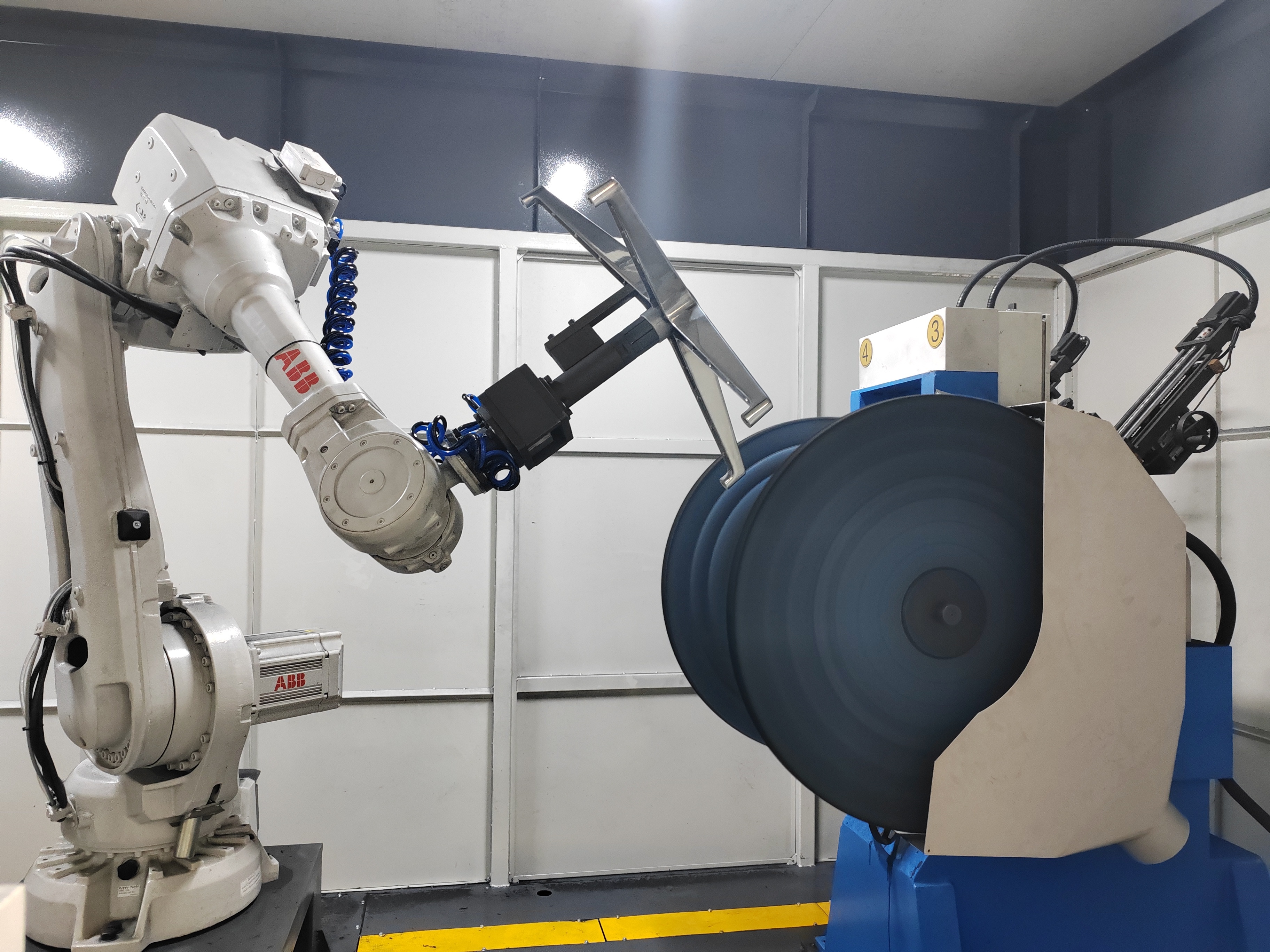
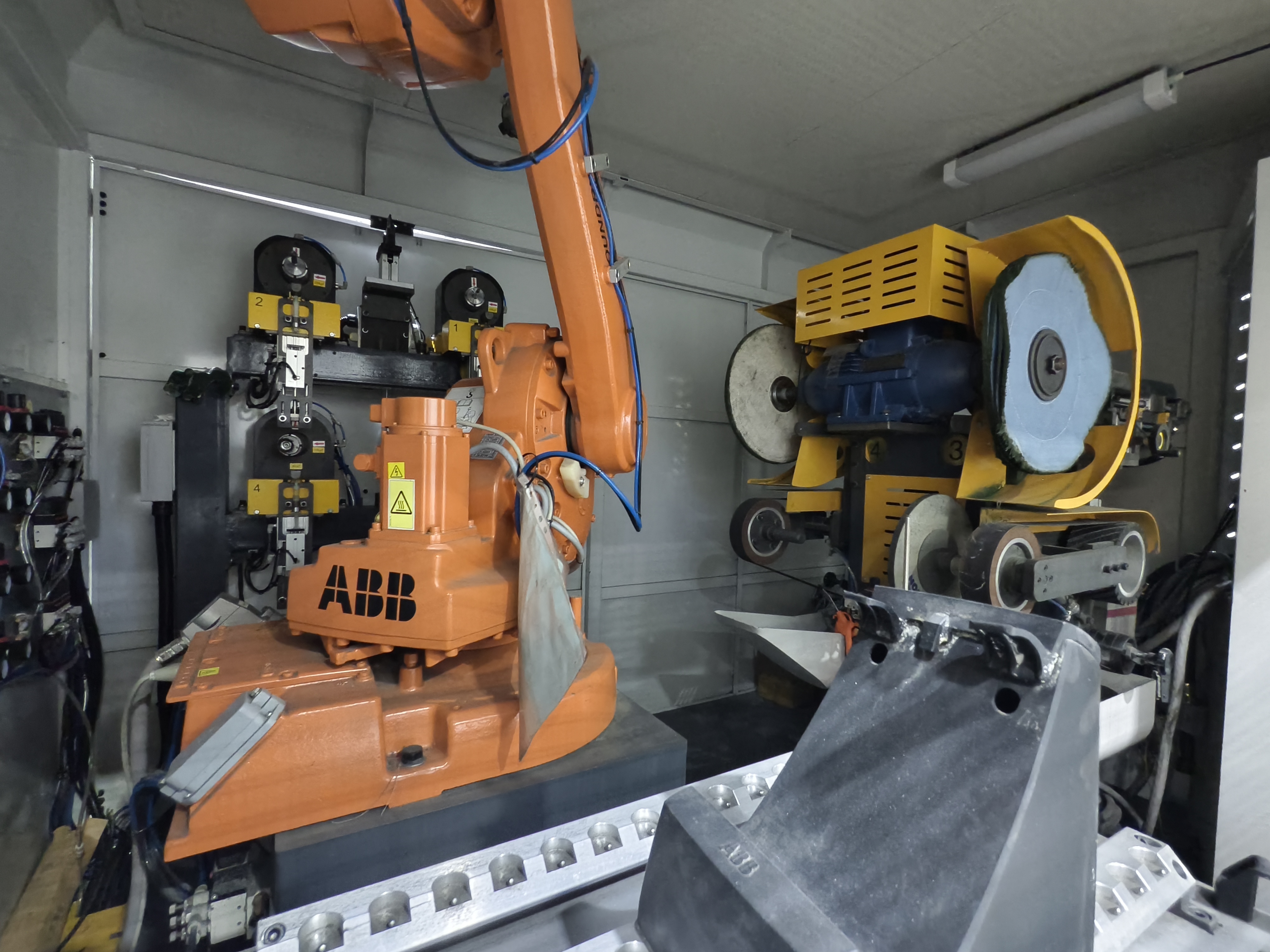
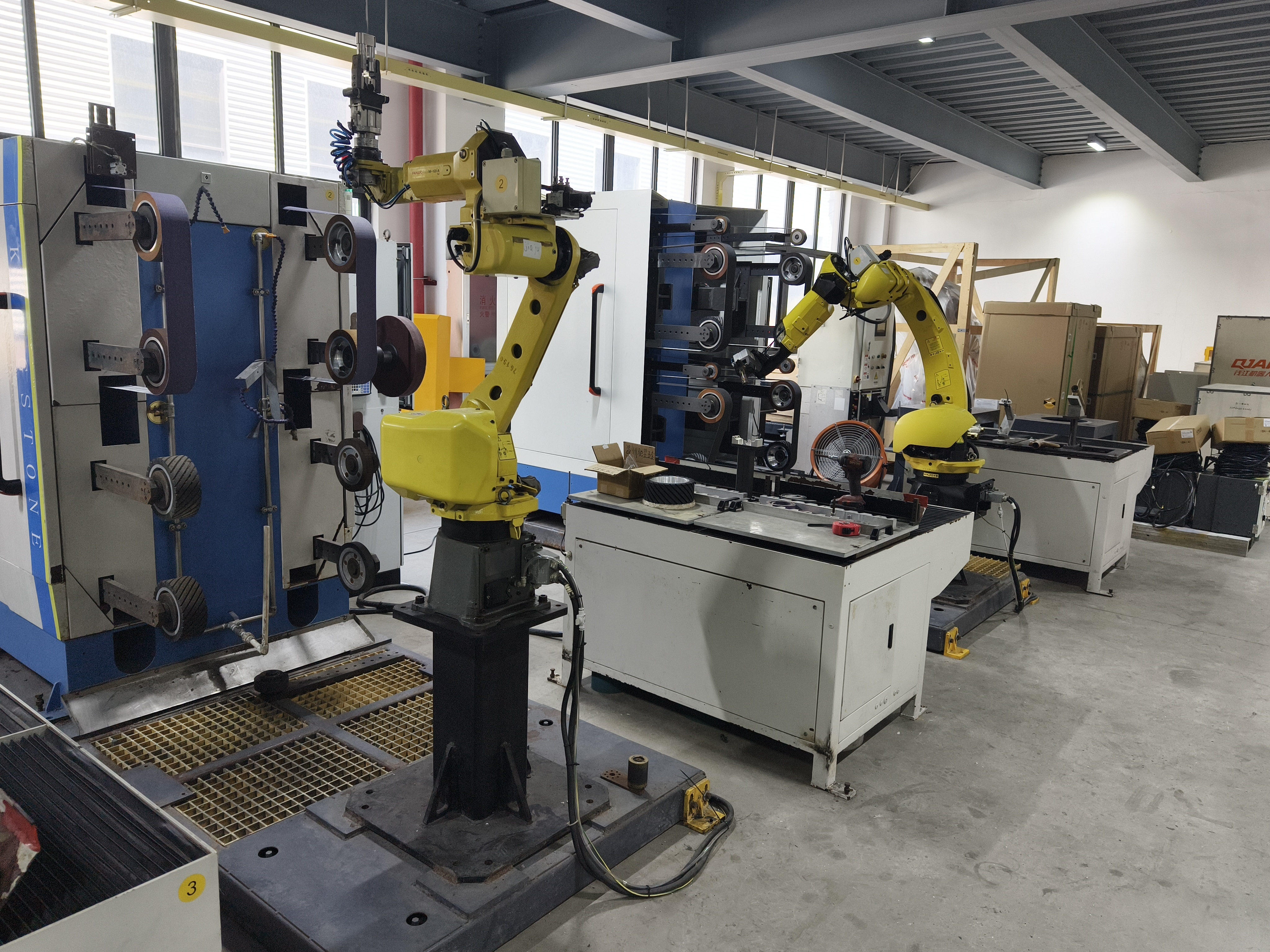
Mirror-Finish Robotic Aluminum Polishing Machine For Cooler Housing
Automated Mirror-Finish Polishing for Aluminum Cooler Housings — Zero Rework, Consistent Ra ≤0.05 μm
Purpose-built robotic polishing system engineered for die-cast aluminum cooler housings. Eliminate manual bottlenecks, achieve optical-grade surface finish, and scale production without sacrificing quality.
Designed specifically for the complex geometry of die-cast aluminum cooler housings — including oil cooler bodies, intercooler end tanks, and water coolant manifolds — the LR-POLISH CHA Series delivers a repeatable, mirror-grade surface finish on all critical sealing faces, pipe boss ODs, and flange mating surfaces.
Key Features
1. Adaptive Force Control
Real-time force feedback (± 0.5 N resolution) maintains consistent contact pressure across curved flanges, O-ring grooves, and boss radii — areas where manual polishing invariably produces high and low spots.
2. 6-Axis Robotic Arm + Compliant Spindle
- Reach: up to 1,850 mm (configurable)
- Payload: 20 kg tooling capacity
- Compliant spindle travel: ±15 mm Z-axis float
- Compatible with buff wheels, felt bobs, and fleece discs
3. Vision-Guided Part Loading
2.5D vision system auto-detects part orientation on fixture — no precision pre-positioning required. Cycle start-to-start in under 8 seconds.
4. Offline Programming (OLP)
Import your cooler housing CAD model (STEP / IGES) and generate polishing paths in simulation — no teach-by-hand, no production downtime for new model changeover.
5. Dust & Mist Extraction Integration
Integrated aluminum-safe extraction hood with HEPA-grade filtration. Compliant with EU Machinery Directive & OSHA aluminum dust standards.
Applications
The LR-POLISH CHA Series is validated for the following cooler housing types:
- Automotive Oil Cooler Housings — sealing face, boss OD, and flange mirror finish
- EV Battery Cooling Plate End Caps — flat and curved surface cosmetic polish
- Intercooler End Tanks — pipe neck OD and interior port polishing
- Industrial Hydraulic Cooler Shells — external cosmetic + corrosion-prep finish
- Motorcycle/ATV Engine Oil Filter Housings — complex boss geometry, O-ring seat polish
Why Choose Us
15+ Years in Robotic Surface Finishing — We have deployed polishing automation in automotive, aerospace, medical, and industrial pump sectors across 30+ countries.
Application Engineering Support — Send us your cooler housing drawing or sample — our engineers will validate the polishing path and provide a guaranteed Ra target before you commit.
Global After-Sales Network — Spare parts stocked in EU, North America, and Southeast Asia warehouses. Remote diagnostics via cloud HMI. On-site response within 72 hours in major markets.
Process Validation
Every LR-POLISH CHA cell ships with:
- ✔ FAT (Factory Acceptance Test) report with Ra measurements
- ✔ Polishing path simulation video for your specific housing model
- ✔ 12-month warranty on mechanical & electrical components
- ✔ ISO 9001:2015 certified manufacturing
Frequently Asked Questions
Q: Can the system handle cooler housings with deep internal cavities?
A: Yes. Slim-profile tooling attachments (as narrow as 28 mm diameter) are available for internal port polishing. Cavity depth up to 120 mm is supported with standard tooling.
Q: How long does changeover take between different housing models?
A: With OLP (Offline Programming), a new housing model is loaded as a program file — changeover takes under 10 minutes. No mechanical retooling required for parts within the same size range.
Q: Do you offer a sample polishing test before purchase?
A: Yes. Submit a cooler housing sample and we will return it with a polished finish and full Ra measurement report — at no charge for qualified inquiries.
Q: What abrasive consumables does the system use?
A: Standard automotive-grade sisal buffs, cotton cloth discs, and water-based polishing compounds. All consumables are globally available; we can also supply them on a long-term agreement.
Q: Is the machine CE certified?
A: Yes. The LR-POLISH CHA Series holds CE marking under the EU Machinery Directive 2006/42/EC and EMC Directive 2014/30/EU.