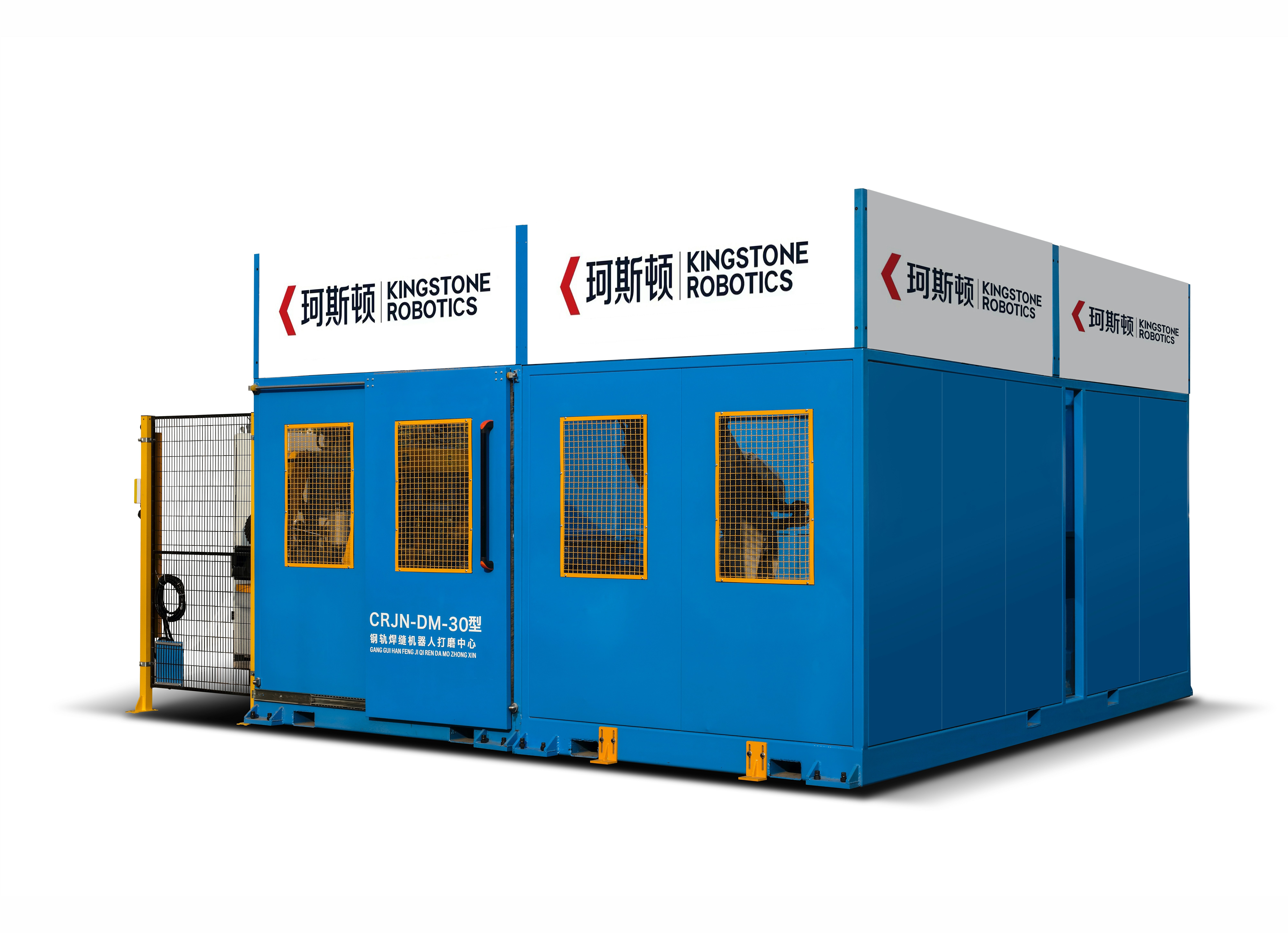
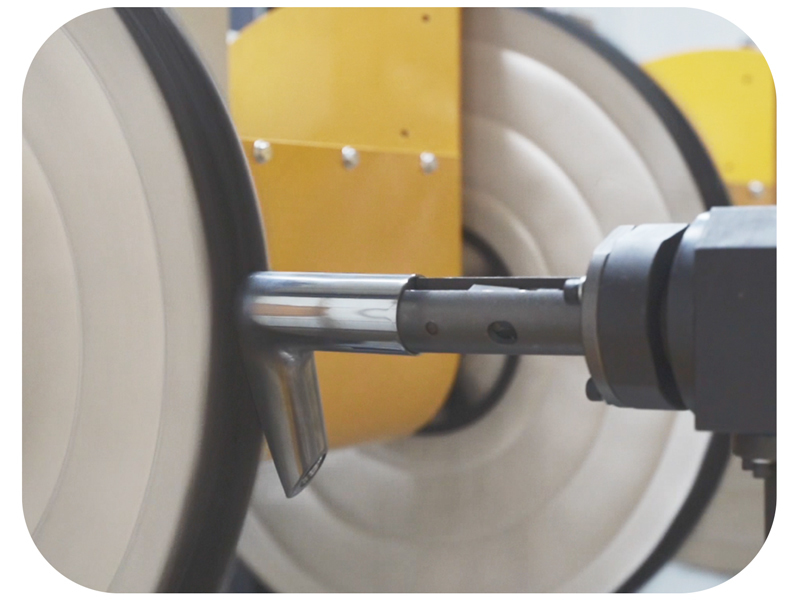
Fully automatic CNC grinding machine purpose-built for stainless steel tubular door handles — removes weld lines, scratches and die marks from 304/316 tube with constant-pressure feed, indexing rotation and inline auto loading. Consistent satin finish across the full batch, run after run.
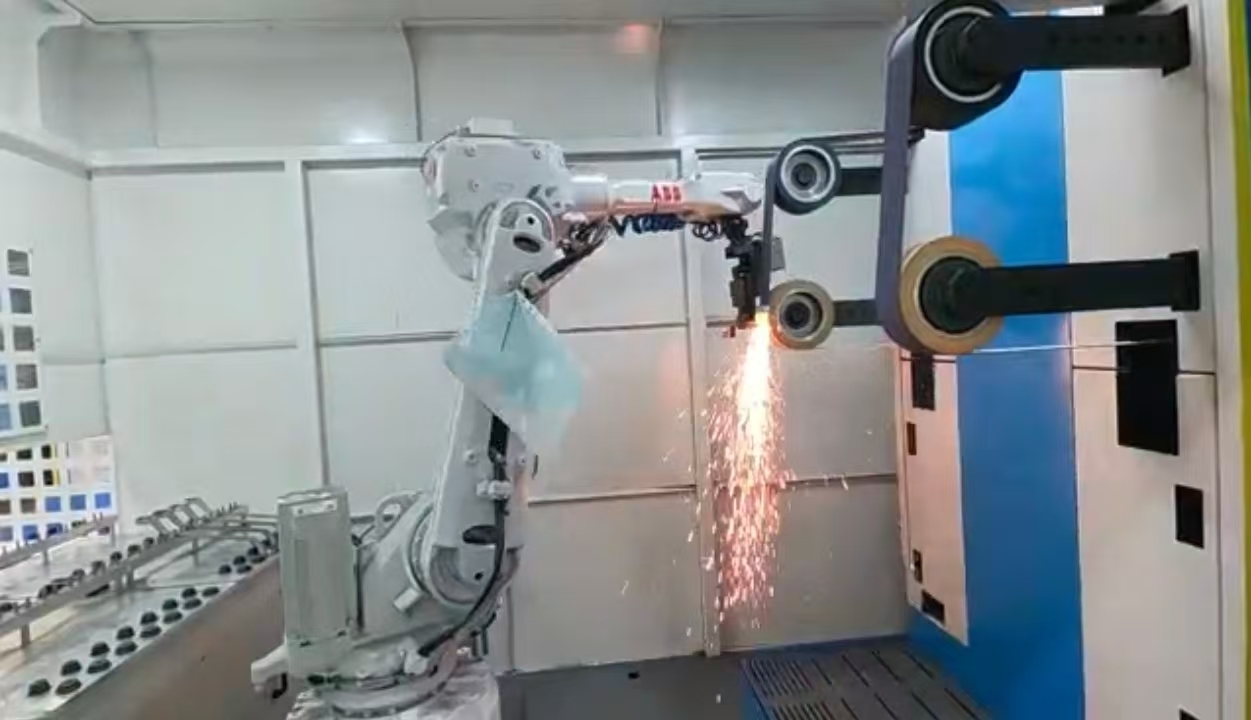
The LR-GRIND-T is a fully automatic, two-station CNC grinding cell engineered specifically for round and bent stainless steel tubular workpieces:
Every handle passes the same cycle with the same grinding force and the same wheel speed — so the finish you approve on the first sample is the finish you get on the 10,000th piece.
Frequently Asked Questions
Q1. How do you prevent deformation when grinding slender tubes?
This is a primary challenge in grinding tubular workpieces. The LR-GRIND-T utilizes a servo-controlled constant-pressure grinding head—ensuring grinding force remains steady regardless of tube length—combined with a center support system to eliminate the "banana-shaped" defect (over-grinding in the middle) common in traditional methods. Pressure values are programmed based on tube diameter and wall thickness, with specific recipes for 304 and 316 stainless steel.
Q2. Can door handles with bends or arched shapes be ground?
Yes. Multi-axis coordination keeps the contact wheel perpendicular to the tube surface throughout the bend, preventing flat spots or burn marks at the corners. Dedicated path programs are available for D-shaped and arched handles within the supported geometric range.
Q3. How are weld seams and mold marks handled?
The program includes a built-in "weld-first" initial step: a coarse grinding pass removes the longitudinal weld seam before pre-grinding and finish grinding. This preserves abrasive belt life and prevents surface defects caused by residual weld material.
Q4. How long does it take to switch specifications (different lengths, diameters, or finishes)?
Thanks to quick-change tooling and one-touch recipe recall, standard changeovers are completed within [TBC] minutes. The recipe library stores [TBC] programs, allowing for seamless switching between combinations of length, diameter, and finish grade without the need for re-calibration.
Q5. Does the machine produce a brushed or mirror finish?
The standard configuration produces a brushed/satin (hairline) finish, meeting mainstream market demands for door handles. A mirror finish can be achieved by adding an independent polishing station (see optional features). Finish grades are managed as recipe parameters, ensuring consistency across the batch.
Q6. How many operators are required per machine?
With automatic loading and unloading, a single operator can oversee multiple machines. The standard setup eliminates the need for manual handling—raw materials are fed from a hopper, and finished products are automatically palletized.
Q7. Does it support unmanned operation?
Yes. The fully enclosed unit and automatic loading/unloading system support continuous three-shift operation; the magazine capacity is designed to match per-shift output ([TBC] pcs/magazine), enabling unattended operation during the night shift.
Q8. What are the workshop requirements?
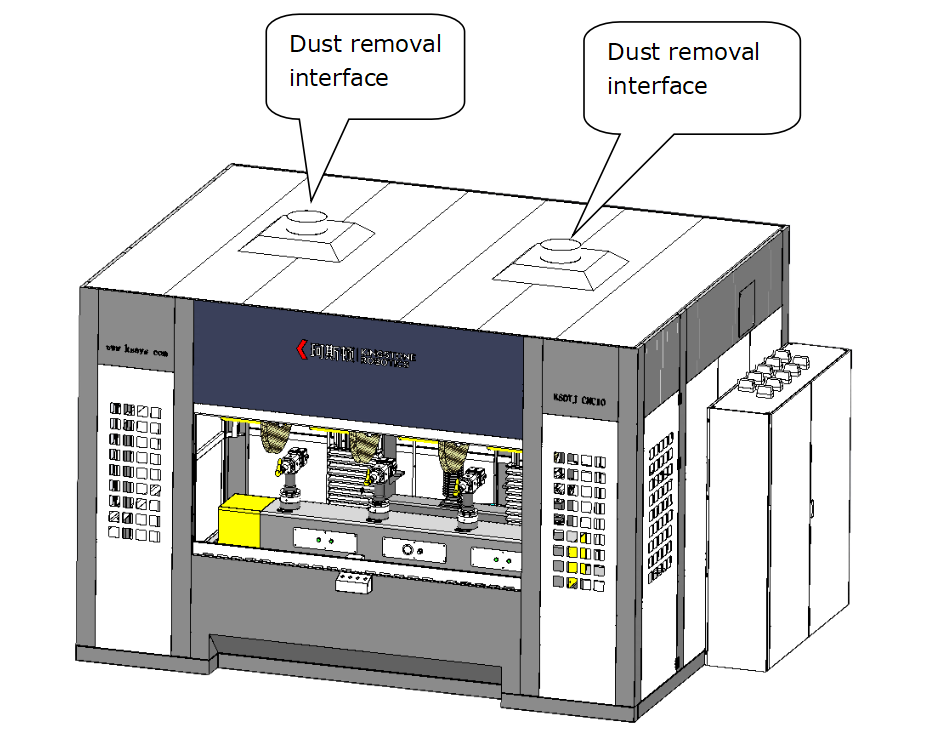
Standard industrial 380V/[TBC]V power supply, [TBC] bar compressed air, and a [TBC] mm dust collection port. It occupies an area of [TBC] * [TBC] m and can replace manual workstations in existing grinding workshops.