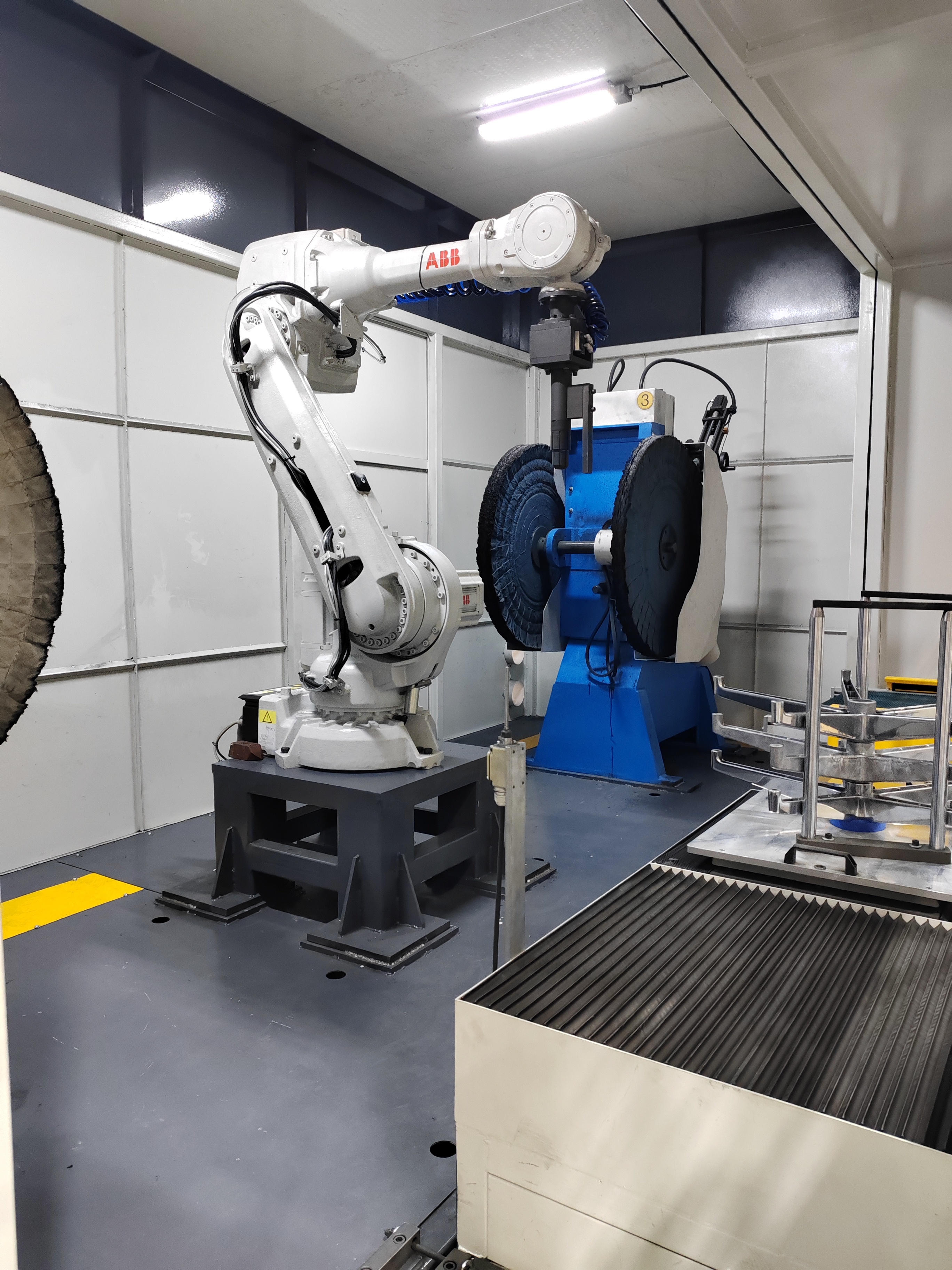
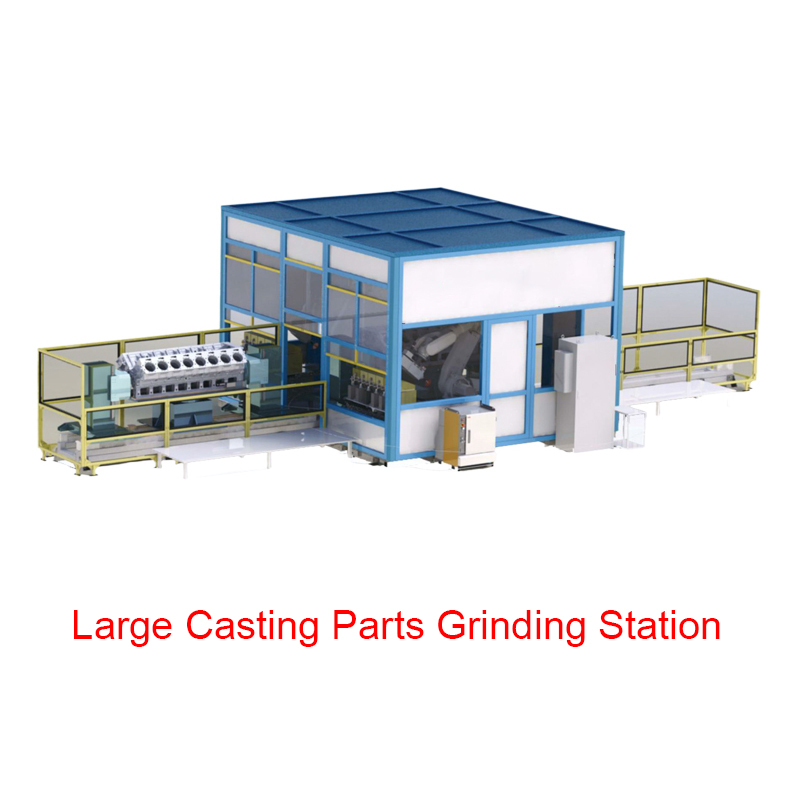
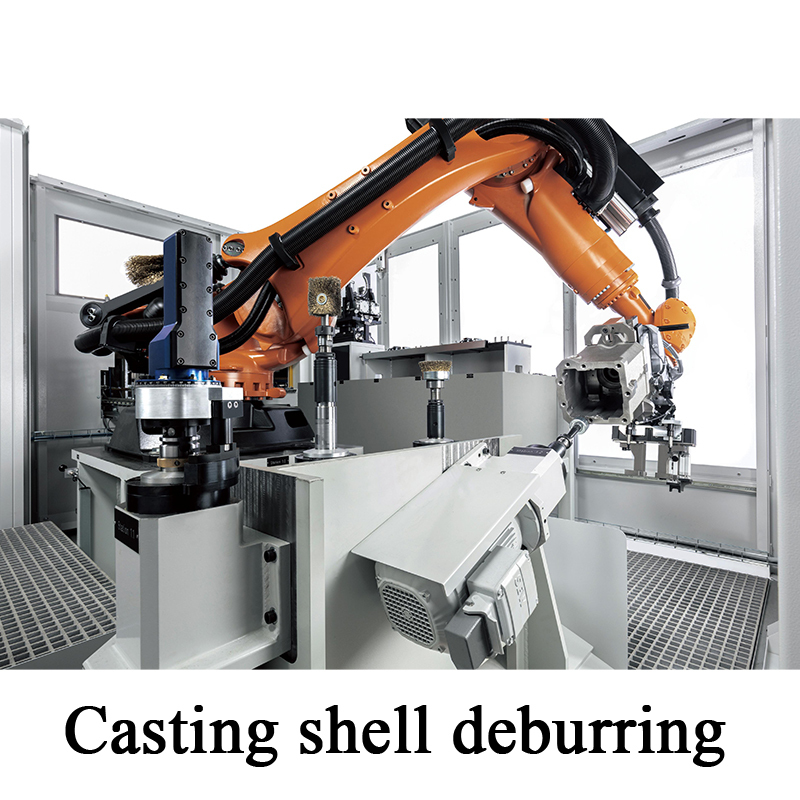
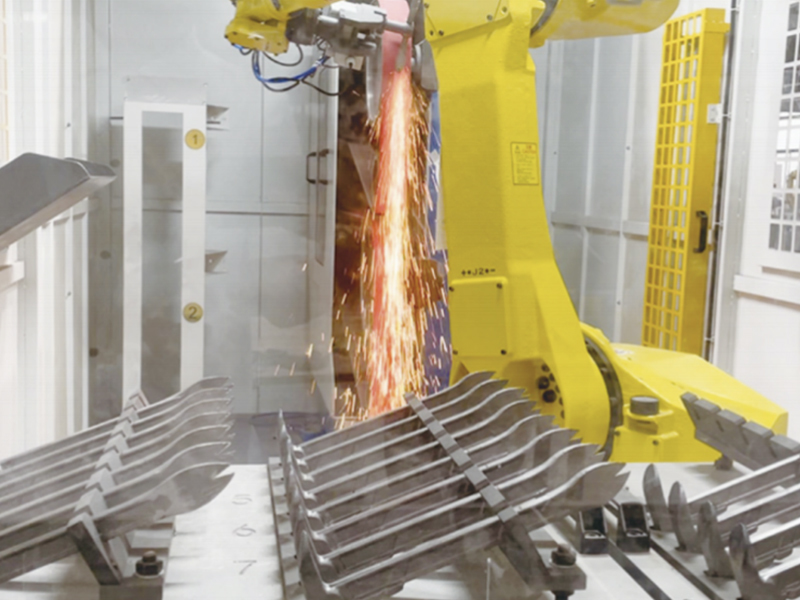
Motorcycle chrome tube frames — trunk trim rings, handlebar surrounds, luggage rack bezels — are among the highest-volume decorative components in the two-wheeler industry. Every piece must reach mirror-grade surface roughness before bright chrome plating. Every piece must look identical under showroom lighting. Manual bench polishing delivers neither consistency nor speed at production scale.
Our heavy duty robotic polishing cell is purpose-built for bent tube chrome parts — delivering repeatable pre-plating surface quality, corner-to-corner consistency, and three-shift throughput, piece after piece.
Frequently Asked Questions
Q1: How does the robot maintain consistent polishing pressure around bends with different radii?
The constant-force compliant polishing head adjusts contact pressure in real time as the robot wrist changes orientation through each bend. The 6-axis wrist re-angles continuously to keep the buff tangent to the tube surface — the same way a skilled operator would tilt their wrist through a corner, but with defined force and speed parameters that never vary. Pressure, feed rate, and buff speed are set independently for straight sections, large-radius corners, and tight corners. We validate all parameters during the free sample test.
Q2: Can the robot reach the weld stud root areas without damaging the studs?
Yes — with a slim-profile conical buff approaching the stud root from a radial angle. The approach path is generated from the 3D CAD model and collision-validated in simulation. The robot polishes as close to the stud root fillet as the geometry allows, then flags the remaining root area in the process record. Any area beyond safe tool reach is documented before installation — no surprises after delivery.
Q3: How does the machine ensure Ra consistency between straight runs and corners on the same frame?
This is specifically what force-torque control solves. On a straight run, the buff contacts the tube tangentially and the compliance system maintains defined force. As the robot enters a bend, the wrist re-angles and the compliance system resets to the same target force on the new contact geometry. Without force control, the buff lifts slightly at corners (reducing material removal) and presses harder at straight-to-curve transitions (over-removing). With force control, the Ra profile is consistent perimeter-to-perimeter.
Q4: Does the cell handle all three polishing stages (cut, buff, finish) in one cycle?
On LR-POLISH-T2 and T3, yes. The auto buff changer carries sisal (cutting), spiral-sewn (buffing), and loose-leaf (finishing) buffs with their respective compound feeds. The robot completes all three stages for the full frame perimeter in one uninterrupted cycle. On T1 (entry), stages are run sequentially with manual buff change between batches — suitable for lower-volume or single-model lines.