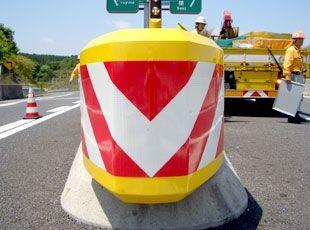
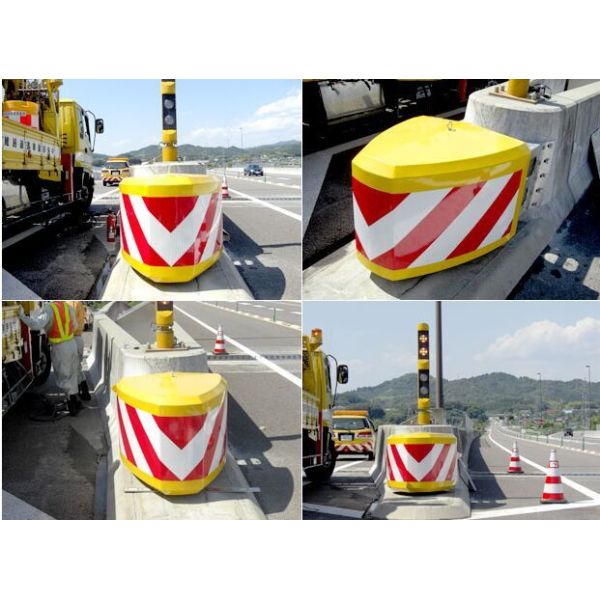
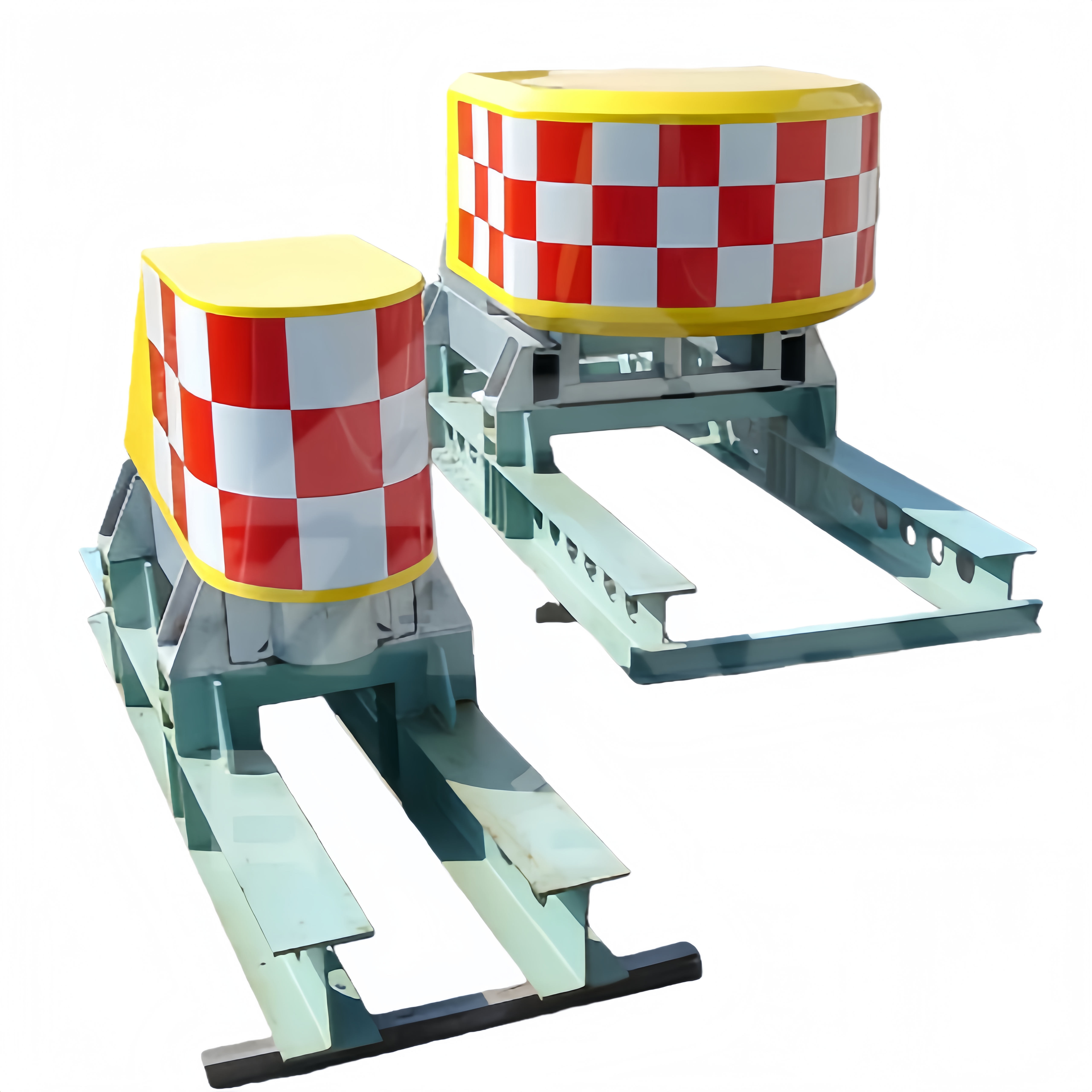
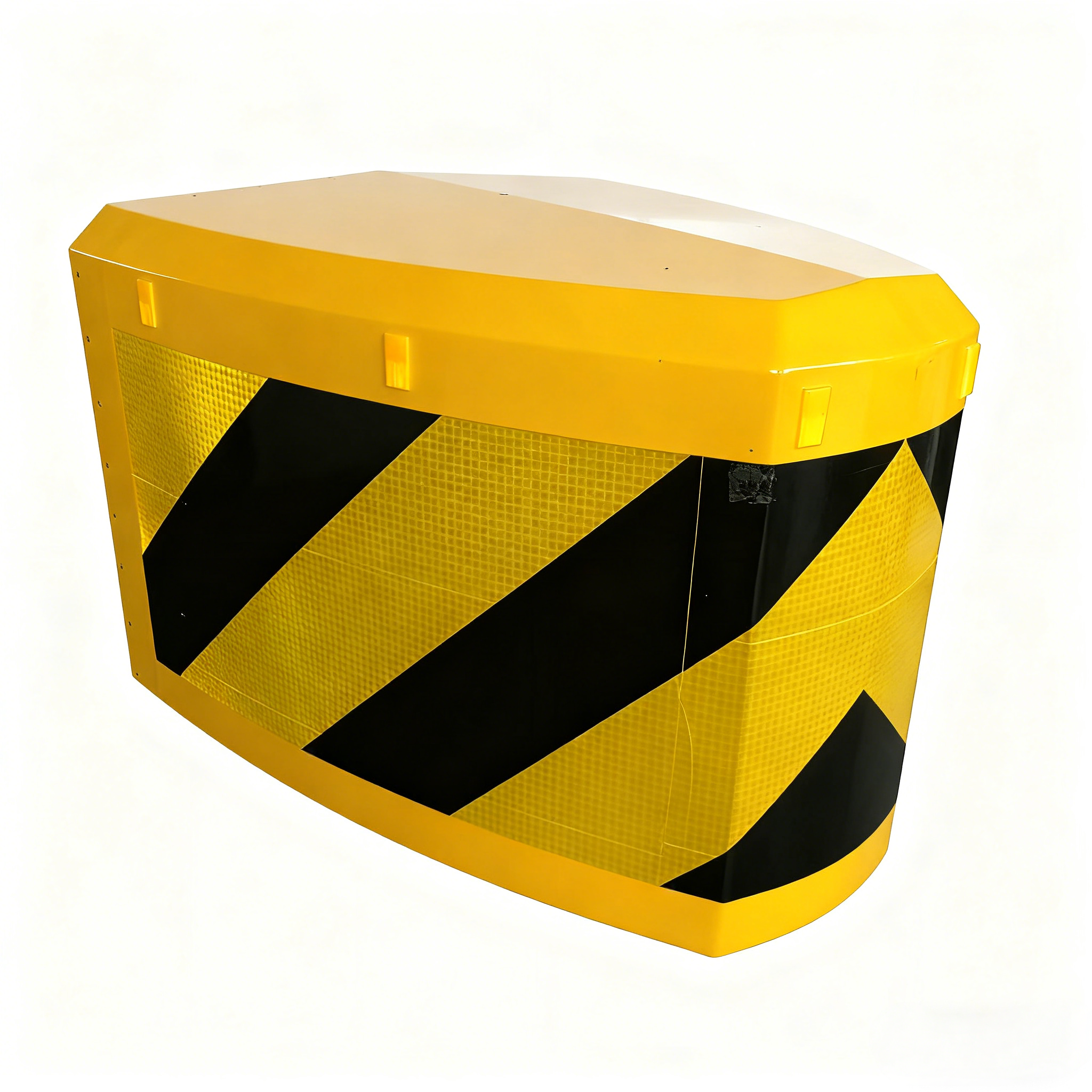
Aluminum Alloy Bumpproof Highway Crash Attenuator
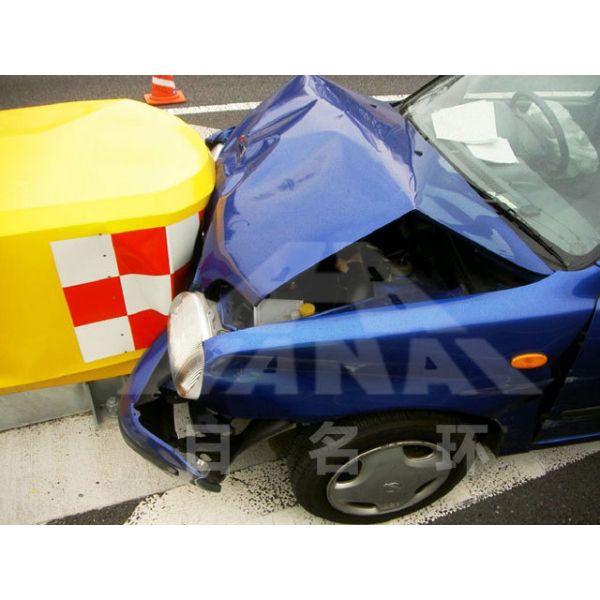
Advanced highway crash cushion system designed for expressways, urban expressways, tunnel entrances, and hazardous intersections. This specialized active protection facility reduces collision severity through deformable energy-absorbing structures, elevating road protection from passive blocking to active safeguarding.
Application Scenarios
- Expressway divergence points
- Tunnel entrance buffer zones
- Sharp curve protection areas
- Toll station warning zones
Installation Methods
- Fixed guardrail mounting
- High fence fixed type
- High fence embedded installation
Product Specifications
| Product Model |
HSK-100 / HSK-80 / HSK-60 |
| Protection Speed |
100km/h / 80km/h / 60km/h |
| Main Material |
Aluminum alloy energy-absorbing core + steel shell |
| Appearance Color |
Engineering yellow/orange (reflective film included as standard) |
| Installation Methods |
Embedded, Guardrail-fixed, High-barrier-fixed |
| Maintenance Feature |
Energy-absorbing core can be replaced separately without full disassembly |
Product Comparison Summary
| Comparison Item |
HSK Crash Cushion System |
Traditional Concrete Crash Barrier |
Plastic Crash Barrel (Temporary) |
| Protection Principle |
Active energy absorption through deformation |
Rigid blocking |
Primarily warning, minimal energy absorption |
| Impact Effectiveness |
Controlled deceleration after high-speed collision |
Often causes severe vehicle damage |
Only suitable for low-speed contact |
| Repair Method |
Module replacement (2-4 hours) |
Complete reconstruction (3-7 days) |
Direct disposal |
| Service Life |
Main structure 10+ years, modules replaced as needed |
Permanent (but unusable after impact) |
1-2 years (prone to aging) |
| Installation Speed |
1-2 days (including foundation curing) |
5-10 days (long curing period) |
Immediate placement |
| Long-term Cost Efficiency |
★★★★★ (Repairable and reusable) |
★★☆ (Single-use) |
★★★ (Low-cost consumable) |
| Safety |
Fire-resistant, splash-proof, reflective warning |
May produce flying debris |
Flammable, easily displaced, weak warning effect |
In a Nutshell
► HSK System: Best suited for permanent high-risk locations. Higher initial investment but optimal long-term safety and cost efficiency.
► Concrete Barrier: Only suitable for low-speed scenarios where structural damage is acceptable. High repair costs and long downtime.
► Plastic Crash Barrel: For temporary warning or low-speed auxiliary protection only, not a substitute for professional cushioning devices.
Product Knowledge Q&A
Q: What is this product?
A: It is a specialized highway crash cushion device that absorbs collision energy through the deformation of its internal aluminum alloy energy-absorbing structure, reducing accident severity.
Q: What do the model numbers HSK-60/80/100 represent?
A: The numbers indicate the design protection speed in km/h. For example, HSK-100 is suitable for highways with a speed limit of 100 km/h.
Q: How is it repaired after being hit?
A: Only the internal modular energy-absorbing core needs replacement (completed in about 2-4 hours). The outer shell is typically reusable, with repair costs approximately 20% of those for traditional concrete barriers.
Q: What conditions are required for installation?
A: Three installation methods are available:
① Embedded (requires pouring a concrete foundation)
② Guardrail-fixed (connected to existing corrugated beam guardrails)
③ High-barrier-fixed (requires matching crash barriers)
Q: Why is the product yellow/orange?
A: It uses internationally recognized warning colors combined with high-intensity reflective film, ensuring visibility from 500 meters away and providing 24/7 warning to drivers.
Q: What advantages does it have over traditional concrete barriers?
A: Four key advantages:
• Faster repairs (4 hours vs. 7 days)
• Lower costs (module replacement vs. full reconstruction)
• Enhanced safety (fire-resistant and splash-proof vs. concrete debris)
• Stronger warnings (all-weather reflectivity vs. no active warning)
Q: What should be noted during procurement?
A: Three critical steps:
① Request the collision test report for the corresponding model
② Verify the validity of the patent certificate
③ Confirm the supply lead time for energy-absorbing cores (recommended ≤ 7 days)
Q: What scenarios is it suitable for?
A: Four high-risk road sections:
• Expressway divergence points
• Tunnel entrances and exits
• Sharp curve sections
• Buffer zones in front of toll stations