AR Coated Germanium IR Lens 3-5um MWIR High Transmission 25.4mm Optics
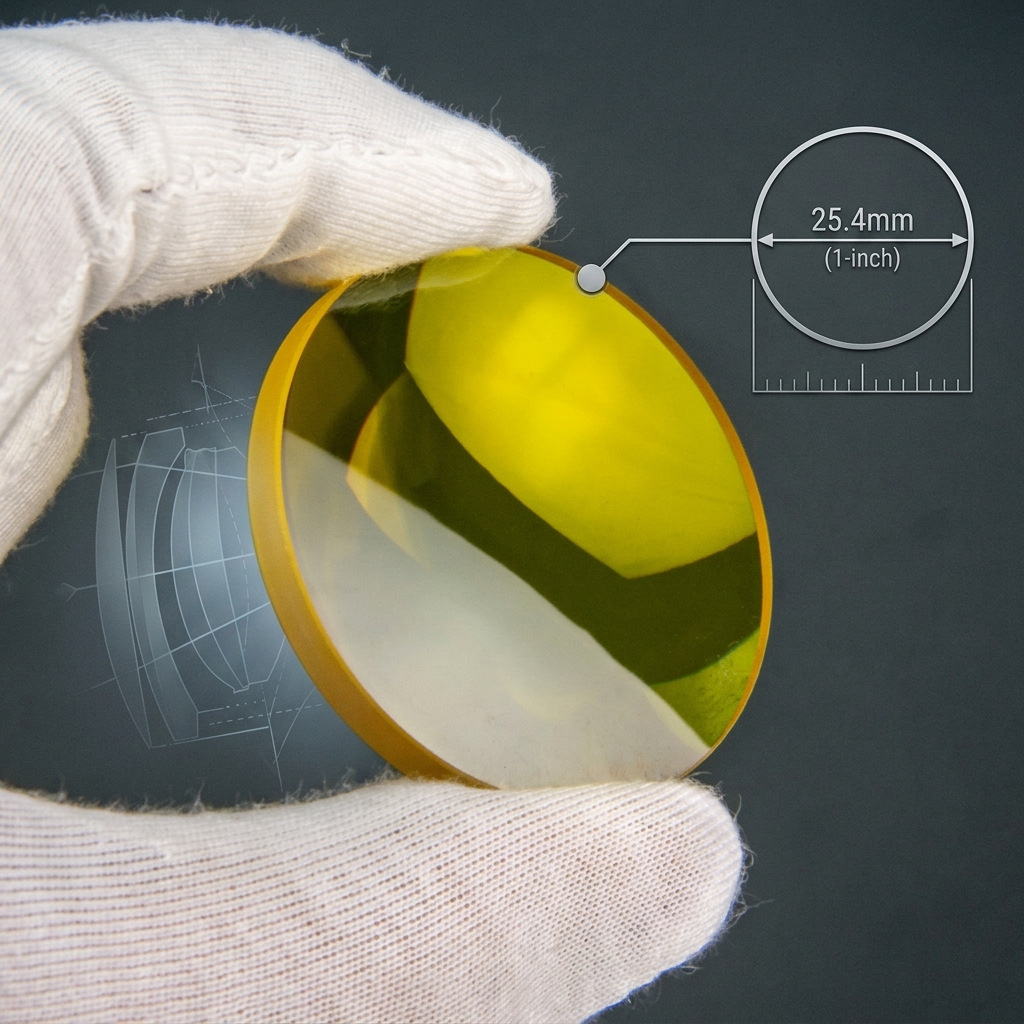
This AR coated germanium IR lens is designed for 3-5um MWIR systems that demand high transmission and stable imaging. The 25.4mm lens is fabricated from optical grade single crystal germanium, the standard substrate for mid-wave infrared optics, and coated with a dedicated MWIR anti-reflective layer that lifts transmission above 97 percent across the 3-5um band. Without the IR coating, germanium reflects roughly 36 percent of incident light from its surfaces; this AR coated germanium lens eliminates that loss and keeps the maximum signal on the detector.
Each germanium IR lens is polished to a 40-20 scratch-dig surface quality and verified with an FTIR spectrophotometer, and the measured transmission curve is supplied with the batch. The lens is available in plano-convex, bi-convex, and meniscus geometries, with focal lengths matched to collimating, focusing, and imaging roles in MWIR systems. Custom diameters from 5mm to 100mm, alternate coatings for 8-12um LWIR or dual-band operation, and mounted versions with threaded housings are available for OEM thermal imaging programs.
Technical Specifications
| Product Name |
AR Coated Germanium IR Lens |
| Material |
Optical Grade Germanium (Ge) |
| Spectral Range |
3-5um MWIR |
| Coating |
MWIR AR (Ravg<1% per surface) |
| Transmission |
>97% Coated 3-5um |
| Diameter |
25.4mm (Custom 5-100mm) |
| Surface Quality |
40-20 Scratch-Dig |
| Geometry |
Plano-Convex / Bi-Convex / Meniscus |
| Application |
Thermal Imaging and MWIR Systems |
| Certificate |
RoHS Compliant, ISO 9001:2015 |
Key Advantages
- MWIR AR coating lifts transmission above 97 percent at 3-5um
- Germanium substrate delivers high refractive index in a compact element
- Measured FTIR transmission curve supplied with every batch
- 40-20 surface quality controls scatter for clean thermal imaging
- Custom focal length and geometry for collimation or focusing roles
- Durable coating withstands cleaning and field handling
- Optional LWIR or dual-band coating for multi-spectral systems
- Mounted versions available with threaded stainless steel housings
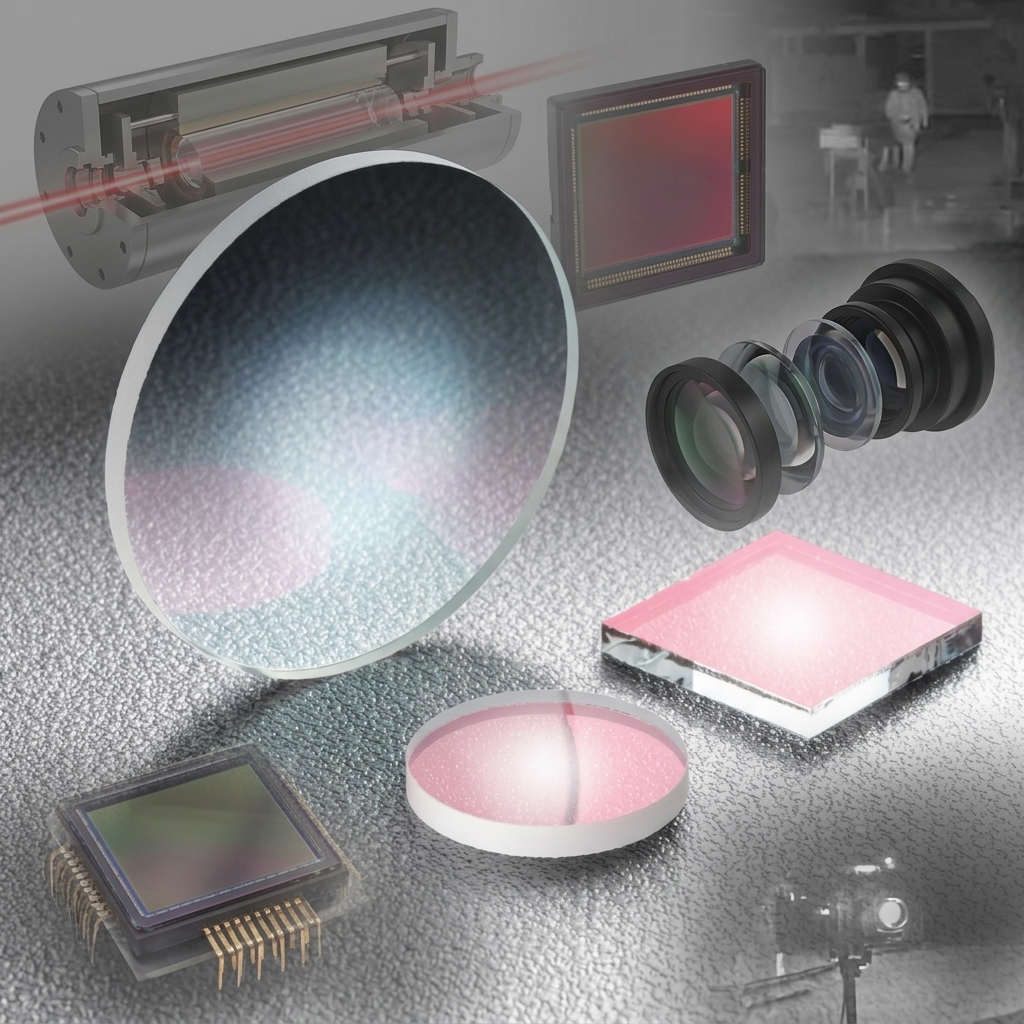
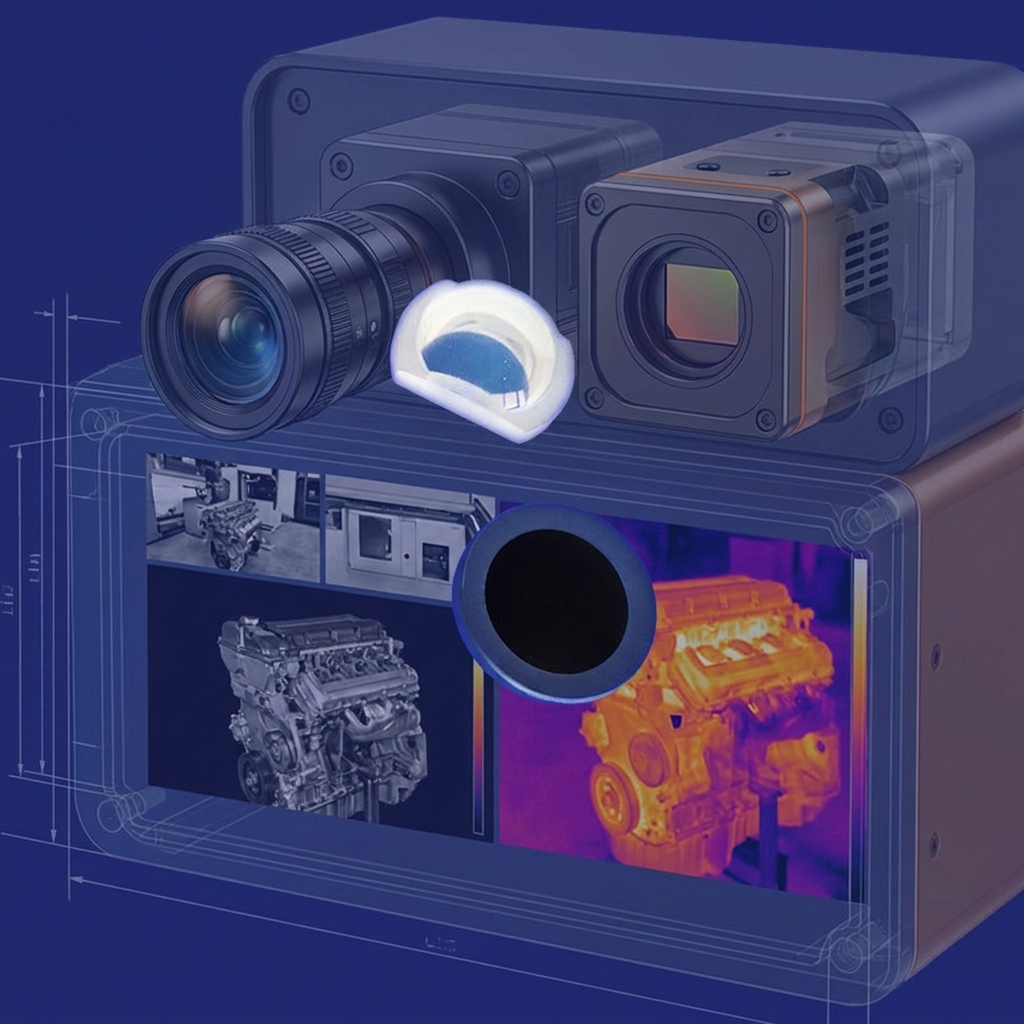
The AR coated germanium IR lens is used across thermal imaging, temperature measurement, and infrared spectroscopy applications where signal loss in the optical path directly reduces measurement accuracy. Because germanium is sensitive to thermal runaway above roughly 100 degrees Celsius, the lens is also available with a hardened protective coating and is typically specified for ambient-temperature system environments. Design teams receive recommended handling and mounting guidance, including torque limits for threaded housings, so the lens performs to specification in production assemblies. Batch traceability records link each lens to its material lot, coating run, and inspection data, which supports quality programs in medical, industrial, and defense supply chains.
Product Q&A
Q: How much transmission does the AR coating add to germanium?
Uncoated germanium reflects about 36 percent of incident MWIR light at two surfaces, leaving roughly 64 percent transmission. The dedicated 3-5um AR coating reduces reflection below 1 percent per surface, raising transmission above 97 percent. This gain directly improves thermal contrast and detection range.
Q: Can this germanium IR lens be used at 8-12um as well?
Germanium transmits across both MWIR and LWIR bands, but the coating must match the band. The standard version is coated for 3-5um; we offer an 8-12um coating version and a dual-band option. Specify your operating band and we will supply the correct coating design.
Q: What focal lengths are available for this 25.4mm lens?
Standard focal lengths range from 12.7mm to 100mm depending on geometry. Plano-convex versions are typical for focusing, bi-convex for imaging relays, and meniscus for aberration control. We can grind custom radii to hit your exact effective focal length.
Q: How is coating quality verified?
Coating adhesion is tested with tape pull per MIL-C-48497, and spectral performance is measured with an FTIR spectrophotometer. Transmission curves and coating test records are included in the batch documentation for incoming inspection.