S235JR ST12 ST37 EN10025 Cold Rolled Sheets Carbon Steel Plate
Product Description
S235JR ST12 ST37 EN10025 Cold Rolled Sheets Carbon Steel Plate
Product Parameters
The DIN 17100 standard has been superseded by the European unified standard EN 10025. ST37 most directly corresponds to S235JR in EN 10025-2 in terms of performance.
- S: Structural steel
- 235: Minimum yield strength of 235 MPa
- JR: Indicates an impact energy of 27 Joules at room temperature (+20°C)
In terms of chemical composition and mechanical properties, it is also similar to:
- Chinese standard: Q235 (especially Q235B)
- American standard: ASTM A36
- Japanese standard: SS400
Regarding "Cold-Rolled"
The original standard did not specify whether "ST37" was hot-rolled or cold-rolled; it was simply a material grade. The term "ST37 cold-rolled sheet" in the market typically refers to thin sheets produced by cold rolling of steel that meets the mechanical property requirements of ST37/S235/Q235. The base material is likely low-carbon steel, which is cold-rolled and annealed to achieve the required strength and ductility.
Basic Characteristics (as a cold-rolled sheet)
If referring to a cold-rolled sheet meeting ST37 performance standards, its characteristics are as follows:
- Strength: Belongs to low-carbon mild steel, with relatively low strength (yield strength ~235MPa, tensile strength ~370-500MPa), but excellent ductility
- Formability: Excellent formability after cold rolling, making it very suitable for complex cold working such as deep drawing, stretching, and bending
- Surface Quality: The cold rolling process results in a smooth, flat surface with high dimensional accuracy. Common surface finishes include bright (BA) and matte (2B)
- Weldability: Low carbon content, excellent weldability
- No Rust Resistance: Prone to rust, requiring subsequent electroplating, painting, or other surface treatments
Applications
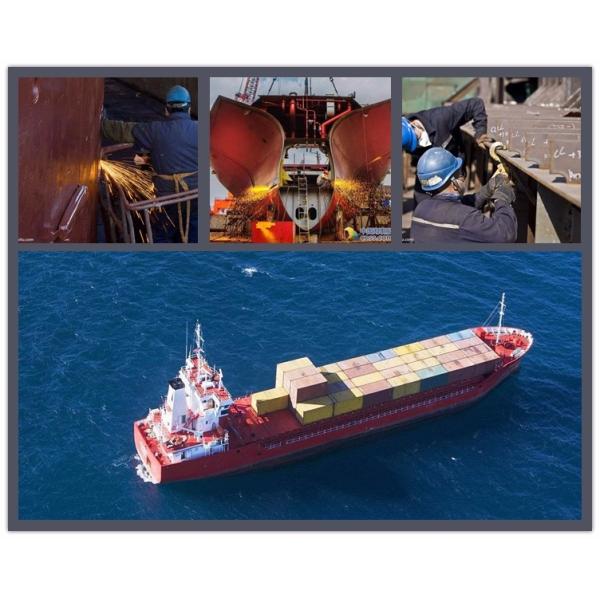
The use of pressure vessels is very wide. It is equipment that plays an important role in various sectors of the national economy such as the petrochemical industry, energy industry, scientific research industry.
The pressure vessel is generally composed of six parts: a cylinder, a head, a flange, a sealing element, an opening, a nozzle, and a support. In addition, it is also equipped with safety devices, meters and internal parts to complete the role of different production processes. Due to reasons such as sealing, pressure bearing and medium, pressure vessels are prone to explosions, fires and accidents that endanger the safety of personnel, equipment and property, and pollute the environment.
Packaging & Shipping Details
Packing Details
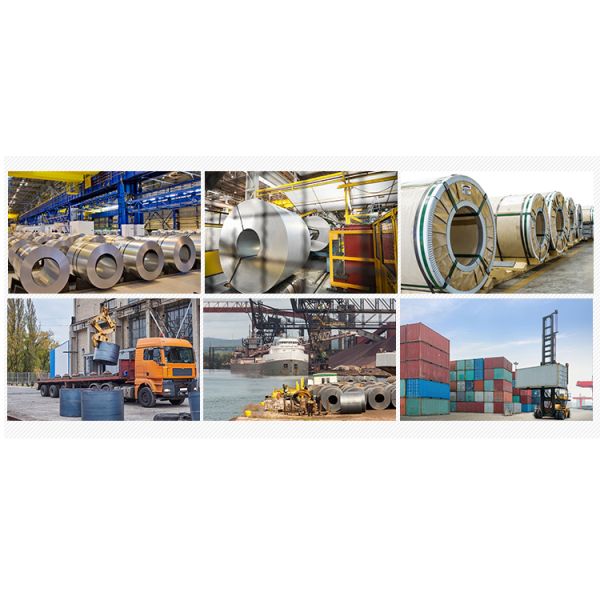
Export standard package, bundled or as required.
Delivery Time
According to order quantity
Recommended Shipping Methods
- By sea (Container or Bulk)
- By air or express: small size sample
Container Sizes
| Container Type |
Dimensions |
| 20ft GP |
5.8m (length) × 2.13m (width) × 2.18m (height) |
| 40ft GP |
11.8m (length) × 2.13m (width) × 2.18m (height) |
| 40ft HG |
11.8m (length) × 2.13m (width) × 2.72m (height) |
Frequently Asked Questions
Q1. What are your company's main products?
A1: Our main products are stainless steel plate/sheet, coil, round/square pipe, bar, channel, etc.
Q2. How do you control quality?
A2: Mill Test Certification is supplied with shipment, Third Party Inspection is available. and we also get ISO,SGS.
Q3. What are the advantages of your company?
A3: We have many professionals, technical personnel, more competitive prices and best after-sales service than other stainless steel companies.
Q4. How many countries have you exported to?
A4: Exported to more than 50 countries mainly from America, UK, Kuwait, Egypt, Turkey, Jordan, India, etc.
Q5. Can you provide samples?
A5: We can provide the small samples in stock for free, as long as you contact us. Customized samples will take about 5-7 days.