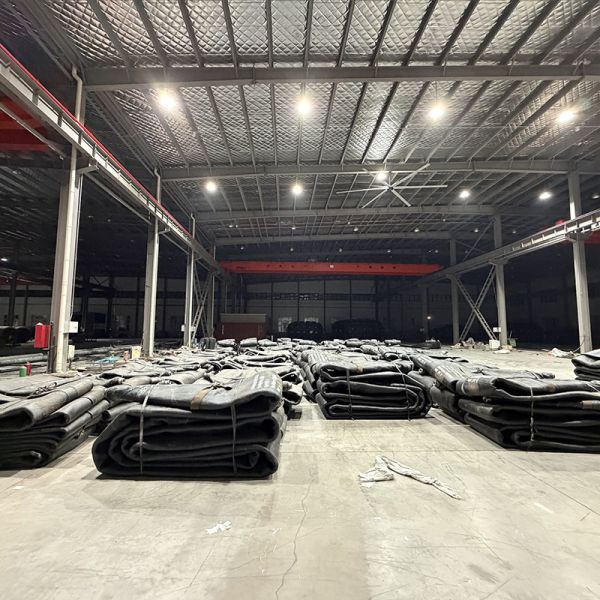
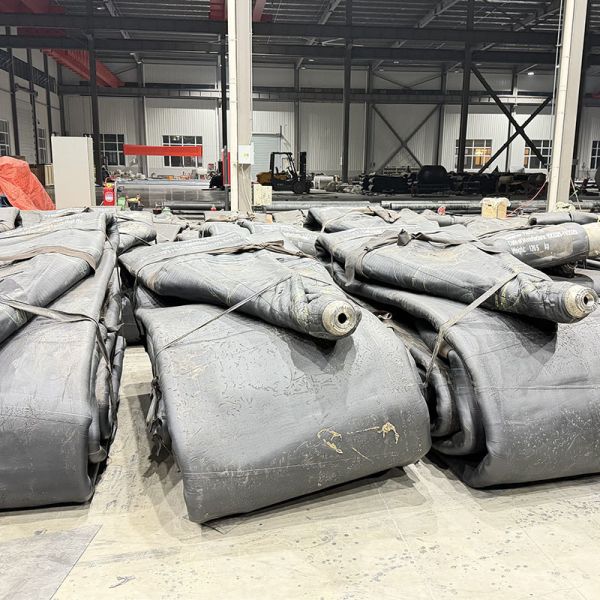
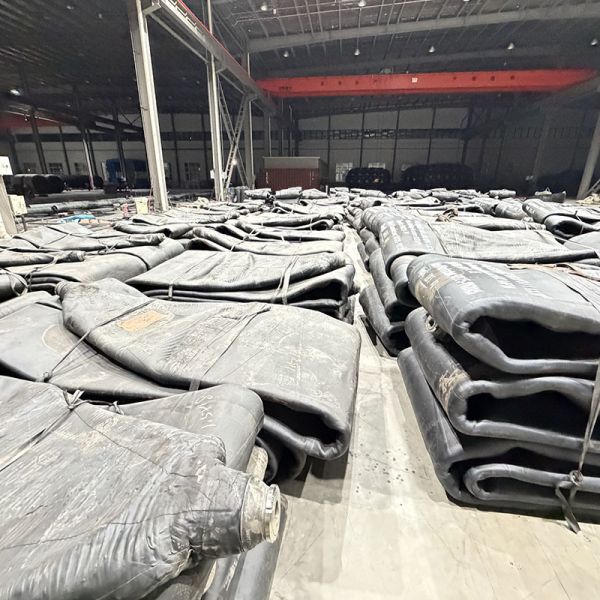
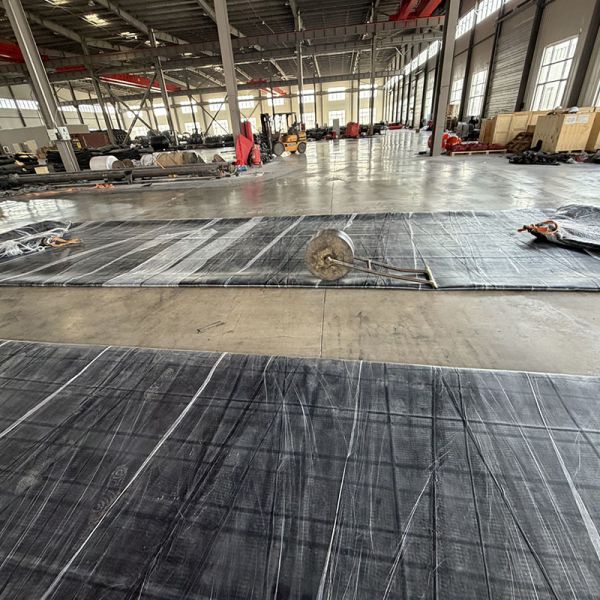
Inflatable Marine Airbags Flexible Operation High Durability Easy Maintenance
Description
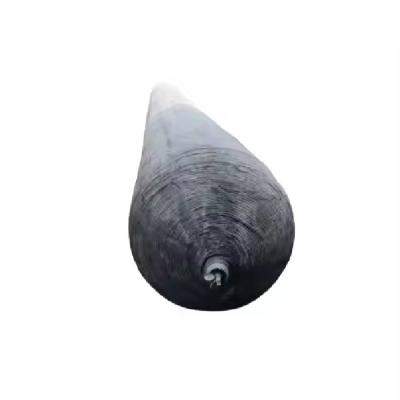
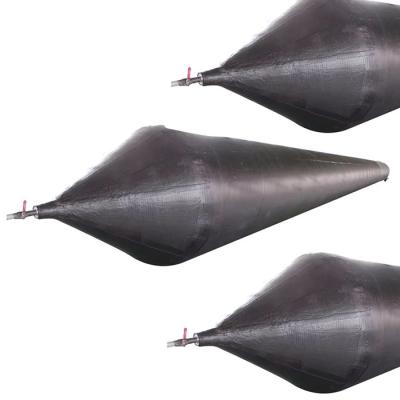
Airbag launching has evolved into a mature, cost-effective, and structurally reliable method for transferring ships from land to water without dependence on permanent slipway facilities. The technology operates by distributing hull loads across a series of cylindrical reinforced airbags that deform elastically under controlled pressure. This deformation serves two simultaneous functions: load-bearing support and rolling propulsion. By adjusting internal pressure and spacing, airbag systems can be configured for vessels with varying displacement, keel geometries, and launching-angle requirements. They perform particularly well in shipyards constrained by space, limited infrastructure, or changing shoreline conditions.
Unlike cradle systems or drydock launching, airbag launching does not introduce concentrated point stresses into the hull bottom. Instead, the hull rests on a continuously adapting support surface, allowing stresses to remain within safe yield limits during longitudinal movement. Advanced rubber formulation and high-tensile reinforcement technology ensure that the airbags maintain structural stability even during rapid pressure transitions and dynamic load cycles.
Case Study: Launching of a 165 Meter Offshore Construction Barge in Northern Europe
A notable engineering case took place at a Northern European engineering facility responsible for deploying a 165-meter offshore construction barge. The barge featured a flat-bottomed hull, complex load distribution due to heavy onboard lifting systems, and a high block coefficient. Traditional cradle launching was impractical because the site lacked the required rail infrastructure and reinforcement capacity. Engineers instead designed a high-capacity airbag arrangement capable of supporting both static hull weight and the asymmetric loads created by the vessel’s onboard equipment.
A total of 32 airbags with diameters of 2.0 m and lengths of 20 m were deployed beneath the keel. To accommodate asymmetric weight distribution, engineers used differential pressurization: airbags under the machinery side operated at slightly higher internal pressure to balance structural loads. A series of laser alignment sensors ensured that the hull maintained straight-line movement during the release phase. The ground surface was reinforced with compacted stone and steel plates to provide predictable rolling resistance.
During the launch procedure, the barge advanced steadily across the airbags as each unit compressed and released energy in a controlled sequence. As the bow reached the waterline, the hydrodynamic buoyant force gradually reduced the load borne by the airbags. The vessel entered the water with low trim variation and no observable lateral drift. Post-operation measurements confirmed that hull deflection remained within engineering tolerances.
The success of this project validated the suitability of airbag launching for very large industrial vessels with unconventional mass distributions. The shipyard reported significant savings by avoiding heavy civil engineering, and it subsequently adopted airbag launching as its preferred method for large non-propelled offshore platforms.
Specifications
| Item | Description |
| Place of Origin | China |
| Brand Name | Hongruntong Marine |
| Material | Industrial Grade Natural Rubber |
| Diameter | 0.5m-3.0m, or as Request |
| Length | 1.0m-28.0m, or as Request |
| Working Pressure | 0.05-0.25 Mpa |
| Technics | High Pressure, Overall Winding, Explosion-Proof |
| Use | Ship Launching and Docking |
| Thickness | 5-13 ply |
| Standard | Conducted by ISO14409 and GB/T1590-2006 system. |
| Accessories | Q355/SS304/SS316, Pressure Gauge, Tee, Plug, Switch, Inflation Tube |
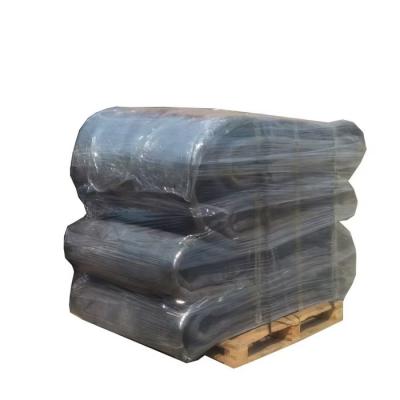
| Packaging | Inner-Plastic Bag; Outer-Standard Wooden Pallets. |
| Keywords | Airbag Launching Ship |
| Certificates | ABS, BV, KR, LR, GL, NK, RINA, DNV, RMRS |
| MOQ | 1 |
| OEM | Welcome |
| Diameter | Working Pressure | Working Height | Bearing Capacity | |
| KN/m | Ton/m | |||
| D=1.0m | 0.14Mpa | 0.6m | 87.96 | 8.98 |
| 0.5m | 109.96 | 11.22 | ||
| 0.4m | 131.95 | 13.46 | ||
| D=1.2m | 0.12Mpa | 0.7m | 94.25 | 9.62 |
| 0.6m | 113.10 | 11.54 | ||
| 0.5m | 131.95 | 13.46 | ||
| 0.4m | 150.80 | 15.39 | ||
| D=1.5m | 0.10Mpa | 0.9m | 94.25 | 9.62 |
| 0.8m | 109.96 | 11.22 | ||
| 0.7m | 125.66 | 12.82 | ||
| 0.6m | 141.37 | 14.43 | ||
| 0.5m | 157.08 | 16.03 | ||
| D=1.8m | 0.09Mpa | 1.1m | 98.96 | 10.10 |
| 1.0m | 113.10 | 11.54 | ||
| 0.9m | 127.33 | 12.98 | ||
| 0.8m | 141.37 | 14.43 | ||
| 0.7m | 155.51 | 15.87 | ||
| 0.6m | 169.65 | 17.31 | ||
| D=2.0m | 0.08Mpa | 1.2m | 100.53 | 10.26 |
| 1.1m | 113.10 | 11.54 | ||
| 1.0m | 125.66 | 12.82 | ||
| 0.9m | 138.23 | 14.11 | ||
| 0.8m | 150.80 | 15.39 | ||
| 0.7m | 163.36 | 16.67 | ||
| 0.6m | 175.93 | 17.95 | ||
| * Other size can be produced follow client's requirements. | ||||
Features
Reinforced Circular Weave Fabric Technology
This airbag generation employs circular-woven reinforcement layers that eliminate seam-related stress concentrations and provide uniform tensile characteristics around the circumference. Circular weaving increases fatigue resistance, enabling the airbags to perform reliably under continuous rolling cycles and extended static compression.
High Energy Absorption Under Dynamic Loading
Internal rubber elasticity and fabric stiffness are calibrated to absorb dynamic energy during forward motion, especially when vessels encounter friction transitions or ground-slope changes, preventing sudden acceleration and protecting hull structures.
Thermal Stability for All-Season Operation
The rubber formulation is engineered to retain elasticity and pressure stability across a wide temperature range, ensuring dependable performance in both cold-climate and tropical shipyards.
Extended Bearing Length for Large Hull Contact Areas
The design offers an extended effective bearing length that improves hull-contact stability, reduces localized loading, and supports wide-beam barges and offshore platforms more effectively.
Applications
Launching of Offshore Engineering Platforms
Suitable for heavy industrial barges, pipe-lay vessels, accommodation platforms, and construction pontoons requiring large-area load distribution.
Support for Modular Shipbuilding and Block Transfer
Ideal for raising or repositioning large hull blocks in modular shipyards where flexibility is vital.
Movement of Oversized Coastal and Civil Engineering Structures
Effective for transferring caissons, breakwater elements, and large steel modules requiring smooth rolling support.
Advantages
Material Science Leadership and Custom Rubber Engineering
Hongruntong develops proprietary rubber compounds optimized for tensile strength, ozone resistance, thermal stability, and long-cycle fatigue performance.
Advanced Production Automation with Precision Fabric Layering
Automated calendaring and controlled vulcanization guarantee uniform reinforcement adhesion and minimize internal shear stress.
Engineering Support for Complex or Non-Standard Launching Projects
Includes slope modeling, differential pressure planning, ground reinforcement recommendations, and real-time technical guidance.
Reliability Proven Across International Shipyards
With worldwide operational experience, Hongruntong offers inspection programs, replacement support, and long-term maintenance assistance.
FAQ
Q1. How do I determine the correct internal pressure for a specific vessel launch?
Pressure is calculated based on vessel displacement, hull geometry, slope conditions, and spacing configuration.
Q2. Can airbags be used for vessels with asymmetric weight distribution?
Yes. Differential pressurization allows the system to maintain balanced support and prevent lateral deviation.
Q3. What environmental conditions can the airbags withstand?
They perform reliably across extreme temperature ranges and resist saltwater, UV exposure, and chemical contaminants.
Q4. How should airbags be stored when not in use?
Store deflated in a cool, dry, shaded area away from petroleum products and excessive heat.
Q5. What maintenance is required for long-term use?
Regular inspection of rubber elasticity, valves, and reinforcement layers, plus periodic pressure testing.