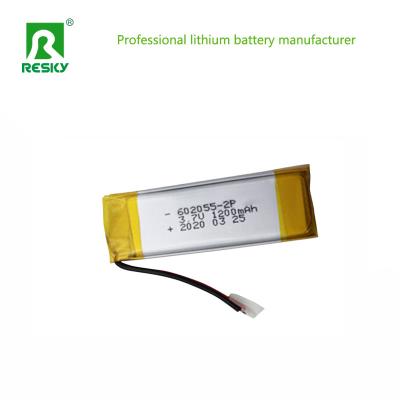
| NO. | Items | Specifications |
|---|---|---|
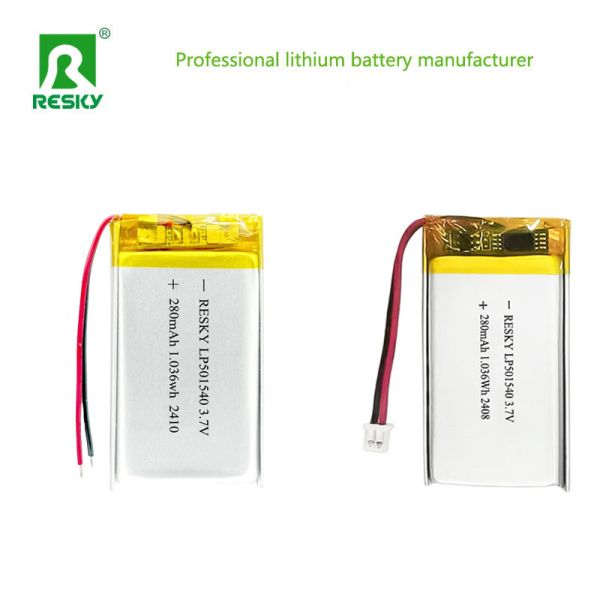
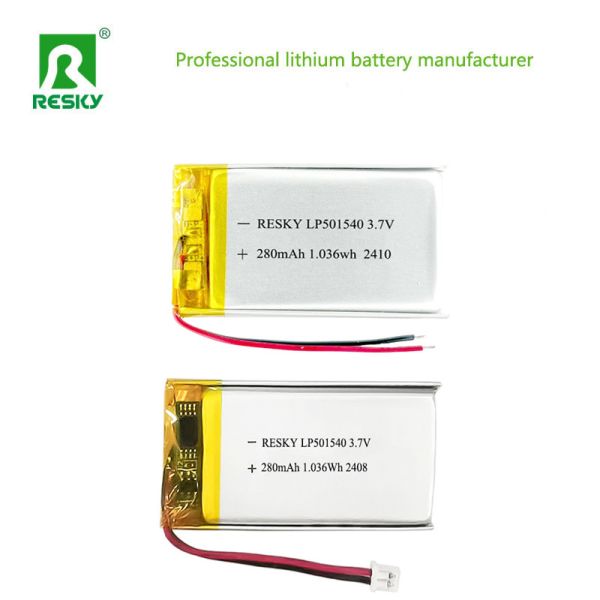
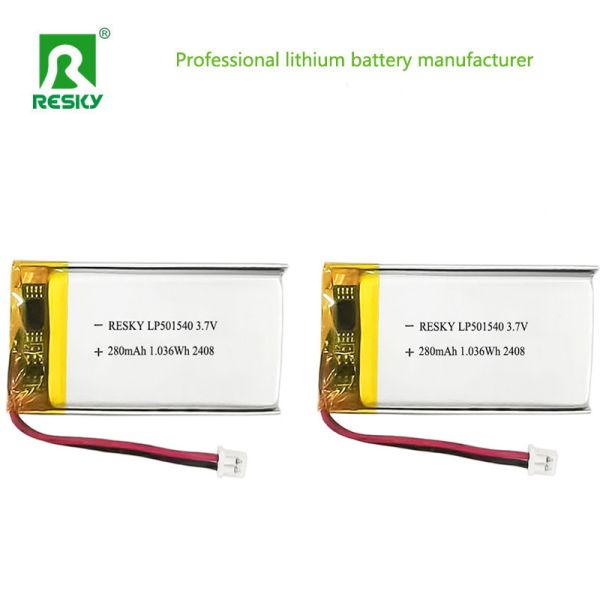
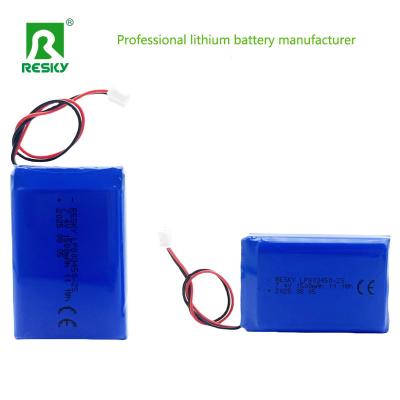
| 1 | Batteries | 3.7v 280mah lipo battery |
| 2 | Charge voltage | 4.2V |
| 3 | Nominal voltage | 3.7V |
| 4 | Nominal capacity | 280mAh @ 0.2C Discharge |
| 5 | Charge current | Standard Charging: 0.2C Rapid charge: 1.0C |
| 6 | Standard Charging method | 0.5C CC(constant current) charge to 4.2V, then CV(constant voltage 4.2V) charge till charge current decline to ≤0.05C |
| 7 | Charging time | Standard Charging: 2.75hours (Ref.) Rapid charge: 2hours (Ref.) |
| 8 | Max. charge current | 0.5C |
| 9 | Max. discharge current | 1.0C |
| 10 | Discharge cut-off voltage | 2.5V±0.25V (0.2C) |
| 11 | Operating temperature | Charging: 0°C ~45°C Discharging: 0°C ~45°C |
| 12 | Storage temperature | -10°C ~ +45°C |
| 13 | Dimension | Length: 40±0.5mm (not including tabs) Width: 15±0.5mm Thickness: 5±0.2mm |
| 14 | Drop Test | The cell is to be dropped from a height of 1 meter twice onto concrete ground. No fire, no leakage |
| 15 | Cycle time | ≥800 times |
Consumer Electronics:
Renewable Energy Systems:
Ternary lithium polymer batteries primarily use nickel-cobalt-manganese (NCM) or nickel-cobalt-aluminum (NCA) cathode materials, making them a mainstream choice for both power and consumer batteries.
They also offer strong compatibility in the medical device field.
Advantages (Compatibility with Medical Device Needs):
Long cycle life and low maintenance costs: Typical cycle life can reach 1000–2000 cycles, 2–4 times that of lithium cobalt oxide. This reduces the frequency of battery replacements for long-term used devices, making them particularly suitable for devices requiring continuous operation, such as ECG monitors and long-running in-vitro diagnostic equipment.
Excellent high and low temperature performance and strong environmental adaptability: Maintaining over 70% discharge efficiency within a wide temperature range of -20℃ to 60℃, far superior to lithium cobalt oxide. Suitable for devices operating in complex environments, such as outdoor emergency defibrillators and diagnostic equipment transported via cold chain.
With outstanding rate capability and support for high-power output, this device can withstand high-current charging and discharging, meeting the needs of emergency equipment such as defibrillators with high-voltage instantaneous discharge and ventilators with peak starting power, ensuring stable operation in emergency situations.
Its thermal stability is superior to lithium cobalt oxide, resulting in higher safety. It has a higher thermal runaway threshold during overcharging, short circuits, and punctures, resulting in a lower risk of fire and explosion, making it more suitable for wearable ECG monitors, portable ultrasound devices, and other personal medical devices.