Display Technology3LCD (0.59" x3, 16:10)
Brightness4200 Lumens (White/Color)
Native ResolutionWXGA (1280*800)
Contrast Ratio5,000,000:1
Light SourceLaser (20,000h / ECO 25,000h)
LensF1.6~1.76, f=19.1~23mm, 1.2x Zoom
Projection Size30" ~ 300"
Projection Distance0.93m ~ 11.51m
Keystone CorrectionH/V ±30° + 4-Corner
Built-in SystemAndroid Smart
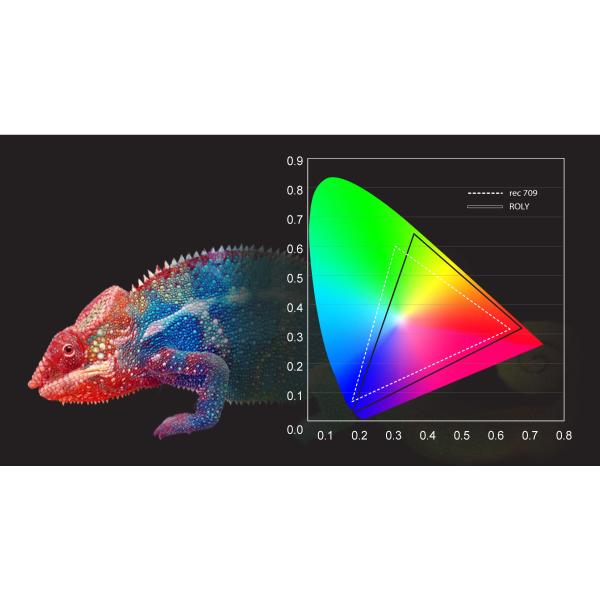
Color StandardREC.709
Installation360° Free Orientation
Noise Level35dB (Normal) / 28dB (ECO)
Dimensions420 * 100 * 280 mm
Weight4.65 kg
Power Supply100-240V AC (50/60Hz)
Digital Zoom/ShiftSupported
24/7 OperationSupported
How do DLP projectors compare to LCD projectors?
DLP projectors use a DMD chip with millions of microscopic mirrors to reflect light, delivering high contrast, deep blacks, and fast switching with no panel aging. LCD/3LCD projectors pass light through liquid-crystal panels, producing smooth, bright color without the rainbow effect. Both are widely used in professional projection; the best choice depends on your venue, ambient light, and content.
What should I look for in a projector for gaming?
For gaming, focus on low input lag, a high refresh rate, and enough brightness to fill the screen. A bright laser projector keeps the image sharp and vivid even on large screens, making it suitable for event gaming, simulators, and interactive installations.
What is the difference between short-throw and long-throw projectors?
Short-throw projectors use a wide lens to create a large image from a very short distance, ideal for tight spaces and minimizing shadows. Long-throw projectors are mounted farther away and suit large auditoriums and venues. Match the lens and throw ratio to your room size and screen.
What types of projector screens are available?
Common screen types include fixed-frame, motorized/roll-down, portable tripod, and ambient-light-rejecting (ALR) screens. Screen gain and material affect brightness and viewing angle. For high-lumen projectors, low-gain matte or ALR screens help avoid hotspots in large venues.
How do I set up an outdoor movie projector?
For outdoor projection, choose a bright projector to overcome ambient light, use a taut, wrinkle-free screen or a suitable wall, ensure stable power and weather protection, and control light around the viewing area.
How do 1080p and 4K projectors compare?
1080p projectors output about 2 million pixels, while 4K projectors deliver roughly four times the detail for sharper large-screen images. Many professional projectors use WUXGA (1920x1200) panels with 4K signal support, balancing brightness, detail, and cost.
What are the most popular projector brands?
The projector market includes brands such as Epson, Flyin, Christie, Barco, Sony, BenQ, and Optoma, along with specialized manufacturers such as Flyin for high-brightness large-venue and 3D mapping projectors. Compare brightness, resolution, light-source lifetime, lens flexibility, and after-sales support.
How do projector brightness and contrast ratio relate?
Brightness (ANSI lumens) determines how well an image competes with ambient light and how large it can be projected, while contrast ratio defines the difference between the darkest and brightest parts of an image, affecting depth and detail. High brightness and high contrast ensure vivid, readable images in large-venue environments.