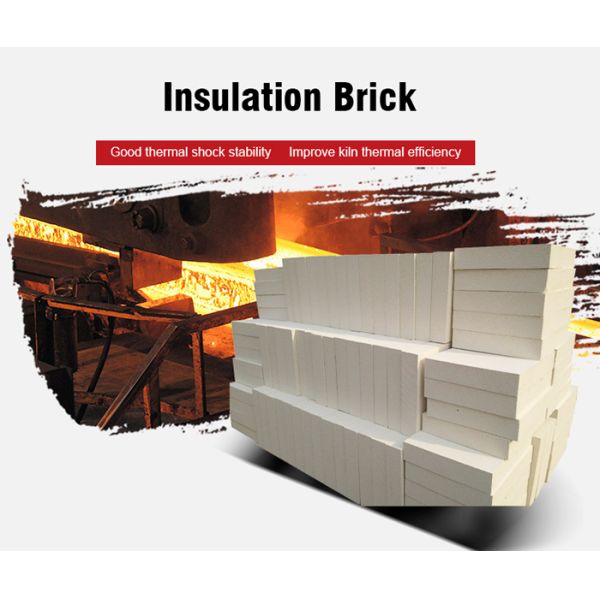
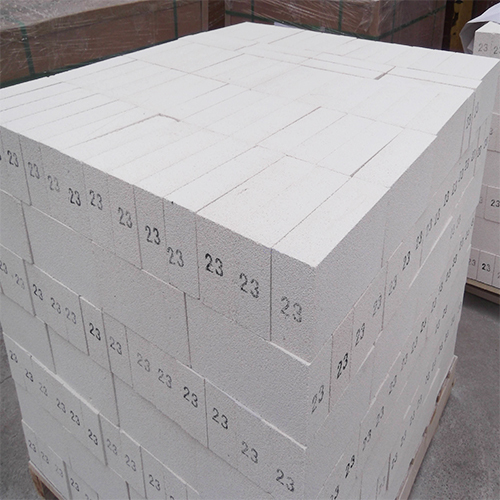
JM 26 Low Density 0.5-1.3g/Cm³ Mullite Insulation Brick Lightweight For Ceramic Roller Kiln
Leadsun Refractory supplies several grades of insulating brick for use in applications from 900℃ to 1760℃. Each grade of brick is formulated to meet specific thermal and physical requirements. After firing, each brick is machined to close dimensional tolerances.
Insulating bricks are manufactured utilizing exceptionally high purity clays or mullite or other ceramic materials. The carefully graded organics used during the manufacturing process burn out during firing to give a uniform pore structure.
Overall, mullite insulating bricks offer a reliable, efficient, and durable solution for applications requiring thermal insulation, structural stability, and energy conservation under demanding operating conditions.
Technical Specifications
| Description |
JM23 |
JM26 |
JM28 |
JM30 |
JM32 |
| Classification Temperature (℃) |
1300 |
1400 |
1500 |
1550 |
1600 |
| Al₂O₃ |
40 |
56 |
67 |
73 |
79 |
| SiO₂ |
51 |
41 |
30 |
24 |
20 |
| Fe₂O₃ |
≤1.0 |
≤0.8 |
≤0.7 |
≤0.6 |
≤0.5 |
| Density (kg/m³) |
600 |
800 |
900 |
1000 |
1100 |
| Module of Rupture (MPa) |
0.9 |
1.5 |
1.8 |
2.0 |
2.2 |
| Cold Crushing Strength (MPa) |
1.2 |
2.4 |
2.6 |
3.0 |
3.5 |
| Permanent Linear Change % |
1230℃*24h≤0.3 |
1400℃*24h≤0.6 |
1510℃*24h≤0.7 |
1620℃*24h≤0.9 |
1650℃*24h≤1.0 |
Key Advantages
- High insulating properties: Low thermal conductivity effectively minimizes heat transfer and ensures excellent thermal efficiency in furnaces, kilns, and other thermal equipment.
- Strong compressive strength: Enables them to withstand significant structural loads and mechanical stress at elevated temperatures without deformation or failure.
- Low heat storage capacity: Allows for rapid heating and cooling cycles, reducing energy consumption during thermal cycling and improving overall process efficiency.
- High purity: Primarily composed of mullite (3Al₂O₃·2SiO₂) phases, ensuring superior chemical stability and resistance to corrosion from alkalis, acids, and other aggressive atmospheres.
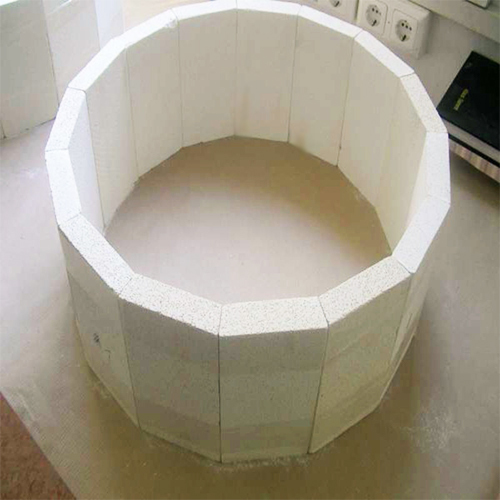
- Tight dimensional tolerance: Ensures precise installation, uniform lining, and minimal joint gaps, which further enhances thermal insulation and structural integrity.
- Energy saving: Inherent energy-saving capability stems from reduced heat loss, lower fuel consumption, and improved thermal management in industrial heating systems.
- Low impurities: Minimizes unwanted reactions, contamination risks, and degradation in high-temperature environments, thereby extending service life and maintaining consistent performance.
Applications
- Primary hot face linings
- Back-up insulation for furnaces and kilns
- Flue insulation
- Sulphur recovery equipment
- Hot blast stoves