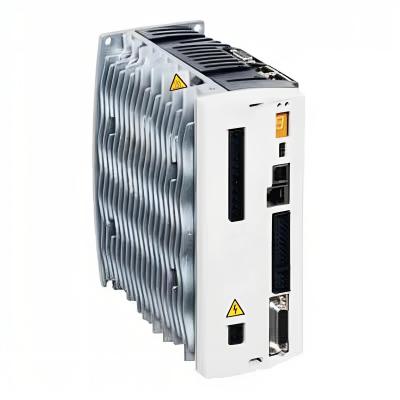
The 1FT7 servo motor is a high-performance permanent magnet synchronous motor engineered specifically for industrial motion control applications. Leveraging premium encoder technology, it delivers exceptional positioning accuracy and speed regulation, paired with low torque ripple to ensure superior surface finish quality and precise trajectory control for machine tools, packaging lines, material handling systems and other industrial equipment. Its standout feature lies in the 4x overload capacity under natural cooling conditions, combined with an IP67 high protection rating and a vibration-isolated encoder, enabling stable and durable operation even in harsh industrial environments. Compact in design, easy to install and maintain, the 1FT7 servo motor seamlessly integrates with SINAMICS S120 drives via the DRIVE-CLiQ digital interface, making it a reliable, high-dynamic and high-precision power solution for industrial automation.
Q1: I bought a 1FT7 motor in Europe and used it in the high-temperature areas of Africa, but it always overheats and shuts down. Is it a quality problem of the motor?
A1: It's probably not a quality problem, but a wrong model selection. Most standard 1FT7 models sold in Europe adopt natural cooling, which is suitable for ambient temperatures up to 40℃. However, the daytime temperature in many areas of Africa can soar above 50℃, so natural cooling can't bear it. It is recommended to replace it with a high-dynamic version with forced air cooling or water cooling. In addition, add a sunshade to the motor to avoid direct sunlight, and leave enough ventilation space around it. This can alleviate the overheating problem. If the problem still exists after replacing the model, you need to check if the load is excessive. Long-term overloading will also cause the motor to heat up quickly.
Q2: I want to replace the old 1FT6 motor with 1FT7. Do I need to modify the mechanical part? I'm worried it can't be installed.
A2: No need to modify the mechanical part! When the 1FT7 was designed, compatibility with 1FT6 was taken into account. The flange size, mounting hole position and shaft diameter are exactly the same. You can directly remove the old one and install the new one. The key point is on the driver side: you need to change the parameters in the SINAMICS S120 driver from 1FT6 to 1FT7. Fortunately, the 1FT7 has an electronic nameplate that can be automatically recognized by the driver, so modifying the parameters is not troublesome. After installation, run a test for 30 minutes to confirm that the motor rotation direction is correct and the positioning is accurate, then it's okay.
Q3: Using 1FT7 in North America, the voltage is 120V, and the motor is marked 200-480V. Will it burn if connected directly?
A3: Connecting directly to 120V will definitely burn the motor! Although the 1FT7 supports a wide voltage range, the minimum is 200V. When using it in North America, you need to equip a step-up transformer to boost 120V to more than 200V before supplying power to the motor. In addition, don't forget to confirm the driver. It must be a North American special model with UL/CSA certification, otherwise it can't pass the local electrical inspection and there will be potential safety hazards. Never modify the voltage wiring of the motor yourself, as the warranty will be lost after modification.
Q4: Used in a food processing plant, the equipment is rinsed with water and cleaning agents every day. Will the 1FT7 motor rust or short-circuit?
A4: The ordinary 1FT7 can't bear it. Most cleaning agents in food processing plants are acidic or alkaline, which will corrode the motor shell, and water flushing may seep into the interior and cause short-circuit. You need to use a special food-grade version. This version has an N40 protective coating, which can resist corrosion from cleaning agents, and the protection level can reach IP67, so it's not afraid of water flushing. In addition, when selecting, confirm whether there is FDA certification, otherwise it will not meet the hygiene standards of the food industry, and problems will occur during customer inspections.
Q5: The motor vibrates violently and makes abnormal noises when running at high speed. What's the reason and how to solve it?
A5: First, check two of the most common places: 1) Are the screws of the mounting flange tightened, and tightened evenly? If the screws are loose or not tightened evenly, the motor shaft will be eccentric, and it will definitely vibrate and make noises when running at high speed. Retighten the screws according to the specified torque, and clean the debris on the flange surface. 2) The encoder. Open the encoder cover to check if the fixing screws are loose. A damaged encoder can also cause vibration and abnormal noises. If the screws are okay, the encoder is probably damaged and needs to be replaced. If both places are fine, the motor rotor may be unbalanced, and you need to contact Siemens personnel for dynamic balance testing.
Q6: The motor broke down right after the 1-year warranty period expired, and the maintenance cost is quite high. Is there any way to save money?
A6: Maintenance after the warranty period does require self-payment, but you can first let the after-sales staff check the cause of the fault clearly. Many times, it's not the core components of the motor that are broken, but small parts such as encoders and bearings. Replacing a small part is much cheaper than replacing the entire motor. In addition, when you buy a motor next time, you can purchase an extended warranty service. Generally, you can extend the warranty period to 2-3 years with a small amount of money. For motors used in harsh environments, buying an extended warranty is particularly cost-effective. In addition, do a good job in daily maintenance, clean dust regularly and check screws, which can reduce faults and extend the service life of the motor.
Q7: Used in a woodworking factory with a lot of wood chips, the motor's encoder always breaks. How to protect it?
A7: First of all, you need to replace the 1FT7 motor with IP67 protection level, which has much better dustproof effect than the ordinary IP65. Then install a custom dust cover at the encoder end. Note that the dust cover cannot block the motor's heat dissipation port, otherwise it will cause the motor to overheat. Daily maintenance is also required: blow the wood chips around the encoder with dry compressed air after work every day, and check the encoder wiring every month to avoid wood chips entering the interface and causing poor contact. After such treatment, the service life of the encoder will be significantly extended.