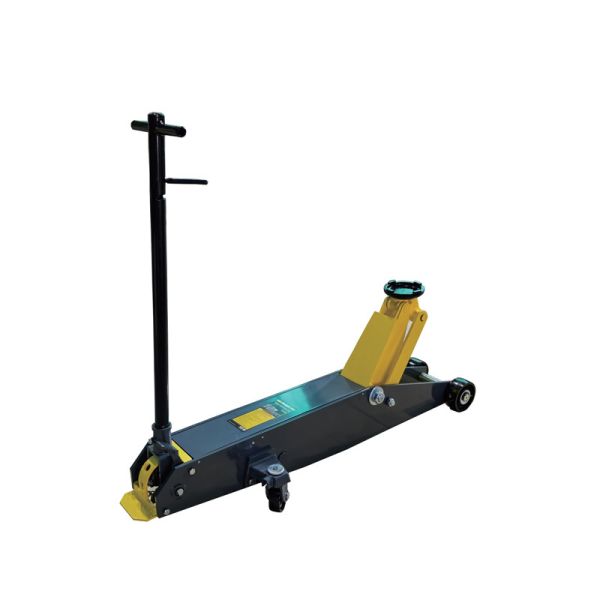
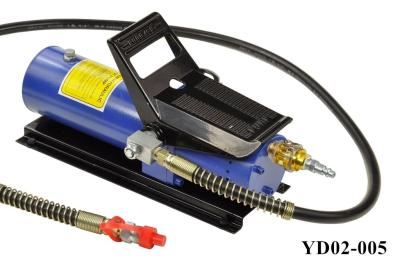
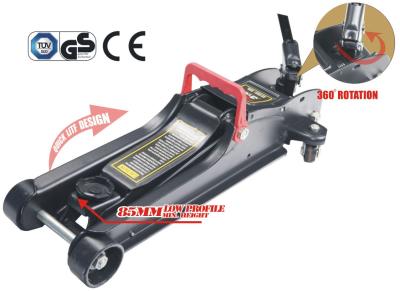
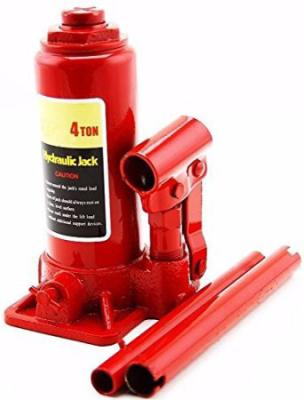
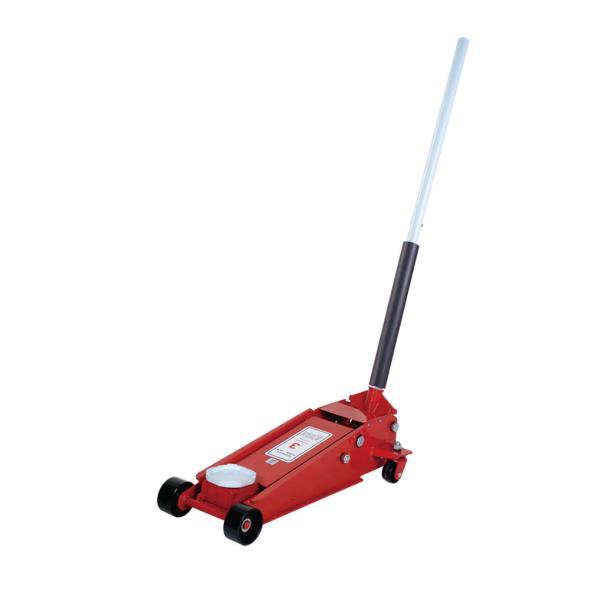
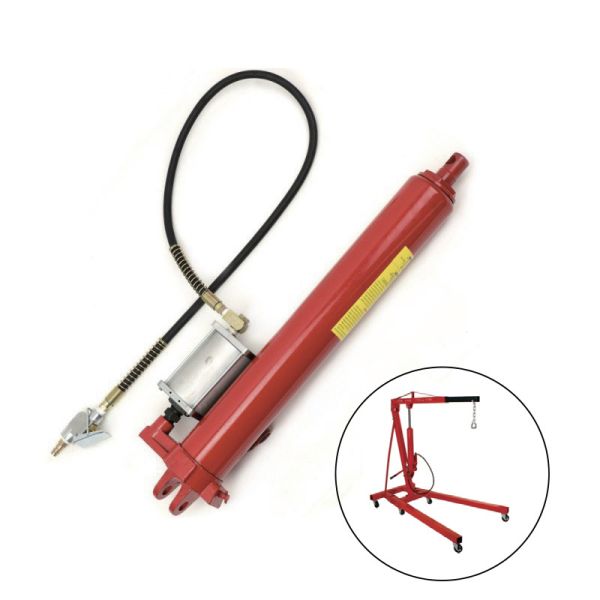
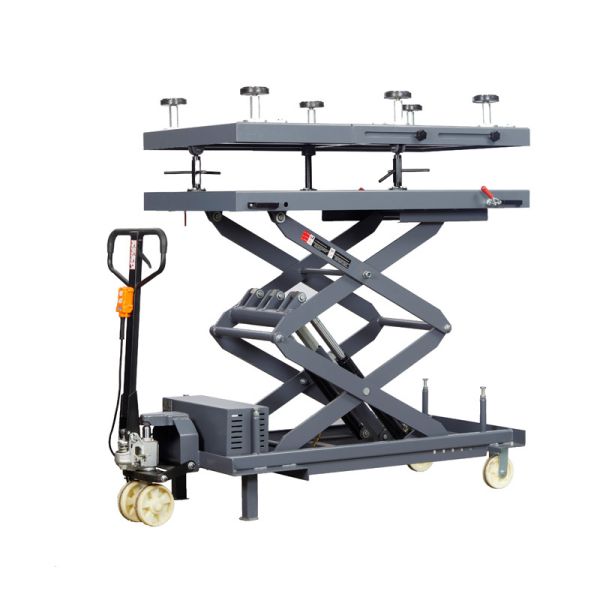
The YD20 Series Long Chassis Service Jacks are a full-tonnage solution developed to address the pain points of "low lifting efficiency, difficult positioning, and high safety risks in professional heavy-load scenarios". With "quick lifting efficiency + heavy-load durability + precise positioning" as the core, they break through the limitations of traditional service jacks such as "slow lifting, poor positioning, and single safety protection", providing "time-saving, stable-load, and easy-to-operate" lifting support for professional scenarios with different load requirements. Their core advantages are as follows:
The exclusive "quick lift" foot pedal optimizes the hydraulic oil circuit; 1-2 foot presses can quickly raise the saddle to fit the vehicle chassis. Compared with traditional manual-pump jacks (requiring 10-15 pumps), the lifting preparation time is reduced by 60%. For example, when an auto repair shop maintains a 3T heavy-duty SUV, a traditional jack takes 2 minutes to adjust the saddle height, while the YD20-002 only takes 20 seconds to complete positioning. Maintaining 10 vehicles a day can save more than 15 minutes, significantly improving workshop turnover efficiency.
The YD20-001 in the series has a maximum height of 800mm, providing over 60cm of operating space after lifting—1.3 times that of jacks of the same specification (mostly below 600mm). For example, when maintaining the gearbox of a medium-sized SUV, maintenance personnel do not need to work in a hunched position, and can easily disassemble the gearbox housing (about 25cm thick) while accommodating toolboxes and parts placement. Compared with ordinary jacks, the maintenance efficiency is increased by 50%, reducing the risk of lumbar muscle strain.
- 2-3T Models (YD20-001/002/003): The main body is made of 10mm thick cold-rolled steel, with a widened chassis of 44cm and a grounding area of 120×44cm. The frame deflection is ≤0.2mm when lifting a 3T load, 40% more stable than ordinary 3T jacks;
- 5T Model (YD20-004): Adopts 12mm thickened steel + reinforcing rib design, with a frame load-bearing capacity of 10T (2× rated load). When lifting a 5T medium-duty truck, the base settlement is ≤0.3mm, meeting high-frequency heavy-load needs;
- 10T Model (YD20-005): The main body is integrally formed with 16mm extra-thick steel, and the welding strength of key parts is ≥500MPa. There is no risk of weld cracking when lifting a 10T heavy-duty truck, suitable for high-intensity, high-frequency operation scenarios of engineering teams.
The built-in overload protection valve and bypass valve form "dual protection": when the load exceeds 10% of the rated value, the overload valve automatically cuts off the hydraulic circuit, and the saddle stops rising; if the hydraulic system pressure rises abnormally (e.g., oil circuit blockage), the bypass valve will actively release pressure to prevent cylinder bursting. Tests show that all models in the series can activate the safety valves instantly when overloaded by 20%, with no safety accidents, solving the hidden danger of "single protection and easy cylinder bursting" of traditional jacks.
- The 2 rear universal swiveling casters have a steering angle ≥180°, allowing precise adjustment of the saddle position when pushed. For example, when maintaining specific pipelines on the truck chassis, there is no need to move the vehicle repeatedly; one person can align the saddle with the support point, with a positioning accuracy error ≤5mm;
- The long chassis design (up to 169cm) makes the jack's center of gravity more stable, with a verticality deviation ≤0.5mm when lifting. Even when lifting a single tire of a heavy-duty truck unilaterally, there is no risk of vehicle tilting, suitable for maintenance needs requiring "high-precision positioning".
- The one-piece handle is ≥1200mm in length, with an operating force ≤80N (easily applied by adult males). Only 40-45 pumps are needed to lift a 5T load, 30% more labor-saving than short-handle jacks;
- The casters and saddle are made of wear-resistant materials. The caster wear is ≤0.5mm after continuous rolling for 5000 meters (simulating workshop movement), and the saddle shows no obvious scratches after 1000 lifting tests. The service life is 2 times longer than that of ordinary jacks, reducing maintenance costs in professional scenarios.
Scenario Requirement: Maintain the gearbox of Great Wall Cannon Off-Road Edition (weight 2.5T, chassis height 180mm), requiring lifting to 500mm. The tool needs quick lifting, long stroke, and stability.
Operation Process:
- One person pushes YD20-002 to the bottom of the vehicle; the rear swiveling casters accurately align with the chassis support point, and the 140mm minimum height easily extends under the vehicle.
- Step on the "quick lift" pedal; 2 presses make the saddle reach the chassis, then press the handle to lift to 500mm (the 660mm maximum height leaves a safety margin).
- Maintenance personnel disassemble the gearbox; the 800mm long stroke provides sufficient space, and the jack shows no shaking during the 2.5-hour process; after completion, open the pressure relief valve to slowly lower the vehicle.
Result: The quick lift design saves preparation time, and the long stroke improves maintenance comfort. The efficiency is 50% higher than that of ordinary jacks, suitable for the professional maintenance needs of auto repair shops.
Scenario Requirement: Inspect the chassis pipelines of Dongfeng Duolika (weight 4.2T, chassis height 150mm) in a dusty outdoor environment. The tool needs low-chassis adaptation and stable heavy-load performance.
Operation Process:
- Two people cooperate to push YD20-004 to the bottom of the truck; the 110mm minimum height adapts to the chassis gap without heightening.
- Step on the quick lift pedal to make the saddle fit the chassis, then press the handle to lift to 450mm; the 5T load capacity stably supports the 4.2T truck.
- Maintenance personnel replace the chassis pipelines; the dual safety valves prevent overloading, with no safety hazards during the 3-hour process; the sealed hydraulic system prevents dust intrusion.
Result: It has strong low-chassis adaptability and a stable heavy-load structure. Compared with ordinary 5T jacks (requiring wood padding for leveling), it saves 30% of operation time, suitable for outdoor scenarios of engineering teams.
Scenario Requirement: Replace the rear tire of Jiefang J6L (weight 8.5T, chassis height 200mm) in a logistics park with fast vehicle turnover. The tool needs heavy-load capacity and high efficiency.
Operation Process:
- Two people push YD20-005 to the bottom of the truck's rear wheel; the 170mm minimum height extends under the chassis, and the enlarged saddle aligns with the frame support point.
- Step on the quick lift pedal + press the handle to lift the vehicle until the tire is 10cm off the ground (the 570mm maximum height is sufficient); the 10T load capacity easily handles the 8.5T weight.
- Complete the tire replacement in 15 minutes; release pressure to slowly lower the vehicle, then push the tool to the next truck.
Result: The heavy-load capacity adapts to heavy-duty trucks, and the quick lift design shortens operation time. It can replace tires for 8 vehicles a day, 40% more efficient than ordinary 10T jacks.
Scenario Requirement: Maintain the suspension system of a 3T tractor (chassis height 160mm) on slightly uneven field ground. The tool needs stability and vibration resistance.
Operation Process:
- Push YD20-003 to the bottom of the tractor; the 140mm minimum height adapts to the chassis, and the weighted chassis (70kg net weight) adapts to the uneven field ground.
- Lift the tractor to 500mm (the 620mm maximum height), leaving space for suspension maintenance.
- Maintenance personnel replace the suspension components; the jack shows no displacement during the 2-hour process, and the anti-slip saddle prevents the tractor from sliding.
Result: The weighted chassis improves stability, adapting to complex field ground. Compared with ordinary 3T jacks (prone to tilting), the safety factor is increased by 80%, meeting the maintenance needs of agricultural machinery.
A1: The overload protection will be triggered, and lifting is not recommended. The rated capacity of YD20-004 is 5T, with an overload protection threshold of 5.5T. 5.5T just reaches the threshold; during lifting, the overload valve will immediately cut off the hydraulic circuit, and the saddle will stop rising. Even if forced operation is attempted, the 5T-grade steel frame (12mm thick) cannot withstand a 5.5T load for a long time, which may cause permanent frame deformation and cylinder leakage, shortening the service life. To lift a 5.5T truck, the YD20-005 (10T) or a higher-tonnage model should be selected.
A2: It is mostly caused by oil circuit blockage in the foot pedal, insufficient hydraulic oil, or foot pedal spring failure. Troubleshoot in the following steps:
- Check the hydraulic oil level: Open the oil filling port; if the oil level is below the scale line (needing to cover 1/2 of the cylinder bottom), add 46# anti-wear hydraulic oil to the standard position, and step on the pedal repeatedly 5 times to discharge air from the oil circuit;
- Clean the oil circuit blockage: If the oil level is normal, disassemble the oil circuit interface connected to the foot pedal, blow out internal impurities with compressed air (0.3MPa), or rinse with alcohol and reassemble;
- Inspect the foot pedal spring: If the pedal has no rebound force, the spring may be broken. Replace it with a spring of the same specification (priced at 20-30 yuan from the manufacturer), then test the pedal flexibility.
A3: Labor-saving operation can be achieved through auxiliary tools + multi-person cooperation:
- Short-distance movement: Use a forklift or manual hydraulic pallet truck (load capacity ≥200kg) to fork or place the jack on the truck; one person can push it, avoiding manual lifting;
- Positioning adjustment: Two people cooperate—one pushes the jack body, and the other adjusts the direction via the swiveling casters to accurately align with the support point, saving 50% of effort compared to single-person operation;
- Fixed operation points: In the maintenance workshop or logistics park operation area, plan the jack parking position in advance (with anti-slip treatment on the ground) to avoid repeated movement and improve positioning efficiency.
A4: It is mainly caused by rust on the caster shaft, impurity jamming, or insufficient lubrication. The solutions are as follows:
- Clean impurities: Use a screwdriver to remove stones, sand, and other impurities from the caster gap; if the impurities are stuck tightly, rinse with water and dry with a cloth;
- Rust removal and lubrication: Disassemble the caster shaft, polish the rust with sandpaper, apply lithium-based grease evenly on the shaft, and reassemble; rotate the caster repeatedly 10 times to ensure smooth rotation;
- Replace worn casters: If the caster bearing is worn (with abnormal noise during rotation) or the wheel surface is severely deformed, replace it with a caster of the same specification (contact the manufacturer for original parts) to avoid affecting positioning accuracy.
-