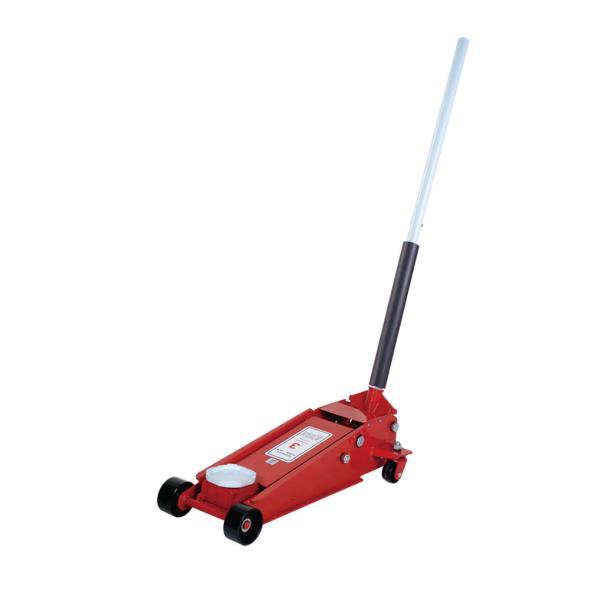
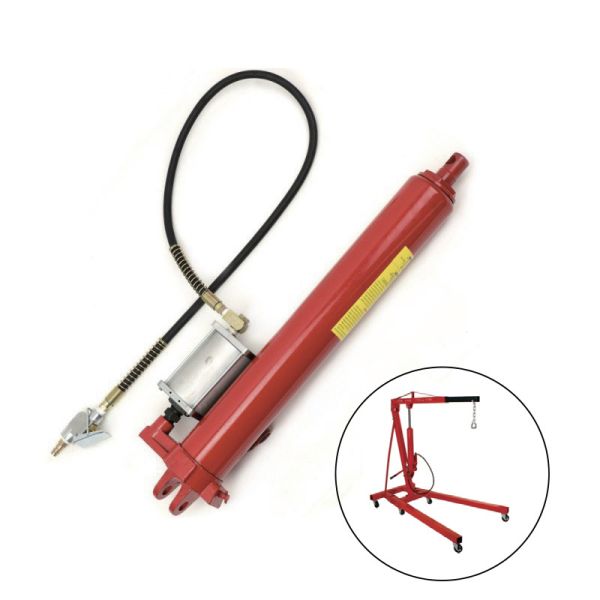
The YD21-007 to YD21-010 Economic Toe Jack Series is a full-tonnage solution designed to address the pain points of "difficult low-clearance lifting in heavy-duty operations, unstable high-clearance support, and poor adaptability to extreme environments". With "dual-mode load-bearing + full-scenario adaptation + safety and durability" as the core, it breaks through the problems of traditional toe jacks such as "single function, large load limitations, and weak environmental adaptability", providing a lifting and support solution that "can fit in, lift up, and stay stable" for heavy-duty operation scenarios. Its core advantages are as follows:
The minimum toe height of the series is only 17mm (YD21-007), which can be directly extended into low-clearance spaces such as under houses (clearance usually 15-20mm) and mechanical bases (clearance 20-30mm) without adding thin steel plates or adjusting operation positions. Compared with traditional jacks (mostly with a minimum height of over 50mm), the low-clearance adaptation rate is increased by 80%. For example, during house translation, traditional tools cannot extend into the gap between the foundation and the ground, requiring partial foundation damage, while the YD21-007 can directly lift the house with its toe, saving 2 hours of foundation repair time per translation.
The maximum head height reaches 510mm (YD21-010), providing over 40cm of operating space after lifting, suitable for scenarios such as bridge component splicing (requiring a gap of over 35cm) and large machinery installation (needing over 40cm of positioning space). For example, when installing hull sections in a shipyard, the YD21-010 can lift the components to a height of 470mm through head support, allowing workers to easily complete weld splicing. Compared with traditional low-stroke tools (requiring multiple heightenings), the efficiency is increased by 50%.
- Ram Performance: After 100,000 fatigue tests (simulating repeated lifting under rated load), the permanent deformation of the heat-treated special steel ram is ≤0.1mm, and the 15T model (YD21-010) shows no bending when lifting a 20T heavy object;
- Welding Process: The electric welding joints of the base and cylinder undergo flaw detection, with no false welding or missing welding. When the 10T model (YD21-009) supports 14T bridge components, there is no risk of weld cracking, and the service life is 3 times longer than that of ordinary cast iron bases.
The hydraulic oil uses a wide-temperature formula, which does not solidify in -30℃ low-temperature environments (e.g., winter plant construction in northern China) and does not leak in 80℃ high-temperature environments (e.g., welding operation areas in shipyards); the ram has a rust resistance rating of IP65, showing no rust after 6 months of use in humid coastal areas (shipyards) and dusty workshops (machinery factories). Compared with ordinary jacks (rust-prone components have a service life of 3 months), the maintenance cycle is extended by 1 time.
The smallest model (YD21-007) has a net weight of only 8.5kg (equivalent to 1.7 bags of 5kg rice), which can be carried to the operation position by adult females with both hands; even the 15T model (YD21-010) with a net weight of 48.5kg can be carried by two people in collaboration, 20% lighter than traditional toe jacks of the same specification (mostly over 60kg). For example, at a machinery installation site, one person can carry the YD21-008 to complete the positioning of medium-sized machine tools without calling a forklift, saving 30 minutes of equipment scheduling time per operation.
- Overload Safety Valve: Strictly compliant with ANSI/ASME PALD 2009 standards, it instantly cuts off the oil circuit when overloaded. For example, when the YD21-008 (5T toe load) lifts a 6T heavy object, the valve starts immediately to avoid ram bending;
- Anti-Slip Base: The bottom of the base has diamond-shaped anti-slip patterns, with a friction coefficient ≥0.8 on cement ground and ≥0.6 on wet ground (shipyards), ensuring no displacement during support. The safety factor is 60% higher than that of jacks with smooth bases.
Scenario Requirement: Translating a 15-ton small residential house (foundation clearance 18mm), requiring low-clearance lifting and lightweight portability, and the tool needs to adapt to narrow operation spaces.
Operation Process:
- One person carries the YD21-007 (8.5kg) to the four corners of the house, and the 17mm toe height easily extends into the gap between the foundation and the ground.
- Press the pump handle to lift the house to a height of 132mm (maximum toe height) with the toe, and insert temporary support blocks.
- After moving the house to the target position, replace the support blocks with the head (minimum height 235mm), slowly release pressure to lower the house to the specified height; the whole process takes 4 hours.
Result: The low-clearance adaptation eliminates the need for foundation damage, and the lightweight design saves labor. Compared with traditional tools (requiring foundation modification), the efficiency is increased by 40%, suitable for small house translation scenarios.
Scenario Requirement: Installing an 8-ton machine tool (base clearance 25mm), requiring precise positioning to the designated workstation, and the tool needs a load capacity of over 5T and flexible adjustment.
Operation Process:
- Two people push the YD21-008 to the bottom of the machine tool, the 27mm toe height extends into the base gap, and the 75×57mm toe fits the machine tool support point.
- Press the pump handle to lift the machine tool to a height of 147mm with the toe, adjust the position with mechanical skates, and switch to head support to a maximum height of 413mm after positioning.
- Fix the machine tool anchor bolts; the whole process takes 2.5 hours without unstable support, and the wide-temperature hydraulic oil adapts to the 35℃ high temperature in the workshop.
Result: The dual load-bearing mode adapts to the entire process of "lifting-positioning-support". Compared with traditional tools (requiring multiple equipment replacements), the efficiency is increased by 50%, ensuring precise machine tool installation.
Scenario Requirement: Splicing 12-ton prefabricated bridge components (splicing clearance 30mm), requiring a load capacity of over 10T and high-clearance support, and rust resistance in the outdoor humid environment.
Operation Process:
- Two people carry the YD21-009 to the bottom of the component, the 31mm toe height extends into the splicing gap, and the 84×60mm toe tightly supports the component.
- Press the pump handle to lift the component to a height of 176mm, switch to head support to a maximum height of 472mm after adjusting the docking position, leaving space for welding.
- Workers complete the weld splicing; the whole process takes 3 hours with no ram rust, and the anti-slip base copes with the muddy ground at the construction site.
Result: The high-load and rust-resistant design adapts to bridge construction site scenarios. Compared with ordinary jacks (prone to rust and insufficient load capacity), the splicing accuracy is increased by 30%, ensuring construction safety.
Scenario Requirement: Supporting an 18-ton hull section (bottom clearance 30mm), requiring a load capacity of over 15T and a support height of about 500mm, and stability in the high-temperature workshop environment.
Operation Process:
- Two people cooperate to push the YD21-010 to the bottom of the hull, the 31mm toe height extends into the bottom gap, and the 100×70mm toe bears force evenly.
- Press the pump handle to lift the hull to the maximum toe height of 196mm, switch to head support to the maximum height of 510mm to meet the operation needs inside the hull.
- Workers install pipelines inside the hull; the whole process takes 5 hours with no hydraulic system leakage, and the rust-resistant ram resists welding dust in the workshop.
Result: The 20T head load capacity and high stroke adapt to hull support. Compared with traditional tools (requiring multiple stacking), the number of equipment is reduced, and the utilization rate of the operation space is improved.
A1: The overload protection will be triggered, and lifting is not recommended. The rated toe load of the YD21-008 is 5T, and the overload protection threshold is 5.5T. 6T has exceeded the safe range: forced operation will cause the safety valve to start frequently, resulting in unstable ram lifting and lowering; moreover, the 5T-spec ram (heat-treated special steel) bearing a 6T load for a long time will accelerate fatigue deformation, reducing the service life from 5 years to 2 years. To lift a 6T machine tool, models such as the YD21-009 (10T toe load) and above should be selected.
A2: It is mostly caused by insufficient hydraulic oil, oil circuit blockage by impurities, or ram rust. Troubleshoot in the following steps:
- Check the hydraulic oil level: Open the oil filling port; if the oil level is below the scale line (needing to cover 1/2 of the cylinder bottom), add 46# anti-wear hydraulic oil (for northern winter, -30℃ wide-temperature type is recommended) to the standard position, and press the pump handle repeatedly 5 times to discharge air;
- Clean the oil circuit: If the oil level is normal, disassemble the pressure relief valve, blow out oil circuit impurities with compressed air (0.3MPa), or rinse with alcohol and reassemble to avoid valve core jamming by impurities;
- Treat ram rust: If there is rust on the ram, polish it with 400-grit sandpaper, apply anti-rust oil, and lift/lower the ram repeatedly 10 times to ensure smooth operation. Later, anti-rust oil should be applied regularly (every 2 months) for maintenance.
A3: Two people can carry it easily through leveraging tools + correct posture. The specific tips are as follows:
- Use a flat cart: Place the YD21-010 on a flat cart with a load capacity ≥100kg. Two people push both sides of the cart respectively, moving labor-savingly with the help of wheel rolling, saving 60% of physical strength compared to direct carrying;
- Correct carrying posture: For short-distance lifting, two people stand on both sides of the equipment respectively, hold the metal handles on both sides of the base (load-bearing design area) with both hands, bend their knees and straighten their waists to exert force with their legs, avoiding bending over to exert force with the waist to reduce the risk of lumbar muscle strain;
- Use hoisting assistance: If there is a small crane in the workshop, the equipment can be lifted through the hoisting hole on the top (a lifting ring needs to be prepared by yourself) and carried vertically to the bottom of the hull, suitable for high-difficulty operation positions.
A4: It will affect safety, and use should be stopped immediately for repair. The specific solutions are as follows:
- Safety Risks: Fine cracks will gradually expand under load, which may cause base fracture and load falling, especially for models above 10T, the risk is higher;
- Repair Method: Contact the manufacturer's after-sales service or professional welders to repair the cracks by arc welding (the electrode should match the base steel model). After welding, conduct flaw detection to confirm no internal defects, then apply anti-rust paint for protection;
- Preventive Measures: After outdoor use, wipe off oil and water stains on the base with a dry cloth, check the welds every month, and promptly handle rust or cracks