We offer factory-direct sales of complete organic fertilizer production lines utilizing biogas residue as raw material.
Fundamentals: Aerobic fermentation occurs under oxygen-rich conditions where aerobic microorganisms break down organic matter through catabolic and synthetic metabolic processes. This converts part of the organic material into simple inorganic compounds while synthesizing new cellular substances, enabling microbial growth and reproduction.
Microbiological Process: The aerobic fermentation process consists of three distinct stages:
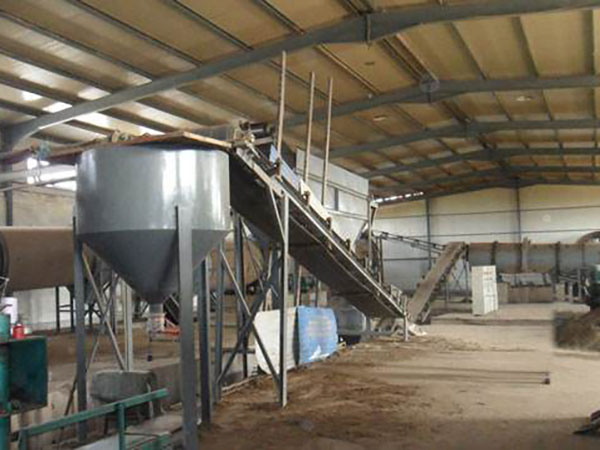
Fermented material is loaded via forklift into the feeder system. The material is then conveyed through a belt system to a vertical pulverizer for crushing. The crushed material proceeds to a drum sieve for screening, where finished product can be directly stacked for granulation or transferred to buffer silos for packaging.
Step 1 - Dynamic Batching: Multiple materials are precisely proportioned using a dynamic batching machine (3-10 positions available) and delivered to a mixing belt conveyor, which transfers the blended material to a biaxial continuous mixer. Water addition occurs simultaneously if required.
Step 2 - Mixing & Granulation: Approximately 40% water is mixed into the material using specialized mixing equipment, producing uniform particles ranging from 1.5mm to 4mm. The formed particles then enter the dryer for baking.
Step 3 - Drying & Cooling: Dryers utilize heat sources including hot air stoves, gas stoves, or electric heating systems. Hot air furnaces using coal provide the most economical operation, followed by raw material combustion. Fans circulate hot air through the dryer to evaporate moisture. The material then moves to coolers where fans introduce cold air to remove remaining water content.
Step 4 - Screening & Recycling: Dryers and coolers employ cyclone and baffle dust collection systems to meet environmental standards. Cooled granular material is screened through drum sieves, with standard particles proceeding to coating machines while non-conforming material is crushed and returned to the mixer for re-granulation.
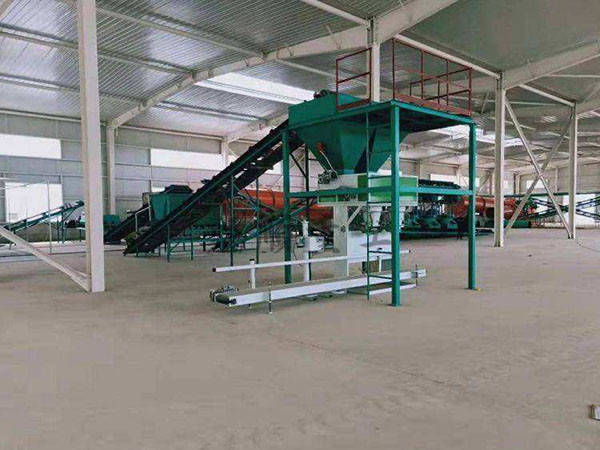
Step 5 - Coating & Packaging: Coating machines apply protective layers to finished products using powder or liquid coatings, enhancing appearance and product quality. The final step involves quantitative packaging scales for precise filling and packaging.