Automatic Organic Fertilizer Production Line Potassium Salt Granulator
Product Overview
New design organic potassium salt fertilizer granulator production line
Application
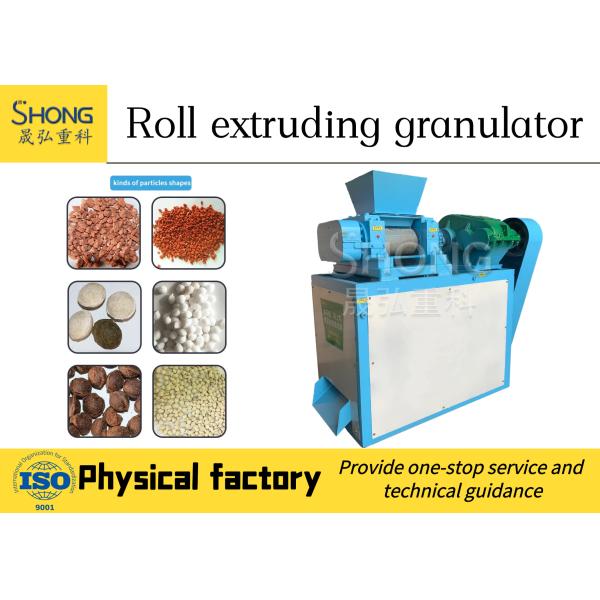
This equipment can granulate NPK fertilizer, NP, ANP, DAP, MAP, CAN, SSP and other materials into compound fertilizer particles in one processing line. It is specially designed for manufacturing compound fertilizers with different concentrations and types, including organic fertilizers, inorganic fertilizers, biological fertilizers, and magnetic fertilizers. The system primarily produces spherical particles with diameters ranging from 1mm to 3mm.
Technological Process
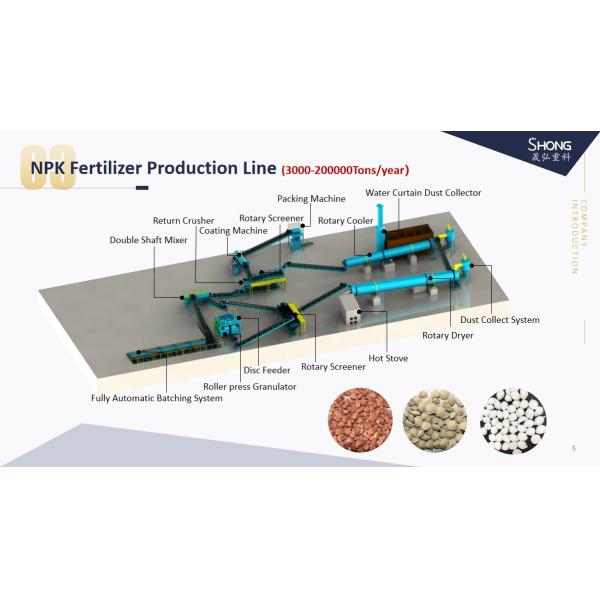
The complete compound fertilizer production process follows this sequence: raw material batching → mixing → crushing and caking → granulation → primary screening → particle drying → particle cooling → secondary screening → finished particle coating → quantitative packaging of finished products.
- Raw Material Batching: Selection of urea, ammonium nitrate, ammonium chloride, ammonium sulfate, ammonium phosphate (monoammonium phosphate, diammonium phosphate, heavy calcium, common calcium), potassium chloride (potassium sulfate) and other raw materials in specific proportions determined by local market demand and soil test results.
- Mixing and Stirring: Uniform mixing of prepared raw materials to enhance overall fertilizer efficiency consistency using horizontal mixer or disc mixer equipment.
- Caking and Crushing: Breaking down large agglomerates of mixed raw materials to facilitate subsequent granulation processing, primarily using chain crusher technology.
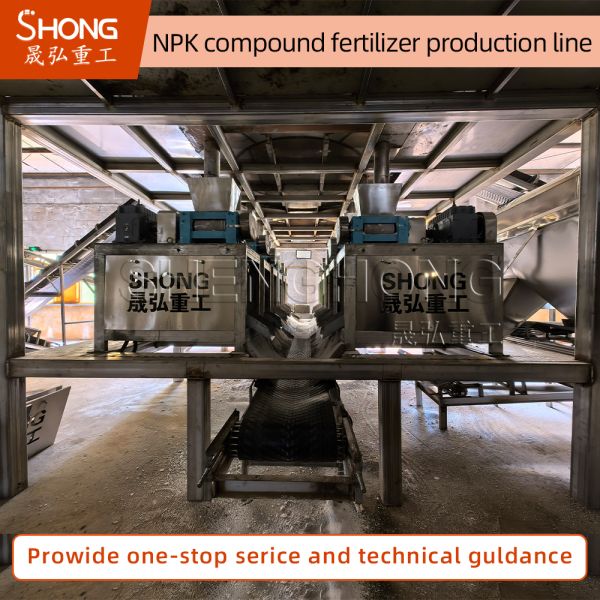
- Material Granulation: Transfer of evenly mixed and crushed materials to the granulator via belt conveyor for particle formation using rotary drum granulator, counter roll extrusion granulator, or disc granulator equipment. This is an essential and critical step in the production line.
- Primary Screening: Initial screening of semi-finished particles where unqualified particles are returned to the mixing stage for reprocessing, typically using drum screening machines.
- Particle Drying: Transfer of first-stage screened particles to the dryer to remove moisture content, increase particle strength, and improve storage stability using rotary dryer systems.
- Particle Cooling: Reduction of dried fertilizer particle temperature to prevent agglomeration and facilitate bagging, storage, and transportation using specialized cooling equipment.
- Secondary Particle Classification: Classification of cooled particles where unqualified particles are crushed and re-granulated, while qualified products proceed through secondary drum screening machines.
- Finished Product Particle Coating: Application of coating to qualified products to enhance brightness, roundness, and overall appearance using coating machine technology.
- Quantitative Packaging: Transfer of coated finished particles to storage silos via belt conveyor, followed by automated quantitative packaging using electronic scales and sewing machines, with final storage in ventilated areas to complete the fully automated process.